

























































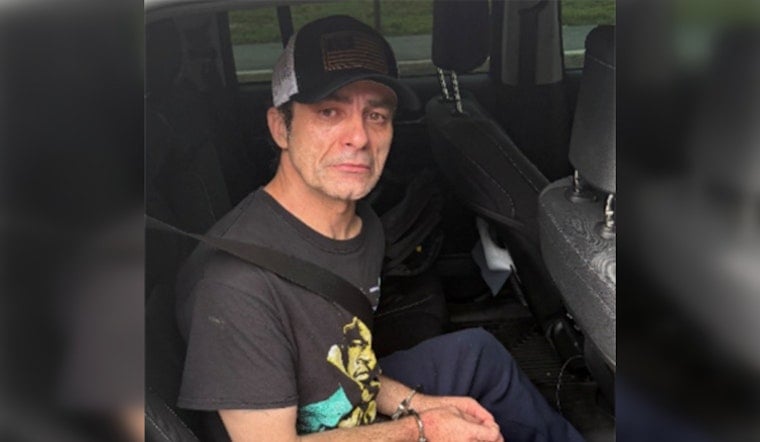
ICE agents arrested Heriton Da Silva Aredes in Taunton during targeted operations, just weeks after Bristol County released the Brazilian national from custody following his arraignment on a charge of motor vehicle homicide by negligent operation. Da Silva Aredes posted bail and walked out of the Bristol County House of Corrections on July 25, according to federal immigration officials, in a case that has reignited a bitter public dispute between the agency and Bristol County Sheriff Paul Heroux over how Massachusetts handles immigration detainers.
The arrest was first reported by the Boston Herald, which detailed a criminal history for Da Silva Aredes that includes convictions for assault and battery with a dangerous weapon, assault and battery, operating recklessly, refusing to identify himself while operating a vehicle, furnishing a false name, and using a motor vehicle without authority. Massachusetts State Police had previously arrested him in Middleboro in August 2023, and he was also released following an arrest by the Stoughton Police Department, per the Herald’s reporting. The Department of Homeland Security had removed him from the United States on October 14, 2008, under a final removal order issued that June, and he later reentered the country illegally on a date and at a location that remain unknown.
Acting ICE ERO Boston Field Office Director David Wesling said the agency will prioritize law-abiding citizens while, in his words, sanctuary politicians protect habitual criminal offenders. Wesling directly blamed Heroux’s noncooperation with federal detainer requests for Da Silva Aredes’s release, and ICE says Massachusetts authorities have released him on three separate occasions. The Bristol County House of Corrections released him without honoring the immigration detainer and without notifying ICE, and the sheriff’s office ignored the federal request altogether, according to the Herald’s account.
Heroux Cites State Law, Not Discretion
Heroux has repeatedly said he will not honor ICE detainers because he considers them a violation of Massachusetts law, and that his office is not allowed to hold someone in custody after that person posts bail, regardless of immigration status. That position traces directly to the Massachusetts Supreme Judicial Court’s 2017 ruling in Lunn v. Commonwealth, which found that state and local law enforcement have no statutory authority to detain someone solely on a civil ICE detainer once they are otherwise entitled to release, according to Justia Law. That decision made Massachusetts the first state supreme court in the country to declare such holds an unlawful arrest under state law.
The sheriff has also said he will not voluntarily participate in ICE activities, and has pointed to guidance from U.S. Attorney Leah B. Foley, who told all 14 Massachusetts county sheriffs during a monthly association meeting in March 2025 that local law enforcement agencies are legally bound by state law regarding detainers, as reported by the Fall River Reporter. Heroux cited that federal acknowledgment to push back on claims that his office was acting unlawfully. He has separately noted that President Donald Trump pardoned 1,600 January 6 defendants, a comparison he has drawn while defending his own approach to who receives leniency under the law.
New State Law Raises the Stakes
The dispute now unfolds against the backdrop of the PROTECT Act, which Governor Maura Healey signed into law on August 5. The legislation restricts federal immigration enforcement in sensitive locations including courthouses, public schools, childcare centers, and healthcare facilities, while codifying the Lunn detainer prohibition into state statute, according to the Massachusetts state government. The law also prohibits civil immigration arrests at courthouses and other state-owned buildings, and it broadly limits ICE’s capabilities and operations within Massachusetts.
Beyond the enforcement restrictions, the PROTECT Act created new state civil liability for federal immigration agents, allowing individuals to sue ICE agents in state court over unjustified enforcement actions, and it banned new 287(g) agreements that deputize local police for civil immigration enforcement, according to the Massachusetts Municipal Association. The law did grandfather in the state’s existing 287(g) agreement between the Department of Correction and ICE. A separate provision, Section 8, now requires employers operating in Massachusetts to notify their workers in writing within 48 hours of receiving an I-9 inspection notice from ICE, per Epstein Becker Green, a requirement that applies regardless of employer size or where a company is headquartered.
A Familiar Pattern of Friction
This is not the first time Heroux and ICE ERO Boston have clashed publicly. In July, the sheriff accused the federal agency of bullying and public intimidation after it posted a mugshot on X criticizing his office for releasing a Honduran national facing gun charges who had posted $1,000 bail, a confrontation Hoodline covered in its own report on the mugshot dispute. Heroux has maintained in that case and others that holding an inmate past their bail date would violate state law and expose his office to lawsuits.
The sheriff’s office does share daily booking logs, court dates, and scheduled release times with federal authorities, but Heroux confirmed last October that he refuses ICE requests for the names of third parties who post bail for inmates, according to the New Bedford Light. Six other Massachusetts sheriffs’ offices told the outlet they had not received similar bail-payer requests from federal authorities. Because agents often do not arrive before a suspect posts bail, ICE has increasingly turned to targeted community arrests, then publicly criticized local officials afterward — a pattern evident in the Da Silva Aredes case.
Oversight and Broader Enforcement Trends
Wesling himself has faced scrutiny from Congress. Senator Ed Markey sent formal inquiries to the acting field office director this month regarding severe overcrowding, prolonged detentions, and deficient conditions at ICE’s regional facility in Burlington. Oversight data released alongside Senator Markey’s inquiry found that only 15 percent of individuals arrested with criminal convictions during a 2025 regional enforcement surge had offenses that ICE classified as serious.
That surge, known as Operation Patriot 2.0, saw ICE ERO Boston and federal partners arrest more than 1,400 people across Massachusetts in September 2025, with the agency publicly criticizing local sanctuary policies for releasing criminal suspects, as Hoodline reported at the time in its coverage of the monthlong operation. More than 600 of those arrested had significant criminal convictions or foreign arrest warrants. The Department of Homeland Security has said that criminal illegal aliens who enter the country unlawfully and break its laws will be found and arrested, a message federal officials continue to repeat as cases like Da Silva Aredes’s move through the courts.





