

























































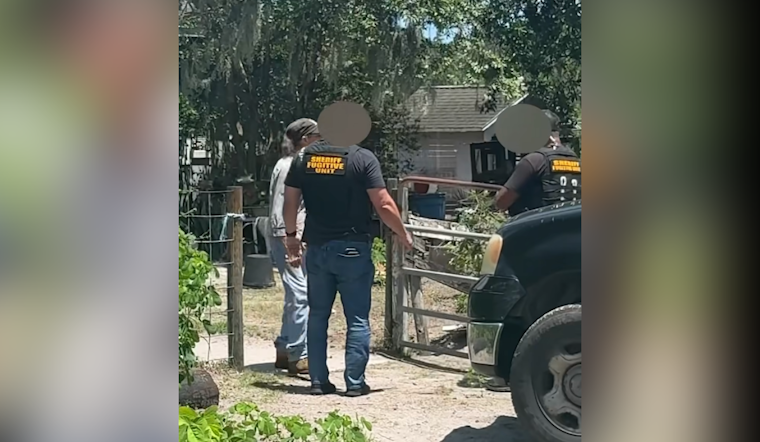
A Brevard County woman is behind bars after allegedly stabbing and violently beating a horse in front of a child, according to Sheriff Wayne Ivey. The case marks the latest in a string of high-profile animal cruelty arrests the sheriff has publicized in recent months, though key details about the animal's condition and the exact charges remain unclear.
According to FOX 35 Orlando, the woman allegedly stabbed and whipped the horse while a child was present, prompting her arrest and booking into the Brevard County jail. Sheriff Ivey has not publicly detailed the horse's current condition, the specific location within Brevard County where the alleged abuse occurred, or the exact relationship between the woman and the child who witnessed it — all questions that remain open as the investigation continues.
What Charges Could Follow
Under Florida Statute § 828.12(2), aggravated animal cruelty is a third-degree felony punishable by up to five years in prison and a fine of up to $10,000, according to FindLaw. The statute applies when someone intentionally inflicts excessive or repeated unnecessary pain on an animal, and if intentional torture or torment is proven, Florida law requires mandatory psychological counseling along with a minimum $2,500 fine, per the same statute.
The presence of a child during the alleged abuse could open additional criminal exposure. Under Florida Statute § 827.03, inflicting mental injury on a child or committing violent acts in a minor's presence that could reasonably cause psychological trauma can be prosecuted as felony child abuse, carrying up to five years in prison, FindLaw notes. Florida law defines mental injury broadly enough to include a discernible impairment in a child's psychological capacity, though it remains unresolved whether prosecutors will pursue that charge in this case.
Florida's Tougher Stance Under Dexter's Law
The case arrives months after Florida's so-called Dexter's Law, or HB 255, took effect on January 1, establishing a statewide, publicly accessible animal abuser database maintained by the Florida Department of Law Enforcement, according to BillTrack50. The law, named after a dog that was tortured, also added a 1.25 sentencing multiplier for aggravated animal cruelty offenses that involve intentional torture, meaning a conviction now could carry steeper prison time calculations than it would have before this year.
Sheriff Ivey runs a specialized Animal Cruelty Investigative Unit within the Brevard County Sheriff's Office and has built a reputation for publicizing these arrests, often walking suspects into the county jail on camera — a facility he has nicknamed “Ivey's Iron Bar Lodge.” Under Chapter 14 of the Brevard County Code, the agency's Animal Enforcement Unit handles all animal welfare complaints, bite cases, and abuse investigations countywide from its Melbourne facility, per the Brevard County Sheriff's Office.
A Pattern of Local Cases
This is not the first time Brevard County deputies have made headlines for animal cruelty arrests this year. In February, deputies arrested a Merritt Island woman on felony animal cruelty charges after she was captured on video violently abusing a family cat to retaliate against a relative, as reported by WKMG. And in March 2025, two Brevard County men were charged with felony aggravated animal cruelty after they abandoned a dog named Rosie inside an apartment following an eviction, which ultimately led to the dog's death — a case Hoodline covered at the time, with Sheriff Ivey publicly denouncing the suspects after rescue efforts failed.
Animal stabbing cases tied to interpersonal conflict have also surfaced before in the county. Back in December 2021, deputies arrested a Cocoa woman for felony animal cruelty after she allegedly stabbed her husband's dog nine times following a domestic dispute, WKMG reported at the time.
Why Officials Say These Cases Matter
Florida State Attorney task forces point to broader public safety stakes in aggressively prosecuting animal abuse. Research cited by the Office of the State Attorney, Fifth Judicial Circuit shows nearly 70% of animal abusers have criminal records and are five times more likely to commit violent crimes against humans, with animal cruelty frequently correlated to domestic violence and other interpersonal crimes.
The arrest also comes weeks after Sheriff Ivey authorized an internal investigation into a separate animal incident involving his own agency. In July, a marked Brevard County patrol car struck a dog and drove away without stopping, and the Sheriff's Office agreed to cover the dog's vet bills while reviewing the deputy's conduct. That dog survived and was expected to recover.
No further details on formal charges filed by the State Attorney's Office, the horse's medical status, or the child's relationship to the accused woman have been released. Hoodline will update this story as more information becomes available.




