

























































A California appeals court has ruled that an engineer who worked remotely from Utah for a Bay Area software company cannot claim California's workplace protections after he was fired over an arrest in Florida, even though his employer was headquartered in the state. The decision in Saberin v. Alation, Inc. clarifies a question that has grown more urgent as remote work has reshaped the California workforce: does an employer's home base alone pull out-of-state remote workers under the umbrella of California law?
Pejman Saberin began working for Alation Inc., a California-based enterprise software company, in 2021, living and working remotely from Utah, according to the San Diego Union-Tribune. While returning from vacation, Saberin was arrested in Florida. His sister reported to Alation that he had been injured in an accident and emailed the company to request additional time off, the Union-Tribune reported. Alation later uncovered Saberin's arrest, and executives Daniel Rose and Christos Mousouris decided to terminate him, citing his unapproved absence and dishonesty about the reason for it.
The termination decision was made in Illinois, per the newspaper's account, though Mousouris normally worked from home in California and Saberin's direct supervisor worked remotely from Washington. California-based employee Liz Laber, who performed her work from California, provided input into the termination decision and ultimately communicated it to Saberin. The criminal case against Saberin was later dismissed in March 2024.
Arbitration and the Fight Over Which State's Law Applies
Alation's proprietary and inventions agreement required binding arbitration of employment disputes pursuant to California law, and Saberin argued in arbitration that his termination violated that law. He specifically invoked California Labor Code Section 432.7, which bars employers from considering a worker's arrest not followed by conviction when deciding on any condition of employment, including termination, and California Government Code Section 12952, which similarly prohibits employers with five or more workers from weighing an applicant's non-convicted arrest.
An arbitrator rejected Saberin's contention that California law applied to his case. Saberin then petitioned the San Mateo County Superior Court to vacate that arbitration award, arguing under California Code of Civil Procedure Section 1286.2(a)(4) that the arbitrator had exceeded his powers by failing to conduct a statute-specific extraterritoriality analysis, according to WorkCompAcademy. The trial judge rejected that argument as well, and the case moved to the First District Court of Appeal.
Appeals Court Sides With Alation
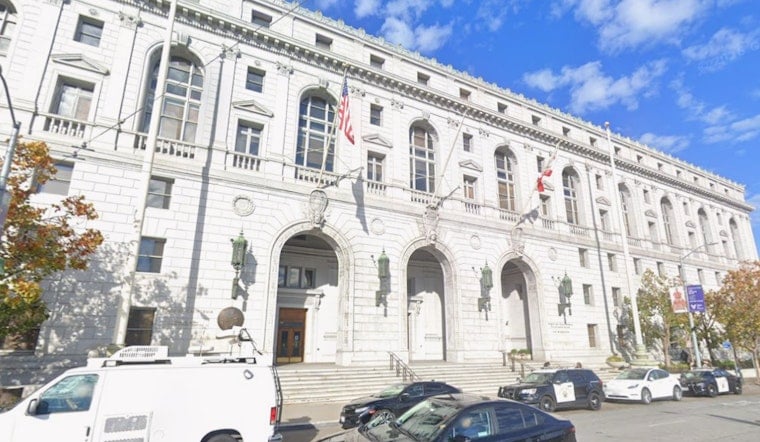
On July 30, the California First District Court of Appeal issued a published decision affirming the trial court's order and rejecting Saberin's petition to vacate the arbitration award, according to court records cited by FindLaw. The court agreed that California law did not apply to Saberin's claims, and it deferred to the arbitrator's finding that Laber's input and communication in the termination were not substantive enough to warrant applying California law. The evidence did not suggest, the court found, that Alation had moved Mousouris out of California to dodge California law.
The appellate court concluded that applying Sections 432.7 and 12952 to Saberin's claims would accomplish neither statute's legislative objective. The California Legislature intended Section 432.7 to protect California workers from losing job opportunities based on arrests without proven guilt and to prevent employers from misusing arrest information, while lawmakers had similar motives in enacting Government Code Section 12952. Because Saberin and his arrest had no connection to California, the court identified Alation's consideration of that arrest as unlawful conduct that nonetheless fell outside the reach of California's statutes as applied to him.
Notably, the court declined to resolve a related question: whether the statutes could apply to California residents who work remotely for employers with no California offices at all. The parties in the case also stipulated that they could identify no Utah, federal, or other applicable non-California law barring termination based on an employee's arrest, leaving Saberin without recourse under any jurisdiction's law once California's was ruled out.
Where California Law Draws the Line
The ruling builds on a body of California Supreme Court precedent addressing where the state's labor protections stop. In the 2020 companion decisions Ward v. United Airlines, Inc. and Oman v. Delta Air Lines, Inc., the state's high court held that California labor laws apply based on where liability-creating conduct or the core location of work occurs, not on an employer's corporate residence alone. Earlier, in the 2011 case Sullivan v. Oracle Corp., the court ruled that non-resident employees temporarily working in California are covered by state overtime laws, but that California's Unfair Competition Law does not reach overtime claims for work performed entirely outside the state, according to Seyfarth Shaw.
Employment attorney Eaton, a partner at Seltzer Caplan McMahon Vitek who focuses on defending and advising employers and also teaches business ethics and employment law at San Diego State University's Fowler College of Business, noted that California workplace laws protect remote workers terminated by California-headquartered employers only under certain circumstances. Per the Union-Tribune's reporting, Eaton explained that employer misconduct generally must be sufficiently connected to California for the state's law to apply to non-California workers, meaning California Labor Code Section 432.7 may extend to non-California workers only when that connection exists. Workers with limited or no ties to California, Eaton added, face special challenges asserting California-law claims against their employers.
A Growing Share of the Workforce Is Affected
The stakes of that legal line have grown alongside the remote workforce itself. A May report by the California Legislative Analyst's Office found that 13 percent of California employees worked primarily from home in 2024, triple the pre-pandemic rate, and that 12 percent of Bay Area job postings offered remote work options. Nationally, workforce data published in July by Founder Reports indicates that 21.7 percent of American employees worked remotely at least part-time as of June, with roughly half operating in hybrid arrangements and just under half working fully remote.
That structural shift has created new jurisdictional puzzles for California companies managing employees scattered across the country, since courts must now determine, case by case, whether enough of an employment dispute touches California soil to trigger the state's protections. Saberin's case shows how thin that connection can be even when a company's headquarters, and some of its decision-makers, sit squarely inside California's borders.
Legislative Backdrop
The statutes at the center of the case trace back to California's broader push to limit how employers use criminal history in hiring and firing decisions. The Legislature enacted Assembly Bill 1008 in October 2017, codified as Government Code Section 12952, banning most employers with five or more workers from inquiring into or considering an applicant's conviction history before extending a conditional job offer, according to Seyfarth Shaw. Lawmakers introduced Assembly Bill 2095 in February, proposing further updates to the Fair Chance Act that would expand restrictions on how employers evaluate criminal history during hiring, according to Forbes. That continued legislative attention signals California's ongoing focus on employment screening fairness, even as courts narrow how far those same protections reach once workers cross state lines.





