

























































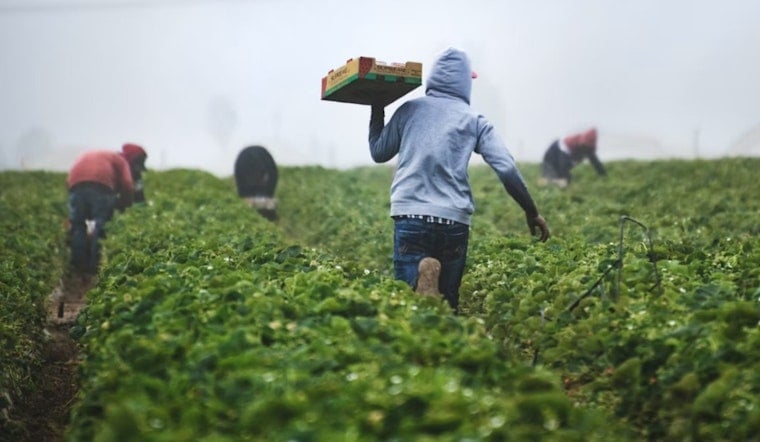
A California bill that would set a $19.75-per-hour minimum wage for certain seasonal and temporary farmworkers has cleared the state Legislature and is now sitting on Governor Gavin Newsom's desk, and a national small business group is warning that the measure could push grocery prices higher for everyone in the state. Assembly Bill 2646 targets agricultural workers brought in from outside California under temporary or seasonal arrangements, along with employees doing comparable work for the same employer in the same county.
NFIB Says Farmers Can't Keep Absorbing New Costs
The National Federation of Independent Business, which has advocated for small and independent business owners for more than 80 years, has come out against the bill, according to Action News Now. The organization says it has the second-highest percentage of agricultural-sector members among its nationwide membership, and it argues that California farms and agricultural companies are mostly small, family-owned operations working on tight margins. John Kabateck, speaking for the group, said the bill would add another high cost to California farmers who already face some of the highest labor, energy, regulatory and operating costs in the country.
“This bill isn't just about wages — it's about the cost of producing food in California and whether we remain competitive globally,” Kabateck said, per the outlet's report. He added a blunter warning about the state's broader food-cost trajectory: “You can't keep raising the cost of producing food and then wonder why Californians are struggling to afford it.” The NFIB argues farmers cannot absorb every new mandate out of Sacramento without eventually passing those costs on to consumers, and warns AB 2646 could make California agriculture less competitive against producers in lower-cost states and countries.
A Federal Wage Rollback Sparked the Bill
The push behind AB 2646 traces back to a late-2025 federal decision under the Trump administration that changed how Adverse Effect Wage Rates are calculated, according to Capital Press. That change caused H-2A guestworker pay floors in California to fall from $19.97 per hour down to the state's general minimum wage of $16.90. The bill's author, Assemblymember Maggy Krell (D-Sacramento), argued the federal shift left seasonal agricultural workers struggling to survive, and the measure was sponsored by United Farm Workers, which contends the legislation protects vulnerable farmworkers from wage depression amid California's high cost of living.
Supporters argue the $19.75 base pay is justified because farmworkers perform physically demanding, essential labor and often struggle with poverty despite the state's expensive cost of living. Assembly Bill 2646 specifically covers what the bill calls approved agricultural employees — out-of-state workers with seasonal or temporary permits under programs like the federal H-2A visa — along with corresponding employees doing similar work for the same employer within the same county, according to Fisher Phillips.
Wage Floor Would Rise Automatically Each Year
If signed, the new wage floor would take effect January 1, 2027, and starting that date it would be adjusted annually based on the Social Security cost-of-living adjustment rate, per LegiScan. That $19.75 rate would sit nearly $3 an hour above California's current statewide minimum wage of $16.90, and about $2.35 above the $17.40 general minimum wage Newsom has already announced will take effect statewide on the same date, as Hoodline previously reported.
Federal H-2A rules already require agricultural employers to provide free housing, cover round-trip transportation, and supply three daily meals or free cooking facilities on top of hourly wages, according to Western Growers. Agricultural groups argue that stacking a new state wage floor on top of those existing federal housing and travel mandates strains farm financial viability. A 2023 University of California study examined the state's 2016 farm overtime law and found it led to a net reduction in worker hours and total earnings, as growers shortened shifts to avoid overtime premiums — a precedent opponents cite as a warning about how mandatory wage increases can unintentionally cut into total available work.
Bill Cleared Both Chambers Along Party Lines
Assembly Bill 2646 passed the California Assembly 58-16 in May 2026 and cleared the state Senate this week, after which it was formally enrolled and sent to Newsom, who has until September 30 to sign or veto it, according to GV Wire. Central Valley lawmakers split along party lines on the vote, with Democrats supporting the measure and Republicans opposing it.
Nearly three dozen agricultural and commercial organizations have formally opposed the bill, including Western Growers, the California Farm Bureau, the California Fresh Fruit Association and the California Cattlemen's Association, Capital Press reports. Those groups warn that higher wage floors could jeopardize California agriculture's global competitiveness and accelerate the closure of farming operations already under financial pressure.
Farm Numbers Have Already Been Shrinking
U.S. Department of Agriculture census data shows the number of operating farms in California fell nearly 19 percent over a decade, dropping from 77,857 in 2012 to 63,134 in 2022, according to The Business Journal. Farming advocates point to that decline as evidence that growers cannot absorb rising labor and regulatory costs without more operations shutting down.
The NFIB also frames its opposition as consistent with recent voter sentiment, noting that California's largest small business association has urged Newsom to veto the bill and arguing that AB 2646 runs counter to the outcome of Proposition 32, the 2024 ballot measure that sought to raise the minimum wage and which California voters rejected. Whether Newsom agrees remains an open question as the September 30 deadline approaches, with the fate of the bill — and its potential ripple effects on grocery prices — resting on his decision.




