

























































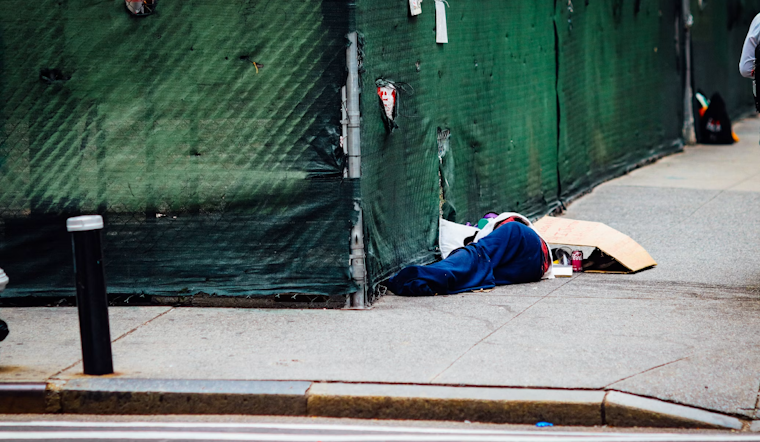
A decade after California voters softened penalties for drug possession, a new state-backed analysis says that decision likely pushed thousands more people onto the streets. Researchers estimate Proposition 47 contributed to roughly 7,000 additional Californians experiencing unsheltered homelessness between 2015 and 2019, a period when the state's overall homelessness rate was already climbing sharply.
The finding comes from the Public Policy Institute of California, which released a report examining the long-term effects of the 2014 ballot measure, as first detailed by Mountain View Voice. Prop. 47, passed by California voters in 2014, lowered some drug and property crimes from felonies to misdemeanors and was credited at the time with easing prison overcrowding. But PPIC researchers now say the measure also contributed to a roughly 10 percent increase in street homelessness between 2015 and 2019, and accounted for about 20 percent of the state's overall rise in unsheltered homelessness during that stretch, according to U.S. Department of Housing and Urban Development figures cited in the report.
The mechanism, according to PPIC researchers, was largely indirect. With fewer people facing felony charges for drug possession, California courts referred fewer people into court-mandated treatment programs, and the state saw a 20 percent reduction in Californians receiving drug treatment. Researchers also found that Prop. 47 contributed to a rise in overdoses, with drug use — measured by overdose deaths and hospitalizations — increasing 7 percent to 8 percent, according to the PPIC study.
How Researchers Reached Their Conclusion
To isolate Prop. 47's effect from other forces, PPIC researchers compared California counties with counties in other states that had similar homelessness trends before the law passed, and they compared California as a whole to states with similar pre-2014 trajectories. That comparison showed areas of California with larger post-Prop. 47 decreases in drug arrests and jail and prison populations were more likely to see larger increases in both homelessness and overdoses.
Still, the researchers stopped short of blaming California's entire homelessness crisis on the criminal justice reform. They also examined whether the state's rent spikes were driving the trend. California rent prices increased much more than rents in other states between 2014 and 2019, and researchers attempted to account for that in their models. Notably, the report found no statistically significant link between changes in rents or vacancy rates and changes in local homelessness rates, though the researchers acknowledged the state's outsized rent increase could have had a bigger effect than their models captured.
Instead, PPIC found that the factor most consistently tied to local homelessness increases was a decline in the share of low-income disabled residents receiving Supplemental Security Income cash assistance, alongside slower local growth in permanent housing beds — both described as parallel key drivers alongside the criminal justice shift.
What the People Living It Say
A separate strand of research complicates the picture. The 2023 UCSF Benioff Homelessness and Housing Initiative report, the largest survey of unhoused Californians since the 1990s, found that loss of income — not drug use — was the most common reason respondents gave for losing their last housing. More than a third of homeless respondents reported regularly using drugs, and the Steinberg Institute notes that 42 percent of drug-using respondents said they began regular use only after becoming homeless, suggesting addiction was often a consequence of homelessness rather than its sole cause.
That same UCSF survey found 48 percent of unhoused residents reported complex behavioral health needs. Taken together, the survey data and PPIC's statistical modeling point to overlapping but distinct stories: one where addiction and reduced treatment access pushed people toward the street, and another where economic precarity remained the dominant, self-reported driver of housing loss.
Voters Already Moved to Reverse Course
California voters have already responded to some of these findings at the ballot box. In 2024, they passed Proposition 36, which increased penalties for certain drug and theft crimes and partially undid the 2014 reform. Supporters argued the measure would reduce both drug use and homelessness by restoring court leverage to compel treatment. Under Health and Safety Code Section 11395, the law created new treatment-mandated felony offenses for repeat drug possession, allowing defendants to avoid prison and have charges dismissed if they complete court-ordered treatment, as detailed by the Riverside County District Attorney's Office. Hoodline has tracked local Prop. 36 arrests since the measure took effect, including cases in San Bernardino, Apple Valley, and Hesperia.
Notably, Proposition 36 included no dedicated funding for treatment or housing infrastructure, leaving local governments to implement the tougher penalties without new state money attached. That funding gap stands in contrast to Prop. 47's own legacy: that earlier measure's Safe Neighborhoods and Schools Fund generated nearly $816 million in state savings through mid-2024, with 65 percent of those funds distributed as competitive grants through the Board of State and Community Corrections for local mental health and addiction treatment programs.
A Recent Turn in the Numbers
Despite the decade-long trend, California's homelessness picture shifted in 2025. Federal HUD data reported by PPIC show the state's total homeless population declined by 2.7 percent that year, driven by a 6.7 percent drop in unsheltered homelessness — the state's first overall decline in more than a decade. California counties reported that increased funding for temporary and permanent housing placements helped drive that reduction, according to CalMatters. A separate PPIC study found that places with larger increases in permanent housing beds saw larger decreases in homelessness following the COVID-19 pandemic, after the state poured money into homeless housing efforts.
Even so, California's overall homelessness rate remains far above where it stood before Prop. 47 passed. The state's rate increased more than 60 percent between 2014 and 2025, and by last year California recorded 462 homeless residents per 100,000 people — the sixth-highest rate in the nation — and 294 unsheltered residents per 100,000, second only to Oregon. The human toll extends well beyond the adult street population: research from UCLA's Center for the Transformation of Schools found nearly 300,000 California K-12 students experienced homelessness during the 2024-2025 school year, the highest number ever recorded by the center.
Researchers also note that improvements California made to its homeless point-in-time counts in 2015 may have resulted in more people being counted, an adjustment that complicates direct year-over-year comparisons even as the broader trend lines remain clear. For now, the PPIC findings leave policymakers weighing a familiar tension — between decarceration goals that reduced prison overcrowding and the treatment pipeline that reform inadvertently narrowed.



