

























































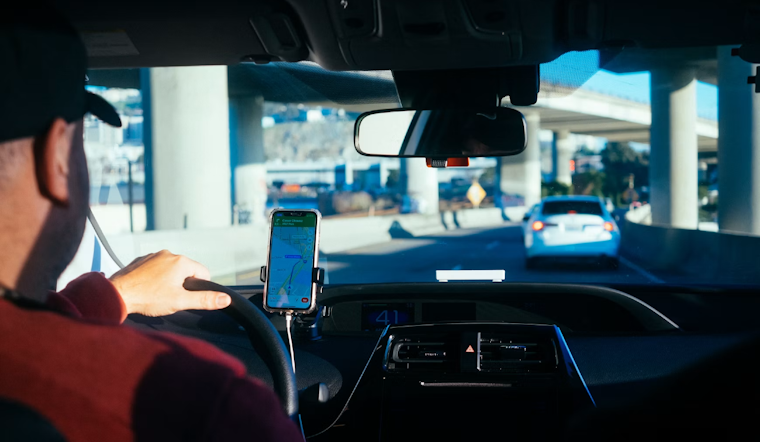
California Uber and Lyft drivers have cleared a major threshold toward forming what organizers describe as the biggest ride-hailing driver union in the world, after the state's Public Employment Relations Board notified the California Gig Workers Union that it had signed up at least 30% of the state's active drivers. Drivers and Service Employees International Union leaders celebrated the milestone at a press conference in Los Angeles, marking a new phase in a yearslong fight over how gig workers can organize while remaining classified as independent contractors.
The sign-up threshold clears the way for the California Gig Workers Union to represent ride-hailing drivers statewide, according to Pasadena Now. Uber and Lyft drivers in California are classified as independent contractors, a status that typically leaves gig workers with no right to bargain collectively. The new pathway instead runs through the state's Public Employment Relations Board, or PERB, which oversees the sectoral bargaining process created under state law.
PERB calculated that California had 100,307 active ride-hailing drivers in the first half of 2026, using a median threshold of 475 rides, which meant the California Gig Workers Union needed to collect roughly 30,000 driver authorization cards to hit the 30% mark, according to KQED. Following PERB's notification, a 30-day statutory waiting period began before automatic union certification takes effect. Certification could only be halted if a rival driver group submitted proof that 30% of active drivers oppose representation — a scenario PERB has said is unlikely since no competing driver organization currently meets eligibility standards.
A Law Built to Work Around Prop 22
The legal path drivers are using traces back to Assembly Bill 1340, the Transportation Network Company Drivers Labor Relations Act, which took effect January 1, 2026, and set up a state-supervised bargaining process without reclassifying drivers as employees. The law was designed to bypass California's Proposition 22, the 2020 ballot measure that nearly 59% of voters approved to keep gig drivers classified as independent contractors, a classification the California Supreme Court upheld in July 2024, according to CalMatters. Rather than reopening that fight, the state built what amounts to a middle ground through PERB.
That framework emerged from an August 2025 compromise among Governor Gavin Newsom, SEIU California, Uber, and Lyft. The companies dropped their opposition to driver bargaining in exchange for Senate Bill 371, which lowered mandatory uninsured and underinsured motorist insurance requirements from $1 million to $60,000 per person, effective this year, per Uber's newsroom. Hoodline previously reported on the rollout of that deal in its Sacramento union power shift coverage.
Under AB 1340, ride-hailing companies operating in California must submit quarterly driver lists to PERB detailing names and contact information for anyone completing at least 20 rides in six months. That disclosure requirement let organizers who cleared a 10% interest threshold reach drivers across the state for outreach, a mechanism explained by Jackson Lewis. Vikaas Shanker, a Fresno driver and leader of the new union, said the systems Uber and Lyft use silo and separate drivers from each other, making that statewide contact list essential to organizing.
What Drivers Want to Bargain Over
The California Gig Workers Union has said it has been preparing drivers for bargaining and expects to begin negotiations with ride-hailing companies by the end of 2026. Organizers say low pay will be a central issue, along with the effects of Uber and Lyft algorithms on drivers' work and the practice of drivers getting kicked off the apps. Riko Mendez, chief elected officer of SEIU Local 521 in San José, has said California has about 350,000 ride-hailing drivers, a figure that far exceeds PERB's narrower count of active drivers used to certify the union.
That gap reflects how PERB's formula for the 30% threshold counts only drivers who cross a median ride count within a six-month window, while labor leaders and legislative summaries estimate statewide union representation could eventually reach between 350,000 and 800,000 total rideshare drivers, according to CalMatters. Many drivers work casual or part-time schedules that fall below the threshold PERB uses to define an active driver.
California Follows Massachusetts and Illinois
California is the second state to allow ride-hailing drivers to unionize. Massachusetts became the first in the nation to certify a rideshare driver union in May 2026, when state regulators certified the App Drivers Union representing roughly 70,000 drivers following voter approval of a ballot measure in November 2024, according to GBH. Illinois followed on August 7, becoming the third state to grant collective bargaining rights to rideshare drivers when Governor JB Pritzker signed legislation covering more than 100,000 drivers and establishing a 4-cent-per-ride fee on transportation network companies to fund administrative costs, per Capitol News Illinois.
Assembly Bill 1340 explicitly limits union representation to passenger ride-hailing drivers working for platforms like Uber and Lyft, intentionally excluding app-based food and grocery delivery workers who drive for services such as DoorDash, Instacart, or Uber Eats. Those delivery workers were left out of the 2025 legislative compromise altogether, leaving open the question of whether they will eventually push for similar bargaining rights of their own in a future legislative session.





