

























































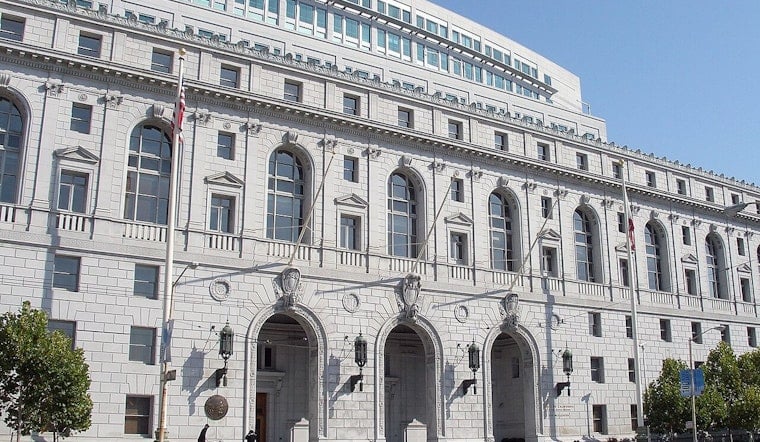
California's highest court has stripped the city of Carson of a legal defense it was using against Marathon Petroleum in a tax dispute worth as much as $370 million, ruling unanimously that cities cannot force taxpayers to exhaust local administrative appeals before suing for a refund under state law. The decision does not settle who actually owes what — that fight over how much of the Los Angeles Refinery's business belongs to Carson is still unresolved. But it does clear a major procedural roadblock for Marathon, whose Tesoro subsidiary has been trying to get its refund claim heard in court since a Carson audit accused it of underpaying taxes years ago.
Chief Justice Patricia Guerrero wrote the opinion in Tesoro Refining & Marketing Co. v. City of Carson, issued Monday, finding that California's Government Claims Act occupies the entire field of claims-presentation requirements against local public entities — meaning Carson's own municipal rules requiring a written request to the finance director and an appeal to the city manager before any lawsuit were preempted by state law, according to Courthouse News. As Mountain View Voice reports, the ruling gave Marathon Petroleum a procedural victory in its tax dispute with Carson, though it left untouched Marathon's underlying claim that Carson attributed too much of the refinery's business to the city rather than to Wilmington or elsewhere.
How the Dispute Started
The fight traces back to a Carson audit that concluded Tesoro — since acquired by Marathon Petroleum in 2018 — had underpaid its business license tax for a period spanning December 2017 through June 2018, per the court's opinion. Carson told Tesoro in 2022 that it owed additional taxes under the city's oil-industry business license tax, and Tesoro paid the disputed amount under protest before filing a refund claim. Tesoro had calculated the tax based on the business it believed actually took place inside Carson, according to its court petition, while Marathon has claimed some of the taxed refinery activity happened in Wilmington and other locations.
The tax itself stems from Measure C, a 0.25% gross receipts levy on oil refining and storage operations that Carson voters approved in November 2017 to address what Random Lengths News described at the time as a municipal fiscal emergency, with the tax expected to generate roughly $24 million annually. Marathon now operates the Carson and Wilmington refineries as a single unit known as the Los Angeles Refinery, which the Long Beach Business Journal has reported has a crude oil capacity of about 363,000 barrels per day, making it the largest refining complex on the West Coast. Per Mountain View Voice, that refinery accounts for 27% of California's crude oil capacity.
Lower Courts Sided With Carson — Until Now
Before Monday's ruling, both the Los Angeles County Superior Court and Division Four of the Second District Court of Appeal had sided with Carson, finding in March 2025 that Marathon should have exhausted the city's local refund process before going to court. The Supreme Court overturned those decisions, anchoring its reasoning in its own 2013 precedent, McWilliams v. City of Long Beach, which similarly held that the Government Claims Act governs tax refund claims against local governments statewide.
Carson was not fighting alone. The League of California Cities, the California State Association of Counties, and the Rural County Representatives of California filed joint amicus briefs backing the city, arguing that local administrative remedies are distinct from state claims-filing statutes and that letting taxpayers skip them would undercut local government oversight, according to filings reviewed by Courthouse News. Business groups on the other side argued the Government Claims Act was designed precisely to prevent companies from having to navigate a tangle of state statutes layered with local ordinances.
Settlement Talks Already Underway
Separately from the litigation, Carson has been pursuing a settlement with Marathon worth as much as $370 million, per Mountain View Voice. As part of moving toward that deal, the Carson City Council has conditionally rescinded a separate refinery tax measure it had approved — one that would have allowed the city to charge refineries up to $1 for every barrel of oil processed there — with the rescission contingent on the settlement being finalized.
Marathon Petroleum spokesperson Jamal T. Kheiry described California as one of the most costly business environments in the world and said additional taxes would carry significant implications for the refinery, potentially leading the company to reconsider its California operations, Mountain View Voice reported. Marathon Petroleum did not answer questions about the Supreme Court's decision when asked by the outlet. The Western States Petroleum Association, described by Mountain League Voice as California's largest oil lobby, supported Marathon in the case, while a Phillips 66 facility operating separately in Carson and neighboring Wilmington was also cited in coverage of the region's refining footprint.
What It Means for Other California Cities
The Supreme Court took up the case in May 2025 specifically to resolve whether local tax refund procedures are preempted under field-preemption doctrine, according to appellate analysis from GMSR Appellate Lawyers — a question whose answer now applies to every municipal jurisdiction in the state. Cities and counties across California had argued that taxpayers must complete local appeals before suing, warning that removing that requirement would weaken municipal control over tax administration. With the ruling now final, that procedural defense is no longer available to any California city or county facing a refund lawsuit, simplifying the path for businesses statewide to challenge local tax bills in court.
For Carson, located south of downtown Los Angeles, the immediate fight over how much Marathon Petroleum owes — or is owed back — remains open. The Supreme Court's decision addressed only whether Marathon had to use Carson's internal refund process or could go straight to court under state law; it did not resolve the underlying dispute over how much of the refinery's business should be counted as Carson's for tax purposes.





