

























































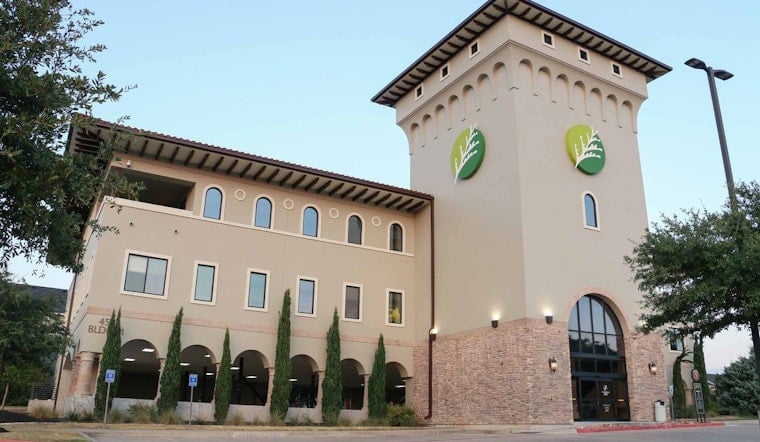
Cedar Park City Council voted Thursday to establish a Bond Advisory Task Force that will spend the fall deciding which capital projects make the cut for a possible 2027 bond election, as city leaders confront a preliminary wish list that already tops $300 million. The 15-member panel will work alongside city staff to whittle that list down to something the city can actually afford to borrow, with a recommendation expected to reach City Council before the end of the year.
The council's Wednesday vote came after members worked through unfinished decisions about several potential appointees, according to Community Impact. Each council member will appoint two task force members, while Mayor Jim Penniman-Morin will appoint the chair plus two additional members, and all appointees must live within Cedar Park city limits. Penniman-Morin said the task force will include “15 respected and informed residents” who will make recommendations to the city, and he plans to appoint former council member Eric Boyce as chair. Residents hoping to serve have until August 21 to submit an application to the city secretary, and the full council is set to vote on the final task force membership on August 27.
A $300 Million Wish List Meets Fiscal Reality
City staff, per Randy Lueders, the city's director of engineering and capital projects, compiled a preliminary project list based on Cedar Park's master plans that already exceeds $300 million. But the city's actual borrowing room is far tighter: Cedar Park has potential bond debt capacity of roughly $180 million to $240 million, and because construction costs are expected to climb over a six-to-eight-year buildout, the task force's realistic target will likely land closer to $136 million to $182 million.
That means the task force's central job is triage — selecting the most important projects from the preliminary list rather than simply approving everything on it. The group is expected to meet roughly seven times through the fall before submitting recommendations late in 2026, following the same structured process Cedar Park used for its 2007, 2015 and 2022 bond programs.
How Bonds Have Reshaped Cedar Park Before
General obligation bonds like these fund major public projects spanning transportation, utility infrastructure, city facilities and parks, and Cedar Park voters must approve any issuance before the city can sell the debt. Kevin Harris, a council member, said prior bond programs demonstrated the value of the mechanism, according to the same report. Cedar Park's most recent bond program, approved by voters in 2022, totaled $158.8 million and funded road expansions, shared-use paths, park upgrades and a public safety training facility.
Some of that 2022 money is only now translating into visible construction. Hoodline previously reported that Lakeline Park's expansion moves forward using a share of the $42.2 million in parks funding from that same 2022 package, after council awarded a $2.1 million architectural contract for the park's Phase 2 design in June. Bond dollars from the 2015 and 2022 cycles also financed some of the city's most visible civic landmarks, including the realignment of Bell Boulevard and construction of the new Cedar Park Public Library in the Bell District.
What Happens Between Now and the Ballot
If the task force's process holds to the city's usual timeline, City Council would vote in February 2027 to formally call a bond election, with Cedar Park eyeing a vote in May 2027. Texas election law requires municipal bond elections to fall on state uniform election dates, such as the first Saturday in May, and mandates that the official election order be adopted between 15 and 90 days before the vote.
Whatever amount voters ultimately see on the ballot, state law requires every bond proposition to carry the statement “THIS IS A PROPERTY TAX INCREASE,” regardless of whether the city actually plans to raise its tax rate. That mandatory language matters in Cedar Park's case because the city has kept its property tax rate flat in recent years — council adopted a rate of $0.36 per $100 of taxable valuation for the current fiscal year, with 46% of that revenue currently servicing existing debt and the remainder funding daily operations.
History suggests Cedar Park voters are receptive to these packages. In the 2015 bond election, voters approved all four propositions on the ballot, with support ranging from 59.87% for library facilities to 74.75% for streets and roads. The city's continued population growth — from 77,595 residents at the 2020 Census to an estimated 79,032 in 2025 — helps explain why demand for expanded infrastructure keeps building even after two decades of steady bond investment. Cedar Park's AAA bond rating allows it to borrow at favorable interest rates, and any bonds voters approve would still require formal legal review by the Texas Attorney General's office before the city could sell the securities in 2027.



