

























































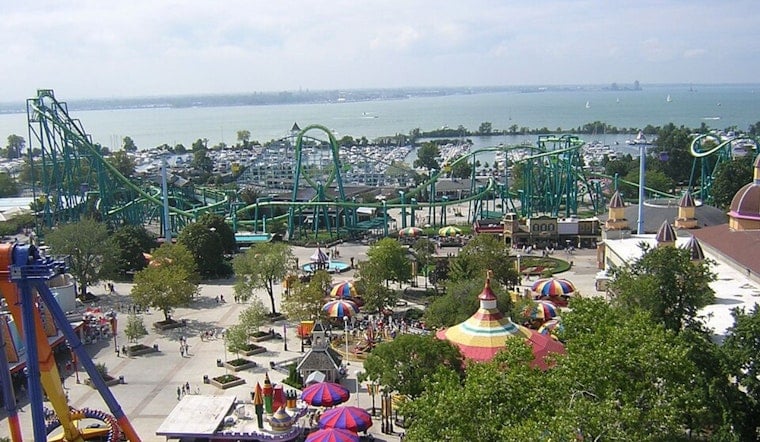
Cedar Point is doubling the price of its all-season Fast Lane pass from $999 to $1,999 for 2027, a jump that has season passholders at the Sandusky park grumbling about the cost of skipping the line on rides like Siren's Curse and Maverick. The park is also closing a loophole that had let some passholders buy the cheaper all-season Fast Lane product at other Six Flags parks and use it at Cedar Point instead.
The price hike was first detailed by Cleveland.com, whose report, authored by Susan Glaser, walks through the new pricing and the reaction from riders. Cameron Schmidt, a season passholder from Cleveland, told the outlet he will not pay $1,999 for the 2027 all-season pass. Schmidt said he waited about an hour for Maverick this summer, a wait that included a short rain-related delay, and about 45 minutes for Siren's Curse — but he still recommends Fast Lane for visitors spending just one day at the park.
Closing a Cross-Park Loophole
Until now, Six Flags Great America near Chicago offered its own all-season Fast Lane Ultimate Pass for $699, and that pass covered skip-the-line privileges at Cedar Point in 2026, per the same Cleveland.com report. Starting in 2027, the Great America pass will no longer cover Cedar Point, closing off a workaround that let some riders pay roughly a third of Cedar Point's list price for the same front-of-line access. Cedar Point's own all-season Fast Lane pass had also provided front-of-line access at other Six Flags parks in 2026, a perk tied to the broader integration following the 2024 merger of Cedar Fair and Six Flags.
Jeff Putz, who runs the enthusiast site PointBuzz.com, said adjusting the Fast Lane program was necessary. Cedar Point is also limiting how many all-season Fast Lane passes it sells overall; once those sell out, the park will make only daily Fast Lane passes available online or in the park, according to the report.
How the Numbers Have Grown
Cedar Point's Fast Lane program has a longer history of price increases than this year's jump alone. Daily Fast Lane passes debuted in 2012 at $30 to $55, the same year regular park admission cost $45 online and $52 at the gate. By 2026, daily Fast Lane passes online ran $159 to $209, while daily admission had climbed to $52 to $105.
The all-season version arrived for season passholders in 2019, when Cedar Point expanded the Fast Lane program and priced the add-on at $849. That figure rose to $999 by 2026 before this year's jump to $1,999. Cedar Point spokesman Tony Clark said Fast Lane continues to be extremely popular, and Fast Lane lines are usually shorter than regular lines, though on busy days they can still stretch to an hour or more. Cedar Point posted a 60-minute regular-line estimate and a 20-minute Fast Lane estimate for Siren's Curse on Sunday, illustrating the gap the pass is meant to close.
A Price Above Disney's Top Annual Pass
The new $1,999 price puts Cedar Point's all-season Fast Lane add-on above the cost of an entire year of admission at Walt Disney World. Disney's top annual pass, the Incredi-Pass, runs between $1,449 and $1,629 before tax, according to Inside the Magic — meaning Cedar Point riders are now paying more just to skip lines than Disney visitors pay for unlimited park entry all year.
Disney's own line-skipping system has its own evolution. Walt Disney World launched the original Fast Pass concept in 1999, and its Fast Pass system later let guests reserve times to skip lines on popular rides. Disney replaced that with the paid Lightning Lane program in 2021, which now includes three levels of skip-the-line passes; the top tier, Lightning Lane Premier Pass, can cost as much as $449 for a single day at Magic Kingdom. Universal Orlando's Epic Universe takes a different approach, selling standalone single-day line-skipping passes priced between $190 and $360 per person per day with no all-season option, according to Attractions Magazine — a structure that limits how many riders can buy their way past the queue at once.
What's Driving the Increase
Dennis Speigel, president of International Theme Park Services in Cincinnati, said skip-the-line passes are not going away and will remain part of the theme park industry. But Robert Niles, editor at Theme Park Insider, said raising Fast Lane add-on prices should reduce the number of guests using the product, and he said fewer Fast Lane users could restore Six Flags' incentive to improve ride operations generally rather than lean on paid line-skipping as a fix.
Matt Ouimet, a former Disney executive and Cedar Fair CEO, has said Fast Lane revenue helps parks build bigger and better rides — a rationale that echoes the timing of the increase. Six Flags announced a $1 billion capital investment plan across its portfolio in November 2024, targeting at least $800 million in annual pre-tax free cash flow by 2027, according to a Six Flags financial statement. The company has also faced financial strain: CEO Richard Zimmerman announced in August 2025 that he would step down by the end of the year following a second-quarter net loss of roughly $100 million and a 9 percent year-over-year attendance drop, according to FOX 5 Atlanta.
Six Flags is also reworking other pass tiers for 2027. Cedar Point's Gold Season Pass, which included access to all Six Flags parks in 2025, will be priced at $115 for new purchasers and $99 for renewals, up from $99 in 2026, and the Prestige Pass is rising to $350 for new buyers and $279 for renewers, up from $199, according to the Advertiser-Tribune. The Prestige Pass now includes one daily single-use Fast Lane pass along with free fountain drinks and preferred parking. Cedar Point has also restructured its season dining plan for 2027 into three tiers ranging from $125 for 20 seasonal meals to $399 for an unlimited plan with a two-hour meal interval.
John Hildebrandt, Cedar Point's general manager from 2005 to 2013, said the Fast Lane program did not produce measurable or significant backlash from regular riders when it debuted in 2012. Whether the same holds true for a $1,999 price tag remains to be seen, but for now Cedar Point maintains that its skip-the-line program remains extremely popular even as the cost of getting to the front of the line keeps climbing.





