

























































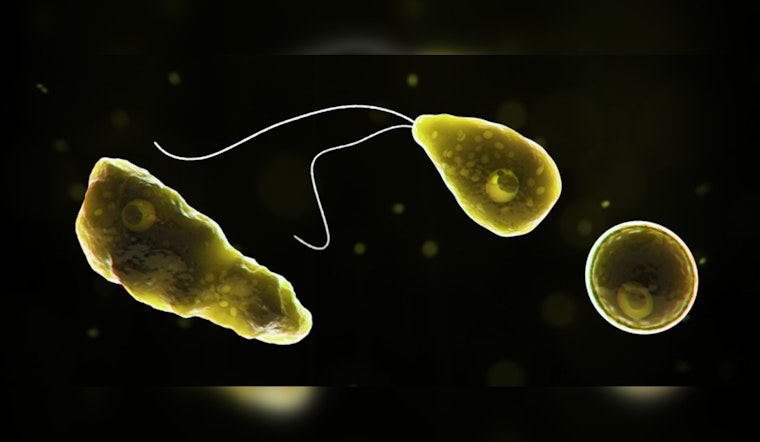
A teenager in central North Carolina is critically ill and receiving medical care after contracting Naegleria fowleri, the rare and almost always fatal organism known as the brain-eating amoeba. The North Carolina Department of Health and Human Services announced the case on Wednesday, offering no further details about the teen or their family in order to protect their privacy.
The case marks North Carolina's latest brush with a pathogen that has struck the state only a handful of times over more than three decades, according to the Charlotte Observer. State epidemiologist Zack Moore said the amoeba is present in North Carolina and across the United States, and he expressed sympathy for the teenager's family, friends and loved ones, per the same report. Naegleria fowleri is a single-celled organism found in fresh water that causes primary amebic meningoencephalitis, a brain infection that destroys brain tissue once it takes hold.
How the Infection Takes Hold
People become infected when water containing the amoeba goes up the nose, not through drinking it or through contact with another infected person. From there, nearly everyone who develops primary amebic meningoencephalitis dies from the disease, according to the Centers for Disease Control and Prevention. The organism grows best in warm water, thriving at temperatures around 115 degrees Fahrenheit, and infections typically occur during hot weather when freshwater temperatures climb and water levels drop.
Health officials recommend a handful of precautions for anyone swimming in warm, shallow freshwater: holding your nose shut or using nose clips, keeping your head above water, and avoiding activities that stir up sediment on the bottom of lakes, ponds, or slow-moving rivers. Swimmers are also urged to avoid jumping into warm freshwater when temperatures are high and water levels are low, and to keep their heads out of hot springs and thermal waters altogether. The North Carolina Department of Health and Human Services has said the amoeba cannot be entirely eliminated from the environment, since it occurs naturally in freshwater bodies and is not something municipal water systems test for.
A Rare but Recurring Threat in North Carolina
This is not North Carolina's first encounter with the amoeba. In 2016, a college student capsized a raft at the U.S. National Whitewater Center in Charlotte and later died of a Naegleria fowleri infection; the student's family eventually settled a lawsuit with the whitewater center. A Naegleria fowleri infection was also reported in Cumberland County in 2019, and in 2021, six-year-old Aven Moffat of Wake Forest died after contracting the amoeba from a private freshwater pond on his family's property, a case that led his family to found a foundation for amoeba awareness research, according to WSB-TV. Official CDC records also show two pediatric deaths from the disease in North Carolina back in September 1991, including a three-year-old girl infected after swimming in a private pond.
The timing of the central North Carolina case also lines up with a separate tragedy further south. On August 8, a Louisiana child died of a Naegleria fowleri infection shortly after her eighth birthday, prompting the Louisiana Department of Health to issue a statewide health alert to providers, according to the agency's own announcement. Louisiana had previously reported just three total cases of the infection between 1937 and 2025.
Why Diagnosis Is So Difficult
Primary amebic meningoencephalitis typically kills fewer than 10 people annually in the United States, according to the CDC, though researchers caution the real toll may be higher. A study published in Emerging Infectious Diseases and detailed by Avian Flu Diary estimated actual U.S. cases may average around 16 per year, suggesting that 70% to 80% of infections could go undiagnosed or unrecognized. Part of the challenge is that early symptoms, including fever and severe headache, frequently mimic bacterial meningitis, which can delay the correct diagnosis and treatment.
Warming freshwater temperatures tied to climate change are also expanding the amoeba's range northward and lengthening the seasonal window when infections can occur, according to research covered by Live Science. That shift helps explain why public health agencies outside the traditional Deep South are increasingly on alert for a pathogen once considered a regional rarity.
A Narrow Window for Treatment
Survival remains exceedingly rare, but not impossible. The CDC maintains an expanded-access protocol that supplies clinicians with miltefosine, an investigational anti-parasitic drug used alongside hypothermia therapy in the small number of cases where patients have survived the infection. The fatality rate for primary amebic meningoencephalitis exceeds 97%, with only four known survivors recorded among the 167 U.S. cases documented by the CDC between 1962 and 2024.
NCDHHS has not disclosed the specific body of water linked to the central North Carolina teenager's infection, and that detail remains under investigation as the agency continues to withhold identifying information about the patient and family. For now, state health officials are repeating the same guidance that has followed every prior North Carolina case: avoid submerging your head in warm, stagnant freshwater, and treat the rare but severe risk with caution rather than fear.





