

























































Scarlet Honolulu, the LGBTQ+ nightclub at 80 S. Pauahi St. in Chinatown, is preparing to head back to federal court against the Honolulu Liquor Commission, alleging the city has violated key terms of a $670,000 settlement reached in January 2025. Co-owner Robbie Baldwin says the club will file a new lawsuit soon, renewing discrimination and First Amendment retaliation claims against the commission just over a year after the two sides thought they'd put their legal battle to rest.
The dispute traces back to a federal civil rights lawsuit that Scarlet Honolulu Inc. and Gay Island Guide LLC filed against the city in October 2021, as reported by the Honolulu Star-Advertiser. That suit accused liquor investigators Jacob Fears and Catherine Fontaine of anti-gay harassment stretching over more than six years, and alleged broader anti-gay bias by liquor investigators, according to the same report. A federal judge previously dismissed claims against Fears and Fontaine in their official capacities, and the suit's most explosive allegation, that an investigator entered Scarlet unannounced through a back door in July 2021 and physically shoved a co-owner and a security guard, later became part of the historical record examined by Honolulu Civil Beat. That outlet also reported that the investigator denied the physical assault claims, even as a federal judge had previously found the plaintiffs' testimony credible.
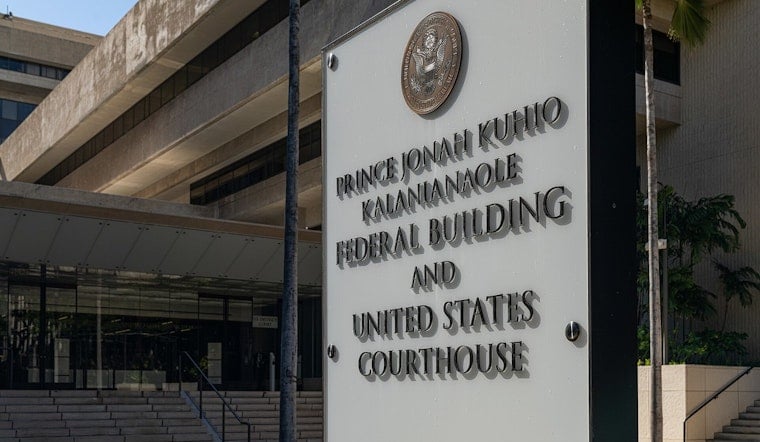
The case nearly went to trial. U.S. District Court Judge Leslie E. Kobayashi ruled on 33 motions in limine in September 2024 to prepare for a bench trial set to begin September 30 of that year, following a 2023 summary judgment ruling that let the case proceed, court filings reviewed by Justia Law show. Instead, the Honolulu City Council's Executive Matters and Legal Affairs Committee recommended approval of the $670,000 settlement on October 22, 2024, requiring the commission to adopt more than 15 operational reforms subject to quarterly federal oversight.
A Settlement Built on Reform, Now Accused of Unraveling
The 2025 settlement package was supposed to be comprehensive. It included expanded LGBTQ+ diversity training, updated enforcement policies, and a requirement that quarterly reports go to federal court documenting the commission's progress. The city also agreed to dismiss pending liquor violations against Scarlet and to implement broader reforms meant to improve oversight, accountability, and fairness at the commission. Separately, the commission amended its administrative rule on unlawful discrimination, effective February 16, 2025, a change described as a direct response to the litigation.
But according to the Star-Advertiser's reporting, Scarlet Honolulu now alleges the commission has resumed the very conduct the settlement was meant to prevent. The club claims the commission delayed action on its after-hours cabaret license application, conducted retaliatory inspections, and failed to fully comply with public records requests, and separately alleges that the commission and the Honolulu Police Department failed to fully respond to records requests. Scarlet reported that correspondence and conferences failed to resolve the disputes, and that the license delay has caused significant financial losses.
What Happened During the April Inspection
Much of the current fight centers on an April 17 inspection at Scarlet. Investigators found no underage drinking and confirmed employees possessed valid liquor cards, and issued no citations, but Scarlet called the visit a retaliatory raid. The club further alleges that investigator Glen Nishigata turned off his body-worn camera during the inspection and instructed subordinates to do the same.
Liquor Commission spokesperson Scott Humber acknowledged that one investigator turned off a camera near the end of the inspection and instructed others to do likewise, but said there were no allegations of misconduct while the cameras were off, according to the Star-Advertiser. Humber also said no Honolulu Police Department officers entered the nightclub or participated in the inspection. The commission has since instructed investigators to keep cameras operating throughout such inspections. A second inspection on May 9 produced similar results: investigators found that complaints alleging minors were served alcohol and that employees lacked liquor cards were unsubstantiated. Humber noted that Scarlet was inspected exactly twice in the past two years.
License Application Still Awaiting a Vote
Scarlet submitted its cabaret license application in March 2025. The application has since been deemed complete, but it has not been presented to the commission for a final vote, even as at least 17 other cabaret license applications from other businesses have been approved in the meantime, per the Star-Advertiser's reporting. A Class 11 Cabaret License is a significant financial prize in Honolulu's nightlife market: it allows venues with live or amplified entertainment and a dance floor to sell alcohol until 4 a.m., two hours longer than standard dispenser licenses, which must stop alcohol service at 2 a.m. under Honolulu Liquor Commission rules and Hawaii Revised Statutes § 281-31. Roughly 30 active cabaret licenses exist citywide, with more than 57% concentrated in Waikiki, making Scarlet's Chinatown application a comparative rarity subject to distinct zoning and neighborhood scrutiny.
Humber said the commission would not discriminate in favor of Scarlet over other applicants and intends to apply its rules and regulations equally to all licensees. He added that there are no outstanding public records requests from Scarlet concerning the inspections or the cabaret license, and that one prior request was denied because it involved an active investigation. Humber maintained the commission committed no wrongdoing and said the city will defend itself if Scarlet sues again.
An Internal Email Raises Fresh Questions
Adding another layer to the dispute, Anna Hirai wrote an email on February 28, 2025, questioning who was leaking information about the confidential Scarlet settlement. Humber confirmed the email was authentic but said Hirai's remarks referred to an attached news article rather than to the settlement itself, according to the Star-Advertiser's account.
The friction extends beyond Scarlet's own case. In June 2026, an affiliate of Scarlet Honolulu filed a formal complaint with the Board of Commissioners of the Honolulu Liquor Commission demanding equal enforcement against illegal 4 a.m. clubs following violent incidents in Kakaako, as Hawaii Free Press reported, accusing regulators of neglecting illicit after-hours operations while scrutinizing a compliant business. It's a pattern that echoes a 2022 City Council resolution, passed after two decades of documented complaints alleging malfeasance and anti-LGBTQ+ bias within the commission, which pressed the mayor to eliminate 24-hour summary shutdowns issued without a hearing.
Court Proceedings Resume
Attorney Carl Varady requested a status conference before Chief Magistrate Judge Kevin J. Mansfield in a letter filed July 20, and Mansfield held a teleconference hearing with Scarlet on July 24. Baldwin has said the underlying issue is First Amendment retaliation, and that the club will pursue a new federal lawsuit soon over discrimination and retaliation claims. It remains unresolved whether Mansfield will intervene under the existing settlement's court oversight or whether Scarlet will be forced to file a standalone civil rights lawsuit, and no date has been set for when the commission will hold a final vote on the cabaret license application.
The city, for its part, has continued investing in its legal defense of the case. The Honolulu City Council adopted Resolution 25-106 in April 2025 and Resolution 26-145 in July 2026 to retain the law firm Kobayashi Sugita & Goda LLP as special counsel for the commission specifically to handle post-settlement judicial monitoring. Baldwin has also been a visible figure in Honolulu nightlife policy beyond this dispute, having supported City Council Bill 28 in 2023, which led the Liquor Commission to distribute free starter doses of naloxone to liquor-licensed venues across Oahu.





