

























































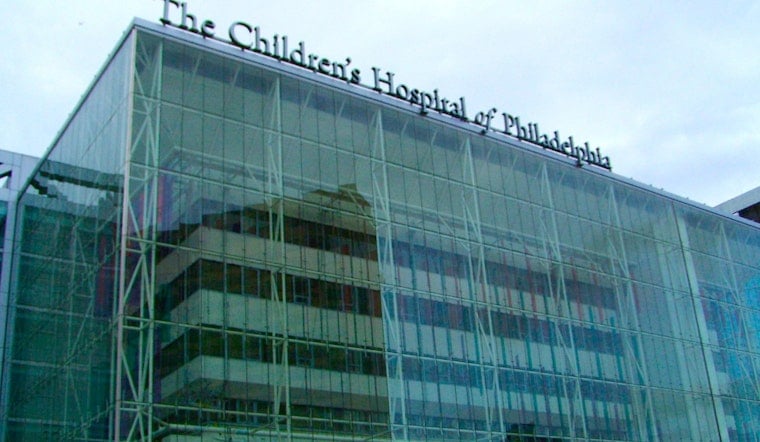
Children's Hospital of Philadelphia's fetal surgery program has performed its 500th prenatal repair of spina bifida, a milestone marked by the birth of a Baltimore baby boy named Owen inside the hospital's specialized delivery unit. Owen's mother, Cassandra Rodriguez, learned of her son's spina bifida diagnosis during a routine 20-week ultrasound visit with her doctor in Baltimore, then traveled to Philadelphia for surgery that repaired the opening in his spine months before he was born. He arrived at term on June 22 and went home on July 1.
Children's Hospital of Philadelphia announced the milestone Wednesday, according to PR Newswire. The 500th repair was performed at the hospital's Richard D. Wood Jr. Center for Fetal Diagnosis and Treatment, which opened in 1995 and has since carried out more than 2,700 fetal surgeries while caring for more than 36,214 expectant parents from all 50 states and more than 70 countries. "Performing 500 fetal MMC repairs underscores CHOP's position as the world's leading fetal surgery center," said Dr. N. Scott Adzick, founder and co-director of the center and principal investigator on the trial that established the surgery's benefits.
A Diagnosis in Baltimore, a Two-Day Evaluation in Philadelphia
Rodriguez learned in November that she was pregnant with her third child, and the spina bifida diagnosis came during that standard 20-week visit in Baltimore. She and her husband, Corey Rodriguez, traveled to Philadelphia in March for a comprehensive two-day fetal surgery evaluation, where she qualified for the open prenatal repair procedure. "From our first phone call, we felt extremely supported and cared for," Rodriguez said, according to the hospital's account.
How Open Prenatal Repair Works
Myelomeningocele, the most common and most severe form of spina bifida, leaves a section of the spinal cord exposed through an opening in the fetus's back. In open prenatal repair, surgeons close the tissue layers of the fetus's back in a watertight manner, protecting the spinal cord and nerves from neurotoxic amniotic fluid and reducing leakage of cerebrospinal fluid through the defect, per the hospital's account.
Not every fetal medicine center uses the open approach. A 2021 systematic review found that emerging fetoscopic, or minimally invasive, techniques eliminate the maternal uterine wall complications seen in open surgery — a 0% rate compared with 11% — but open repair still results in lower rates of surgical site leakage, 7% versus 30%, and fewer cases of premature rupture of membranes, according to a study published on PubMed.
Three Decades of Data Behind the Milestone
CHOP researchers began pioneering fetal surgery for spina bifida in the laboratory before moving to patients starting in 1998, and the hospital served as a lead site for the NIH-funded Management of Myelomeningocele Study beginning in 2003. That trial, known as MOMS, established that in-utero correction roughly halves the need for brain shunts and improves mobility compared with postnatal repair, according to findings in The New England Journal of Medicine, which reported shunt rates falling from 82% to 40% and 42% of prenatally treated children walking independently at 30 months, compared with 21% among those who had postnatal repair.
A follow-up study, MOMS2, tracked the same children into school age and found in JAMA Pediatrics that 51.3% of children who underwent prenatal repair could walk independently over community distances between ages 5 and 10, compared with 23.1% of those who had standard postnatal surgery. CHOP is now leading a third phase, MOMS3, which is evaluating the original prenatal and postnatal surgery groups as they continue to age.
How Common Is Spina Bifida, and Why Rates Vary
Estimates of how many babies are born with spina bifida vary by source: CHOP's announcement puts the rate at about 1 in 2,000 births in the United States, while the Centers for Disease Control and Prevention estimates it closer to 1 in 2,857 live births, or roughly 1,250 to 1,300 babies a year, according to the CDC. The agency also reports that Hispanic women have the highest spina bifida birth rate, at 3.80 per 10,000 live births, compared with 3.09 for non-Hispanic White women and 2.73 for Black women. That data comes even as the CDC has tracked a 28% to 35% nationwide drop in neural tube defects since a 1998 FDA mandate required folic acid fortification of enriched cereal grains, a change credited with averting roughly 1,300 cases of spina bifida and anencephaly annually.
A Lifelong Condition With Rising Adult Needs
Prenatal surgery is not a cure — it significantly reduces disability but does not eliminate it. As pediatric survival has improved, the population of adults living with spina bifida has grown substantially: a population modeling study estimated that 124,150 people were living with the condition in the United States in 2020, with adults between 30 and 80 making up two-thirds of that population, according to medRxiv. Lifetime medical care for a single patient has been estimated at $460,923 in 2009 dollars, per the Arizona Department of Health Services, underscoring the medical and financial stakes tied to interventions that reduce shunt dependence.
CHOP's Three-Decade Fetal Care Legacy
Children's Hospital of Philadelphia, founded in 1855 as the nation's first pediatric hospital, is a nonprofit charitable organization whose CHOP Care Network operates more than 50 primary care practices, specialty and surgical centers, urgent care sites, and community hospital alliances across Pennsylvania, New Jersey, and Delaware. Open fetal surgery for myelomeningocele was first performed in humans in 1997, following 1993 research in sheep that showed in-utero repair could preserve neurological function and reverse hindbrain herniation, according to research cited on PubMed.
Dr. Adzick, who has led the Wood Center since its founding and served 31 years as CHOP's Surgeon-in-Chief before stepping down from that role in 2026, per Children's Hospital of Philadelphia, said the milestone "reflects more than two decades of innovation, clinical excellence and research dedicated to improving outcomes for children with spina bifida." The 500th repair comes just under two weeks after Hoodline reported on federal funding cuts hitting CHOP, a financial strain now facing the hospital's broader research programs.
Where Owen Was Born
Owen arrived inside CHOP's Garbose Family Special Delivery Unit, the world's first birthing facility built inside a standalone pediatric hospital specifically for mothers carrying babies with known birth defects. The unit opened in June 2008 and marked its 5,000th delivery milestone in November 2022, according to a separate PR Newswire release. Hoodline previously covered CHOP's new Roberts Children's Health Building, part of the hospital's broader campus growth alongside its fetal care programs.



