

























































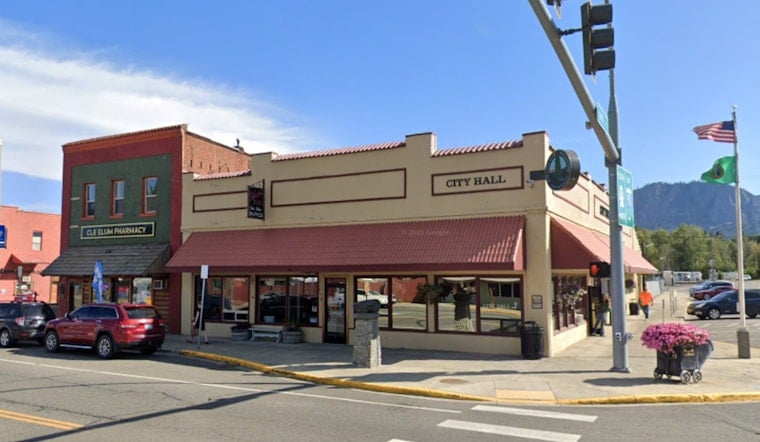
Cle Elum's city council voted unanimously to slap an emergency six-month moratorium on new data centers, but the small Kittitas County town's own preexisting development agreement could let a $200 million, 20-megawatt facility get built anyway. Blue Fern Development unveiled the proposal earlier this month for a 100,000-square-foot data center tucked inside a residential and commercial development near Interstate 90. The council's ban was meant to buy time to study the industry's strain on power, water and noise — but city officials now have to figure out whether the moratorium can even legally touch this particular project.
As reported by The Seattle Times, the council cited power demand, water consumption, mechanical noise, heat and emergency generators as the effects it wants to study before letting large computing facilities move forward. The moratorium, approved unanimously, is meant to give the city breathing room to form an advisory committee that will examine power capacity, water and wastewater systems, tax impacts and job creation. But the very development the ban targets sits on land already governed by an older agreement, and Cle Elum must now decide whether a data center counts as an already-permitted commercial or industrial use under that deal.
Blue Fern representative Ben Paulus told the council the facility would be a relatively small, research-sized operation employing 20 to 40 people full-time and generating significant property tax revenue for the city, according to the same report. Paulus said the project would cost about $200 million, draw roughly 20 megawatts of electricity, and rely on a closed-loop cooling system that reuses the same liquid through recirculation rather than constantly drawing fresh water. He estimated the cooling system would need about 80,000 gallons of water in its first year.
The Loophole a 2002 Agreement Could Open
The site in question is part of the 1,100-acre Bullfrog Flats property, which Blue Fern acquired in June 2025 from Sun 47 North LLC, according to Land Advisors Organization. That purchase came with rights to a master site plan first approved back in 2002, which already includes a 75-acre light industrial business park alongside planned housing. Under Washington's vested rights doctrine, a project is generally evaluated under the rules in effect when its application was filed — meaning a later moratorium typically cannot be applied retroactively to a project vested under an older agreement, per MRSC.
That legal wrinkle has already surfaced in council debate. Councilmember Steven Harper cautioned that the moratorium was not a magical fix and might not be able to override the existing development agreement, per the same report. Councilmember Beth Williams said the council still needs to verify whether Blue Fern's own claims about the project check out before drawing conclusions.
Grid Strain Fuels a Statewide Standoff
Puget Sound Energy, which supplies Cle Elum's electricity, has already determined the proposed facility could be reliably served and has backed the project moving forward, the report states. Blue Fern has agreed to fund the infrastructure upgrades needed to protect existing ratepayers from cost increases, according to Puget Sound Energy. For scale, the utility's territory also includes Microsoft's data centers under construction in Chelan County, which could end up more than ten times larger than the Cle Elum proposal.
The stakes extend well beyond one small town. A January report from the University of Washington Climate Risk Lab projected the state could face a 9-gigawatt electrical capacity shortfall by 2030, driven by AI data center growth, EV adoption and the retirement of fossil fuel plants. Puget Sound Energy has told regulators it will need more than 6,700 megawatts of new carbon-free generating capacity by 2030 to comply with Washington's Clean Energy Transformation Act, which requires ending coal generation and reaching greenhouse-gas-neutral electricity that same year, according to Puget Sound Energy's own regulatory filings.
A Statewide Scramble to Slow the AI Boom
Cle Elum isn't alone in reaching for the brakes. Washington lawmakers failed to pass House Bill 2515 in March, a measure that would have forced data centers drawing more than 20 megawatts to cover the full cost of grid expansion and disclose their power and water use, according to Columbia Basin Herald. Lawmakers did pass Senate Bill 6231, which stripped sales tax exemptions from equipment and labor used to refurbish existing data centers while leaving incentives for brand-new construction intact, per GeekWire. With statewide guardrails stalled, the same outlet reported that the Seattle City Council unanimously approved its own emergency one-year moratorium in June, halting new data centers over 20 megavolt-amperes after intense pushback against five proposed facilities.
Federal Way followed suit in July, enacting a 12-month moratorium to study electrical, water and noise impacts after residents pushed back on a proposed 1-million-square-foot industrial redevelopment, as reported by Seattle Weekly. The pattern isn't limited to Washington — Hoodline has tracked towns nationwide freezing data center growth from North Carolina to Utah as communities scramble to study grid and water impacts before committing to projects that can take years to fully power up.
What Happens Next in Cle Elum
An entity tied to the project, Bullfrog Flats LLC, filed an application in late May for a major modification to the Bullfrog urban growth area development agreement covering sales and marketing facilities, with a hearing examiner review set for Aug. 18, according to City of Cle Elum records. The city has also scheduled a separate public hearing for Sept. 8 where residents can weigh in directly on the data center proposal. With Cle Elum's official population estimated at just 2,215 as of April, per the Washington State Office of Financial Management, a project of this size could carry outsized weight for local infrastructure and tax rolls regardless of how the legal questions shake out.





