

























































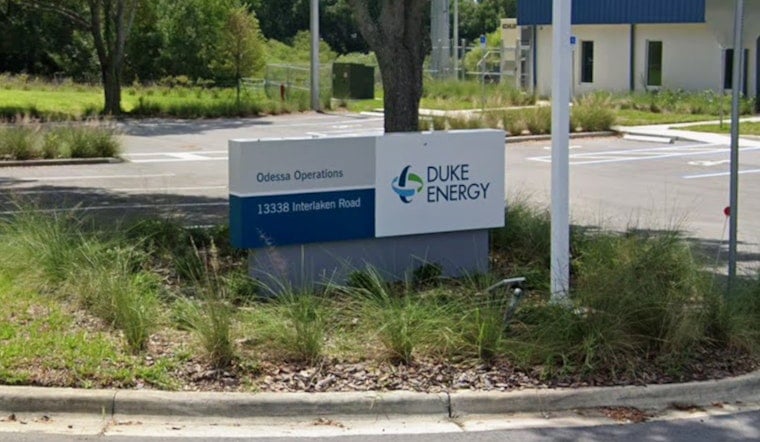
Clearwater City Council has approved a new 30-year agreement with Duke Energy, ending a two-year debate over whether the city should break away from the utility and build its own public power system. The vote keeps Duke Energy supplying electricity to Clearwater for the next three decades, even after a city-commissioned study suggested residents could see significant savings under a municipal utility.
The agreement, first reported by Tampa Bay 28, is non-exclusive and includes a window for the city to pursue public power in the future if it chooses. Jason Scott, a member of the local advocacy group Dump Duke, told the outlet that the group's fight is not over, even though the council sided with Duke Energy for now. Scott said a study and appraisal commissioned by the city showed customers could see savings, citing a potential 15% reduction on residents' bills and estimating residents could have saved up to $30 million in the first year alone.
Those numbers echo the broader case Dump Duke has made throughout the debate: that a feasibility study conducted for Clearwater by NewGen Strategies & Solutions projected a municipal electric utility could cut customer rates by 7% annually over the first five years and by 18% annually over the following 25 years, according to Florida Politics. The group had sought local control of the utility, arguing public ownership would ultimately cost residents less than staying with Duke Energy.
Why the Council Didn't Pull the Trigger
The math got complicated fast. City consultants estimated the cost to acquire Duke Energy's local distribution grid at $572 million, but a third-party analysis commissioned by Duke Energy from Concentric Energy Advisors put the real cost at more than $1.1 billion by 2029. Duke Energy stated its system was not for sale and signaled it would pursue eminent domain litigation if forced, a dispute that introduced serious financial uncertainty into council deliberations.
A February 2026 analysis by Florida TaxWatch, initiated at the request of state Senator Nick DiCeglie, urged Clearwater to abandon municipalization plans altogether, warning that acquisition through eminent domain would mean prolonged litigation, severe cost overruns, and financial exposure for local taxpayers. Under Florida Public Service Commission rules, investor-owned utilities hold exclusive territorial monopolies, meaning any city trying to form its own utility must either buy the private assets outright or seize them through court-supervised eminent domain, which requires paying full market value plus severance damages.
Clearwater City Council also questioned whether the city could restore power lines faster than Duke Energy after a hurricane, weighing severe weather and public safety heavily in its decision. Community members reportedly worried both about the time required to stand up a public utility from scratch and about the city taking on the operational pressure of running one, according to Tampa Bay 28's reporting.
What Clearwater Got in Return
The city didn't walk away empty-handed. In a side memorandum of agreement, Duke Energy committed to invest roughly $1.75 million to $2 million in local projects, including $600,000 for infrastructure resilience, $600,000 over 20 years for Coachman Park naming rights and shade structures, and $100,000 for a North Greenwood CRA container mall, according to reporting from Florida Politics. Tampa Bay 28 reported the investment figure at about $2 million.
Melissa Seixas, president of Duke Energy Florida, said economic development helps bring jobs and revenue and is a good fit for Duke Energy to work with Clearwater, per Tampa Bay 28's account of the deal. Duke Energy will also support economic development and resiliency efforts in the city as part of the new arrangement, while continuing to supply power and electricity under the 30-year franchise.
The deal also preserves Clearwater's 6% franchise fee, a meaningful piece of the city's budget. Utility franchise fees and utility taxes account for 5.5% and 9.0% of Clearwater's General Fund revenues respectively, per the city's FY 2024–2025 operating budget, underscoring how much municipal services depend on the existing arrangement with Duke Energy.
A Costly Study, and a Regional Debate That Isn't Over
Getting to this point wasn't cheap. Clearwater spent more than $600,000 in taxpayer funds studying municipalization, including $504,000 for the initial feasibility study and $100,000 for asset appraisal work, before council members ultimately decided the transition risks outweighed the potential upside, according to WUSF. Clearwater's prior 30-year franchise dated back to a 1995 contract with Florida Power Corporation, which was later acquired by Progress Energy before Duke Energy took over Progress in 2012; that original agreement expired at the end of 2025.
Duke Energy, meanwhile, has been expanding aggressively in Florida. Its parent company grew its five-year Florida capital plan to $87 billion in August 2025 after selling a 19.7% minority stake in Duke Energy Florida to Brookfield Asset Management for $6 billion in cash, while retaining an 80.3% controlling interest and operational oversight, according to a company release carried by PR Newswire.
Clearwater's decision is being watched closely just down the road. Neighboring St. Petersburg voted in June to allocate up to $590,000 for its own feasibility study as its 30-year franchise agreement with Duke Energy approaches its August 2026 expiration, a move Hoodline covered in St. Pete's earlier public power push. St. Petersburg leaders reportedly watched Clearwater's debate closely before launching their own review, and it remains an open question whether the city will reach the same conclusion or use Clearwater's outcome as leverage to extract similar community investments from Duke Energy.





