

























































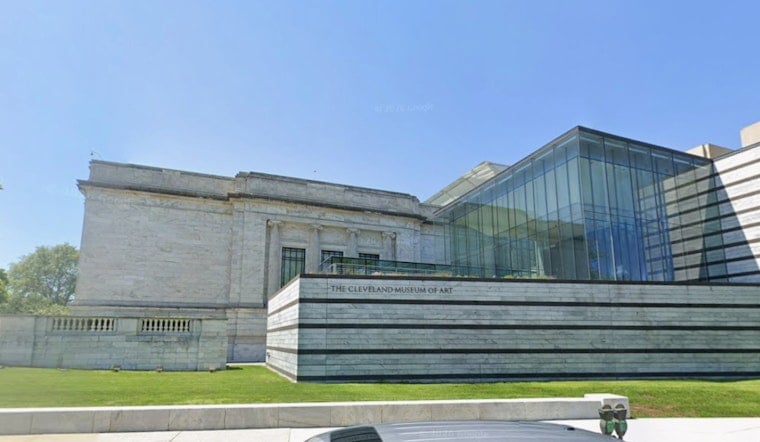
Six movies pushing a full century old are about to get a second life in Cleveland, complete with live musicians recreating the sound they would have had in a 1920s movie palace. The fifth annual Cleveland Silent Film Festival & Colloquium runs September 15 through 20, 2026, spreading screenings across the Cleveland Museum of Art, the Cleveland Institute of Art Cinematheque, and the Cleveland Grays Armory Museum.
The festival was founded in 2022 by harpist and scholar Emily Laurance, who started the event after noticing Northeast Ohio had no regular outlet for silent films paired with live musical accompaniment, according to FreshWater Cleveland. What began as scattered local screenings has since grown into an established regional autumn tradition, per the outlet. This year's lineup leans hard into the calendar: five of the six films being shown are celebrating their 100th anniversary, and the festival is spotlighting each on its centennial, as reported by Cleveland.com.
Keaton's Civil War Comedy Gets the Armory Treatment
The headliner is Buster Keaton's 1926 comedy The General, which follows a locomotive engineer racing to rescue his train and his fiancée from Union spies during the Civil War, and it's known for Keaton's own daring stunts and action sequences, according to Cleveland.com's reporting. The film screens September 17 at the Cleveland Grays Armory Museum, with Donnie Rankin performing live on the armory's Wurlitzer pipe organ. Rankin told Cleveland.com that the venue itself has ties to the film's period, and that the movie will be accompanied the way it would have been a century ago.
That organ is no ordinary instrument. The Wurlitzer Opus 2153 was originally installed in 1930 at the Warner Theatre in Erie, Pennsylvania, before it was relocated to Cleveland in 1970 and expanded to 17 ranks with more than 1,000 pipes, according to the Western Reserve Theatre Organ Society. Its capabilities include theatrical sound effects such as train whistles, sleigh bells and a 32-foot wood diaphone pipe, per the organ society, features that line up neatly with a film built around a runaway locomotive. The armory that houses it, built in 1894 at 1234 Bolivar Road by the private military company known as the Cleveland Grays, is listed on the National Register of Historic Places, according to the Grays Armory Museum.
The General was a commercial failure when it was first released, but it was later reassessed as a masterpiece and became part of the inaugural class selected for the Library of Congress's National Film Registry in 1989, according to the National Gallery of Art. That inaugural class included 25 films chosen for preservation as culturally significant American cinema, the museum notes.
A Lost Japanese Horror Film and a Restored Western
Also marking its 100th year is Teinosuke Kinugasa's A Page of Madness, an avant-garde Japanese film about a woman confined to a psychiatric hospital and the janitor husband trying to free her, according to Cleveland.com. It screens September 19 at the Cleveland Museum of Art. The film was considered lost for 45 years until Kinugasa himself rediscovered a surviving print in his storage shed in 1971, per the Cleveland Museum of Art, which also notes the experimental picture was produced in Kyoto by Japan's School of New Perceptions avant-garde group.
John Ford's 1926 Western 3 Bad Men, which follows three outlaws helping a young woman after her father is killed, screens September 16 at Gartner Auditorium inside the Cleveland Museum of Art. The screening will feature an improvised score by Jackie Warren and a pre-show talk by Grafton Nunes, a former president of the Cleveland Institute of Art and a John Ford film expert, per Cleveland.com. The print itself carries archival weight: the Museum of Modern Art restored the film from original nitrate elements and recreated its original silent-era color tinting, according to MoMA, which also notes 3 Bad Men was Ford's final silent Western before he returned to the genre in 1939 with Stagecoach.
Yiddish Theater, a Foreign Legion Epic and a Flash Flood
Not every film on the schedule is turning 100. East and West, a romantic comedy about a young Jewish American woman navigating her family's traditional Eastern European values, was released in 1923 and screens September 15 at the Cleveland Institute of Art Cinematheque. Laurance described it to Cleveland.com as an important document of early Yiddish theater and of star Molly Picon's talents. The screening will pair an original score performed by Donald Sosin and Alicia Svigals, who are collaborating on a comedy for the first time, per the outlet.
Beau Geste, the 1926 epic about three English brothers who join the French Foreign Legion in North Africa amid the mysterious disappearance of a family heirloom, closes the festival September 20 at the Cleveland Museum of Art. The film cost $900,000 to produce and grossed $1.5 million, becoming one of the decade's biggest hits and winning the Photoplay Medal of Honor for best picture, according to the San Francisco Silent Film Festival, which notes star Ronald Colman helped establish the mystery-adventure template for foreign legion cinema. The Johnstown Flood, a dramatization of the deadliest flash flood in American history starring George O'Brien, Janet Gaynor and Florence Gilbert, screens September 18 at the museum and is noted for its innovative special effects, per Cleveland.com. Rodney Sauer will lead a quintet performing a newly compiled score blending period music with improvisation for that screening, and Sauer separately leads his group in an original score elsewhere in the festival. His band, the Colorado-based Mont Alto Motion Picture Orchestra, was founded in 1994 and compiles scores from historic sheet music libraries, having recorded accompaniments for more than 150 silent films and scored releases for Criterion, Kino Lorber and Turner Classic Movies, according to the ensemble's own biography.
Tickets and a Cinematheque in Transition
Individual tickets for the festival cost $25, while an all-film pass covering all six movies costs $120, or $100 for festival members, according to Cleveland.com. Festival members and members of the participating venues also receive discounts on individual tickets. No Exit New Music Ensemble members will perform music by James Praznik as part of the programming as well.
The Cleveland Institute of Art Cinematheque, one of the festival's host venues, has its own recent changes. David Huffman was appointed director of the Cinematheque in May 2026, succeeding Bilgesu Sisman, who had taken over in 2024 following co-founder John Ewing's 40-year tenure, according to the Cleveland Institute of Art. Huffman previously spent more than 20 years at Cleveland Cinemas managing specialty and repertory programming, the institute notes. Founded in 1984, the Cinematheque operates out of the 300-seat Peter B. Lewis Theater, equipped with a 36-foot screen, 4K digital laser projection, dual 35mm film projection and Dolby Digital 7.1 surround sound, and it presents non-multiplex foreign, classic and independent cinema roughly 50 weekends a year.



