

























































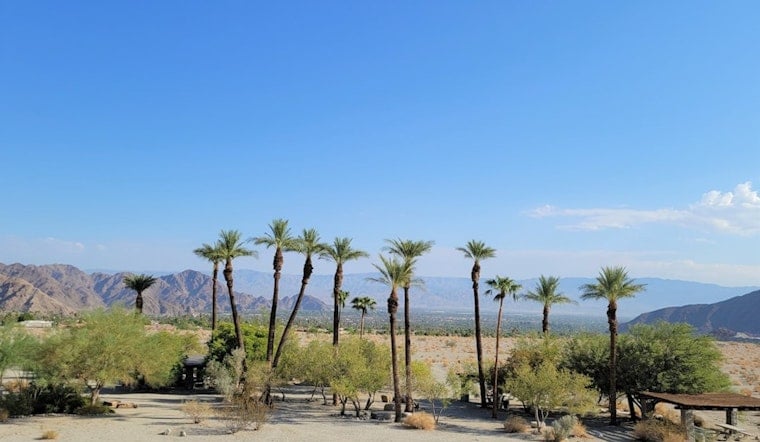
A 14-year-old in the Coachella Valley is being recognized by the city after noticing an elderly woman who appeared confused and in need of help, then staying by her side in triple-digit heat until assistance arrived. The woman, who was suffering from dementia, had been wandering alone, and the teenager stuck around, contacted her family, and waited for help to reach them.
The incident was reported by NBC Palm Springs, whose Roggin Report segment highlighted the case as an example of how bystanders can respond when someone appears to be in distress during extreme heat. The report noted that the Coachella Valley regularly sees temperatures of 100 degrees or higher, conditions that can pose serious additional risks for elderly people or anyone who becomes disoriented or needs assistance in the heat.
The same report also addressed a common hesitation many people feel before stepping in to help a stranger — the worry about becoming entangled in someone else's situation, whether legally or otherwise. That reluctance was part of why the segment turned to attorney Brian Harnick, of Roemer Harnick, to explain what protections actually exist for people who choose to act.
What the Law Actually Protects
Harnick discussed California's Good Samaritan laws, explaining that they provide legal protections in certain circumstances for people who attempt to help someone in an emergency. He said that people who feel uncomfortable directly approaching someone who appears to need assistance can instead contact emergency services and remain nearby while waiting for help to arrive, rather than feeling they must intervene physically themselves.
That guidance lines up with the state's underlying statute. Under California Health and Safety Code Section 1799.102, individuals who render emergency assistance in good faith at an emergency scene — whether medical or non-medical — are shielded from civil damages, as long as their actions don't amount to gross negligence or willful misconduct, according to FindLaw. Lawmakers specifically broadened that protection in 2009 to cover non-medical assistance, after a 2008 California Supreme Court ruling in Van Horn v. Watson had limited Good Samaritan immunity to medical care alone, as detailed by Krasney Law. That earlier ruling had stirred public anxiety that simply staying with someone in crisis, without administering formal medical care, could expose a bystander to a lawsuit — a fear the amendment was designed to erase.
Why Wandering Is So Common — and So Dangerous
The teenager's decision to stay put rather than walk away reflects just how often this kind of situation arises. According to the Alzheimer's Association, six out of ten people living with dementia will wander away from safety or caregivers at least once, and many do so repeatedly. Cognitive impairment can disrupt spatial navigation and memory so severely that people become disoriented even in familiar surroundings. According to National Institute on Aging guidance published July 9, 2024, families can help prevent wandering by keeping doors locked, placing STOP, DO NOT ENTER, or CLOSED signs on doors, and installing a smart doorbell or alarm.
The stakes climb sharply once heat enters the equation. The Centers for Disease Control and Prevention notes that aging diminishes the body's natural capacity to regulate core temperature, while conditions like dementia can impair a person's ability to recognize thirst, sense overheating, or take self-protective action, according to guidance published by heat.gov. Research cited by the Center for American Progress found that heat-related deaths among older adults nationwide rose 88 percent between 2018 and 2022 compared with the early 2000s, underscoring how quickly a wandering episode can turn life-threatening in extreme conditions.
A Heat Wave Bearing Down on the Desert
The rescue unfolded as Southern California moved through a stretch of prolonged heat in late August, with National Weather Service advisories noting inland daytime highs and overnight lows running 8 to 12 degrees above normal, per Patch. Hoodline reported this week that temperatures near Death Valley reached 121 degrees. In the Coachella Valley specifically, temperatures regularly climb to 100 degrees or higher for roughly four months of the year, and Palm Springs set an all-time record of 124 degrees in July 2024, according to the Coachella Valley Weekly.
Local officials have been building out responses to that reality. Hoodline previously reported that Palm Springs is planning its first Extreme Heat Summit, scheduled for September 18 at the Palm Springs Convention Center, where public health, emergency preparedness, and resilience will be among the topics discussed, according to an event listing on Eventbrite.
The City of Palm Springs says residents who are unable to escape the heat can consider using a Cooling Center. According to the City of Palm Springs, Mizell provides nutritional assistance to low-income seniors through daily meals.
Why Staying Close Matters
Search-and-rescue research cited in missing-person reporting shows that 94 percent of missing dementia patients who wander on foot are found within 1.5 miles of where they disappeared, a pattern Hoodline has noted in coverage of similar cases elsewhere, including a search for a missing 75-year-old with dementia in Groveport. Early detection near the point where someone first wandered off can make all the difference before conditions worsen.
In this case, that early detection came from a 14-year-old who noticed something was wrong and didn't look away. The teenager stayed with the woman, reached out to her family, and waited for help to arrive — actions the city has since recognized publicly. Fred Roggin, who reported the story for NBC Palm Springs, framed it as a clear example of what can happen when someone chooses to respond rather than pass by during a Coachella Valley heat wave.





