

























































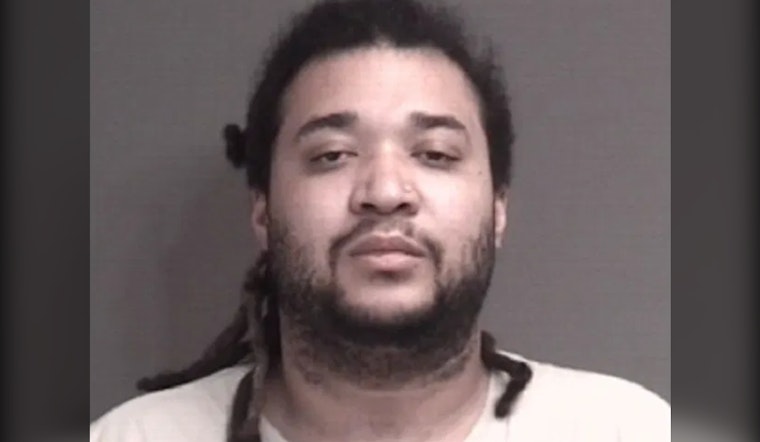
A 29-year-old Columbia man is being held without bond after a child in his care lost part of a finger to what deputies say was a gunshot wound, not the firework injury he initially described. Dontay Palmer now faces a felony charge of first-degree child endangerment following the August 6 incident, and a court hearing has already been scheduled as the case moves forward.
Deputies were called to University Hospital in Columbia on August 6 after a child arrived missing part of the left index finger, according to ABC 17 News. Palmer initially told authorities the child had lit a firework with a burning candle and had been left alone in a living room, per the probable cause statement cited by the outlet. But when deputies went to Palmer's home, the station reports they found no physical evidence of detonated fireworks — instead turning up four guns, including one near a high chair.
According to KXEO, deputies also found a spent shell casing, blood in the high chair, and a blood trail leading to a bedroom — details that directly conflicted with Palmer's account of a firework accident. Court documents cited by the station indicate another person told deputies that Palmer had said the child shot off their own finger. KXEO reports the search of Palmer's home turned up multiple firearms but nothing to support the fireworks explanation he initially gave.
Charges and What Comes Next
Palmer was arraigned Monday and is being held at the Boone County Jail without bond, per the same reporting. A confined docket hearing is scheduled for August 18, with a preliminary hearing set for September 24.
Under Missouri Revised Statutes § 568.045, endangering the welfare of a child in the first degree is generally a Class D felony, but the charge escalates to a Class C felony when physical injury occurs and to a Class B felony when the injury is serious, according to the Missouri Revisor of Statutes. A Class B felony carries a prison term of 5 to 15 years, while a Class C felony carries up to 7 years, according to FindLaw.
No State Law Requires Locking Up Guns
Missouri does not have a law mandating secure firearm storage or child access prevention, meaning gun owners generally do not face criminal liability for leaving unlocked firearms accessible to children unless a child is actually injured or exposed to substantial risk, according to the Giffords Law Center to Prevent Gun Violence. That leaves prosecutors relying on endangerment statutes after the fact rather than preventive storage requirements. The Boone County Sheriff's Office has noted that Missouri has allowed eligible adults 19 and older to carry concealed firearms without a permit since 2017, though optional permits are still issued locally.
The case lands amid data showing Missouri has one of the worst records in the country for unintentional shootings involving children. Everytown for Gun Safety Support Fund found the state recorded 129 unintentional shootings by children between 2015 and 2023, ranking fourth highest nationally, with 2023 marking the worst year on record nationwide for such incidents, exceeding 400 for the first time since tracking began. Firearms are the leading cause of death among Missouri youth, claiming an average of 108 children and teens each year, per Everytown for Gun Safety.
Local Push for Safer Storage
Younger children face particular risk from unsecured weapons. A study analyzing CDC WISQARS data from 2001 to 2019, published in PubMed Central in September 2025, found that 29% of firearm injury deaths among children ages 0 to 4 were caused by unintentional shootings.
In response to the broader trend, the City of Columbia partnered with the national Be SMART campaign last year to launch local public education efforts focused on secure firearm storage in homes. It remains a voluntary effort, since Missouri law places responsibility for those decisions on individual households rather than mandating locks or storage requirements. Palmer's case, still in its early stages, will next be heard at the confined docket hearing later this month before the preliminary hearing in September.





