

























































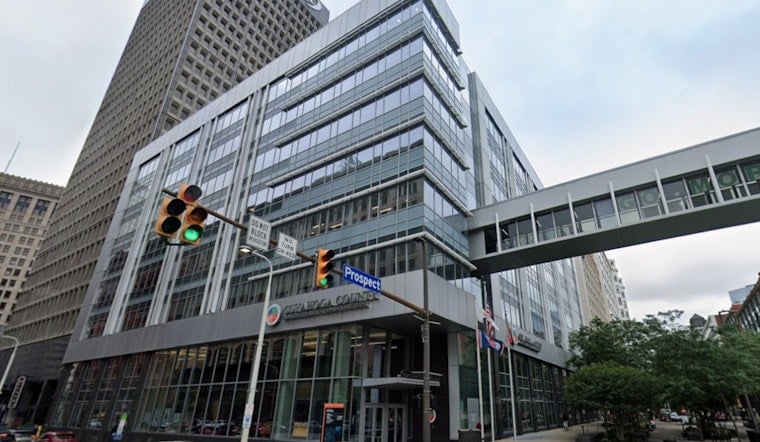
Cuyahoga County developers who land more than $1 million in county loans, grants or bonding assistance will now have to prove their projects give something back to the neighborhoods around them. County Council approved the new requirement unanimously at last week's meeting, creating a formal community benefits process that ties public subsidies to local hiring, job training, apprenticeships and other commitments.
The measure, detailed by Cleveland.com, was formally enacted as Ordinance No. O2026-0009, which creates Chapter 810 of the Cuyahoga County Code under the title Cuyahoga County Community Benefits Advisory Committee, according to Cuyahoga County Council. Developers seeking that level of county assistance must submit a community benefits plan outlining how their projects will produce broader public value in return for the public investment, and they'll later have to file reports documenting whether those promised benefits were actually delivered.
Councilmember Michael J. Houser Sr., who represents District 10, championed the requirement and began pushing the county to explore the policy about ten months before it passed, roughly in October 2025. “Public dollars should be invested back into the community,” Houser said, according to the same account. Houser was elected to County Council in November 2024 after previously serving as Executive Director of the Bond Accountability Commission and in senior leadership at the Cleveland Metropolitan School District, per Ballotpedia.
What Counts As a Community Benefit
The ordinance defines community benefits broadly. Qualifying commitments can include neighborhood improvements and public amenities, hiring local contractors or subcontractors, workforce development and job training, apprenticeships, educational partnerships, childcare access, environmental sustainability efforts, and contributions to a fund distributed back into the community. That last category flows into a dedicated Community Benefits Fund created within the county's General Fund specifically to account for developer cash contributions, per the county's legislation.
Councilmember Sunny Simon called the policy overdue at last week's council meeting, per the same report, and said partnership matters when the county extends low-interest loans or other investment to development projects. The new rule is modeled after Cleveland's existing Community Benefits Ordinance, first enacted as Ordinance No. 297-2023 in June 2023, which set a much lower financial trigger of $250,000 in city assistance, according to KJK. Under the city's framework, projects are further split into Standard CBAs for developments under $20 million and Expanded CBAs for those over $20 million, which require additional negotiated public perks beyond baseline local hiring targets, per the City of Cleveland.
How Oversight and Enforcement Will Work
The county's version establishes a seven-member Community Benefits Advisory Committee that will review projects and make recommendations for meeting the community benefits requirement. Its voting seats are split among the County Department of Development, the Fiscal Office, the Department of Housing and Community Development, the business community, a local community organization, County Council and an executive appointee, according to the ordinance. The committee's recommendations are nonbinding, but County Council and the county executive retain final approval authority over any deal.
Even without binding committee power, the ordinance gives the county real teeth. Developers must submit annual compliance reports, and if promised community benefits aren't delivered, the county could withhold funding, require repayment, or disqualify applicants from future economic incentives, per the county's ordinance language. The idea, as Cleveland.com frames it, is that projects receiving millions of dollars in taxpayer-backed assistance should provide something in return rather than simply pocketing public support.
A Regional Track Record and a Local Example
Cleveland's own municipal ordinance offers a preview of what scale is possible. Between its implementation in September 2023 and May 2026, the city's Community Benefits Ordinance produced 33 executed Community Benefits Agreements representing more than $959 million in total projected investment, according to Civic Capacity. County officials have pointed to the new cold storage facility along Opportunity Corridor Boulevard, built with county funding, as the kind of project the policy is meant to hold accountable going forward. That development, Cleveland Cold Storage, is a 156,000-square-foot freezer facility built by Weston that broke ground in June 2022 with multi-agency public support, per JobsOhio.
The new county rule also lands amid ongoing friction over how much scrutiny developer subsidies get before they're approved. Hoodline previously reported on a divided Cleveland City Council vote in March 2026, when members approved an $11.4 million TIF deal for the Westinghouse complex 9–5 despite objections that the tied community benefits agreement hadn't gotten adequate workforce committee review. With the county's $1 million threshold now sitting well above the city's $250,000 trigger, questions remain about how the two frameworks will interact on projects that draw both city and county support — and whether nonbinding committee reviews will be enough to keep developers accountable once the incentives are already flowing.




