

























































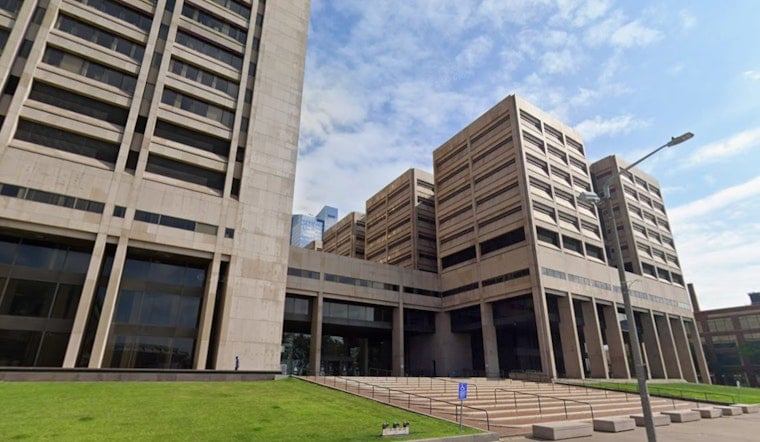
Four Democratic judicial candidates running for Cuyahoga County Common Pleas Court are refusing to sit for interviews with Judge4Yourself, the bar-association coalition that rates local judges on a scale from not recommended to excellent, according to the Cuyahoga County Democratic Party. The boycott revives a fight that has simmered for years over whether the ratings process is fair to Democratic candidates, even after the coalition rewrote its rules earlier this year to address complaints.
The four candidates sitting out interviews are Fallon Marie Radigan, Kira Krivosh, Daryl T. Dennie, and William Vodrey, fellow party members in contested Common Pleas races, according to reporting from Signal Cleveland. The candidates felt the Judge4Yourself process was not sufficiently objective, the party said. Judge4Yourself is run through a coalition of Cleveland-area bar associations and has issued candidate ratings since 2002, according to Judge4Yourself.com, which lists the Cleveland Metropolitan Bar Association, the Norman S. Minor Bar Association, and the Cuyahoga Criminal Defense Lawyers Association among the six legal organizations that operate it.
Party officials David Brock and Juanita Brent wrote in a note that Judge4Yourself attempts to control electoral results through a process favoring personal interactions between lawyers and judicial candidates. The party also acknowledged that elected judicial positions are inherently political, even as it argued that prioritizing rankings of Democratic candidates while the court system is under attack represents a missed opportunity, per the same note.
A Long-Running Standoff Over Ratings
This is not the first time Cuyahoga Democrats have pulled candidates from the process. During the November 2024 election cycle, six Democratic Common Pleas Court nominees declined the same bar-association interviews over similar transparency and ratings concerns. The Cuyahoga County Democratic Party has also pointed to a statistical grievance dating back further: in a statement, the party cited analysis showing Black judicial candidates scored 25% lower than white candidates in Judge4Yourself ratings between 2016 and 2018.
Judge4Yourself did not sit still after the criticism. In April, the coalition and Democrats met to discuss their differences, and the group enacted process reforms that eliminated the “Refused to Participate” ranking penalty for candidates who skip interviews, agreed to survey general bar-association memberships, and committed to disclosing interviewer lists in advance. Despite those concessions, most Democratic candidates opted out again this cycle, signaling that the party's mistrust runs deeper than any single procedural fix.
Bar Coalition Says It Will Rank Candidates Regardless
Judge4Yourself leadership said it will rank judicial candidates whether they participate in the process or not, meaning the four Democratic candidates could still receive ratings without ever sitting for an interview. Khalida Sims Jackson, speaking for the coalition, said all candidates should be evaluated regardless of the administration in the White House. She argued that in-person interviews with bar associations provide perspectives that may not appear on paper, and said political considerations cannot determine what information the public receives about judicial candidates.
Sims Jackson said Judge4Yourself remains willing to converse with the party despite the disagreements, and added that she is open to continuing discussions with the Cuyahoga County Democratic Party going forward. The coalition frames its ratings as offering voters a second opinion that could undercut political-party messaging in races where information is otherwise scarce.
Not every Democrat is sitting this cycle out. Judge Anita Laster Mays plans to sit for a Judge4Yourself interview in her race for the Eighth District Court of Appeals, and Common Pleas Judge William Vodrey participated in a Judge4Yourself interview this spring even though he faces a Republican opponent, Timothy Clary, in the November 3 general election, according to Ballotpedia.
Why Low-Information Judicial Races Matter
The dispute matters because judicial races typically provide voters with little information beyond party affiliation and campaign mailers. Ohio legislative findings from 2021 found that nearly one million Ohioans who vote in top-of-ticket presidential elections historically skip down-ballot judicial races entirely, a drop-off that has driven continuous state and local voter-education efforts. Judge4Yourself's evaluation protocols call for volunteer attorneys to assess candidates across four core standards — integrity, judicial temperament, diligence, and professional competence — while barring attorneys with active campaign roles from rating that specific race, according to Judge4Yourself's own published criteria.
The party's messaging strategy also collides with a recent statutory change. Under Ohio Senate Bill 80, enacted in September 2021, general election ballots for state Supreme Court and appellate court candidates must now display party affiliation, while Common Pleas and municipal court races remain listed without party labels. That means voters in the Common Pleas races at the center of this boycott will see no party cue on their ballots at all, raising the stakes for whatever information — or lack of it — reaches them beforehand.
A Domestic Relations Seat Adds Extra Scrutiny
One of the county's most closely watched contests this fall involves the Domestic Relations Division, where Democrat Sunny Simon faces Republican Judge Pamela A. Hawkins. Governor Mike DeWine appointed Hawkins to the bench in April, filling a seat that opened after former Judge Leslie Ann Celebrezze resigned in December and later pleaded guilty to felony record tampering following an FBI and county investigation into non-random case assignments, as Hoodline has previously reported. That scandal has kept public attention on Domestic Relations Court races even as the broader Judge4Yourself boycott plays out across the Common Pleas bench.
With the November 3 general election approaching, voters in several Cuyahoga County judicial races will now have to decide with a partial picture: ratings for candidates who sat for interviews, and ratings — or none at all — for the four Democrats who chose not to, per Judge4Yourself's stated intent to rank candidates regardless of participation.



