

























































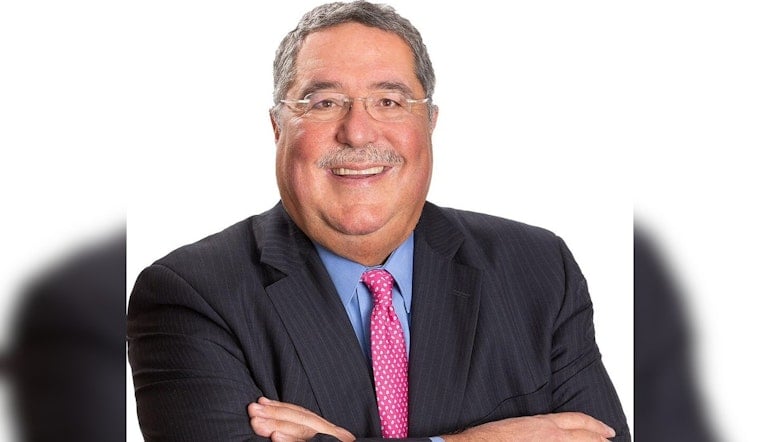
A defunct personal injury firm that once operated in Denver and Salt Lake City has beaten Colorado's best-known injury attorney to the courthouse, filing a lawsuit that seeks to head off a trademark fight over a single Google ad. Great West Injury Law and its founder, Christopher Fears, filed a federal declaratory judgment complaint on August 6, asking a judge to declare that the firm never infringed on trademarks owned by Franklin D. Azar & Associates, the Aurora-based firm widely known as “The Strong Arm.”
The filing, docketed as Case No. 1:26-cv-03583 in the U.S. District Court for the District of Colorado, comes with attorney Jeffrey H. Kass representing Great West, according to PacerMonitor. As Westword reports, the dispute traces back to a single advertisement that Great West ran through the digital marketing vendor Agree Media in 2024, featuring language telling potential clients: " Don't call Frank Azar, call us instead.
Great West says that one ad, bidding on Google keywords containing the Azar name, generated exactly one referral and cost the firm $2,500 in payment to Agree Media. According to the same account, Frank Azar later threatened to sue Great West and its owners unless they paid millions of dollars for that advertising, a demand the firm has called outrageous. Great West argues the modest scale of the campaign — a single ad with a click-through rate below 2 percent — cannot support a lawsuit of that size.
Azar's Trademark Fight Already Underway Against the Ad Vendor
Azar's firm already has an active trademark lawsuit against Agree Media itself, filed June 21, 2024, and docketed as Case No. 1:24-cv-01738 before District Judge S. Kato Crews and Magistrate Judge Timothy P. O'Hara in the same Colorado federal court. Azar's firm claims Agree Media infringed on its trademarks by bidding on Google keywords containing the Azar name to target potential clients for referral business. That case, per court records cited by the Westword report, is now in the summary judgment phase.
Great West contends that if Azar believed it was at fault for the ad, the firm should have been named in that original 2024 lawsuit rather than pursued separately later. Great West has also argued that its own trademarks — presumably referring to its brand identity — are not used at the point of sale, noting that it identified itself and displayed the Great West Injury Law brand on its retention agreements and medical waiver forms.
A Firm That No Longer Exists
Great West Injury Law is listed as permanently closed in both Denver and Salt Lake City, and its website, greatwestinjurylaw.com, is no longer operating. Founder Christopher Fears, however, remains active in the legal profession. He owns two registered law firms in Texas, Fears Law PLLC and Fears Dudley Injury Law, according to Justia Dockets, meaning the litigation continues even though the Great West brand itself has shut down.
Frank Azar's office did not respond to Westword's request for comment on the new filing. The firm has a documented history of aggressive trademark enforcement in this space: it received a $1.55 million settlement in 2024 from the Mike Slocumb Law Firm, an Alabama-based competitor, after alleging that the firm created misleading ads designed to make people believe they were clicking on Azar firm links.
Azar Calls Keyword Tactics a Scam, But Courts Have Set a High Bar
Following that settlement, Azar publicly called the alleged advertising tactic a scam, according to comments reported by CBS News and cited in the Westword account, alleging that callers were deceived into thinking they had reached his office. Founded in 1987, Franklin D. Azar & Associates is Colorado's largest plaintiff-centered personal injury firm, with roughly 60 attorneys across 14 locations including Aurora, Denver, Colorado Springs, and Pueblo, according to Super Lawyers. The firm says it has recovered more than $1.5 billion in total verdicts and settlements since its founding.
Great West's preemptive strategy relies on the federal Declaratory Judgment Act, 28 U.S.C. § 2201, which allows a party facing threatened litigation to ask a federal court to clarify its legal rights before a lawsuit is filed against it, provided an actual controversy exists. It's a mechanism that lets firms like Great West try to resolve liability questions on their own terms rather than waiting to be sued for potentially larger damages.
The legal landscape may not favor sweeping trademark claims over keyword advertising. Under Tenth Circuit precedent set in the 2013 case 1-800 Contacts, Inc. v. Lens.com, purchasing a competitor's trademark as a search keyword does not automatically amount to trademark infringement without proof that consumers were actually confused. Federal appellate courts across multiple circuits have reached similar conclusions in 2024, holding that bidding on trademarked keywords doesn't violate the Lanham Act so long as the resulting ad copy clearly identifies the real advertiser.
Discovery Battle Could Cut Both Ways
That evidentiary bar has already shaped the underlying Agree Media case. In a July 2025 ruling, Judge Crews affirmed a magistrate judge's order allowing discovery into Azar's own digital marketing practices, a move intended to test defense arguments that keyword bidding is standard practice across the personal injury legal marketing industry. Agree Media has argued in that case that online keyword bidding of this kind is common throughout the field, not evidence of intentional trademark infringement.
That discovery order means Azar's own advertising strategies could face scrutiny as both cases move forward — the pending Agree Media suit and now Great West's preemptive challenge. For a now-shuttered firm built around a single $2,500 ad buy, the outcome could determine whether a modest marketing misstep from 2024 turns into a costly legal reckoning, or whether it becomes another example of courts limiting how far trademark law can reach into the mechanics of online advertising.





