

























































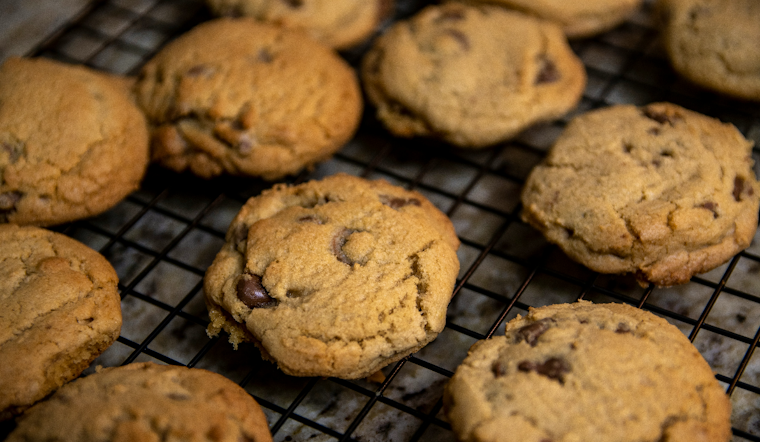
A cookie business that started on a front porch in Deltona has gotten big enough to need actual walls. The Snack Shack Bakery, known for selling deep-dish cookies and jumbo stuffed cookie sandwiches around the clock from a residential home, is opening its first brick-and-mortar storefront in Sanford, Florida.
The bakery's owners have found viral fame after building a loyal following through their self-serve setup at 679 Alexander Avenue in Deltona, according to a Facebook post detailing the operation. Customers browsed temperature-controlled coolers on the porch and paid through cashless apps like Cash App or Venmo, all on the honor system, with the setup running 24 hours a day. As reported by FOX 35 Orlando, reporter David Martin checked out the bakery himself as its owners' cookie sales grew into what the station describes as significant success.
The new location will place The Snack Shack roughly 12 to 18 driving miles south of the original Deltona home, crossing the line from Volusia County into Seminole County, per Uber's route data on the area. Sanford functions as a major commercial and dining hub for central Florida, linked to Volusia County by Interstate 4 and U.S. Route 17-92, the same source notes. That puts the bakery's next chapter within easy reach of the customer base it built at home.
Five Years of Recipe Testing Before Going Viral
The Snack Shack Bakery didn't happen overnight. Its founders spent five years developing their proprietary dessert recipes, engaging in small-batch baking starting around 2019 before officially launching the business in 2024, according to Macaroni KID West Volusia. The product line that eventually caught fire online centers on deep-dish cookies, jumbo stuffed cookie sandwiches, and dessert boxes made without artificial dyes or chemical additives, the bakery's Facebook page states, with menu updates and limited-edition restocks posted regularly for local pickup.
How Florida Law Made the Porch Model Possible
The porch operation was legal thanks to Florida's cottage food law, which exempts home-based food businesses from state food permits, licensing fees, and routine health inspections as long as annual gross revenue stays under $250,000, per Florida Statute § 500.80 as cited by Online Sunshine. Those cottage food operations are restricted to non-potentially hazardous, shelf-stable foods like cookies rather than anything requiring refrigeration for safety.
That $250,000 ceiling is relatively new. It took effect in July 2021 when Governor Ron DeSantis signed House Bill 663, the “Home Sweet Home Act,” raising the cap from a previous $50,000 limit, according to WKMG ClickOrlando. The same 2021 law also legalized direct mail orders and online payments for cottage food sellers within the state, opening the door to exactly the kind of app-based, contactless transactions The Snack Shack relied on.
The law also keeps local governments out of the picture. Florida's cottage food statute preempts regulation of home food businesses to the state level, meaning cities and counties cannot ban cottage food operations or pass conflicting rules of their own, according to the Florida Senate's bill analysis. That preemption is why a residential porch cooler in Deltona could operate without running into municipal zoning fights.
What Changes With a Storefront
Moving into a commercial space means leaving cottage food protections behind entirely. A storefront requires exiting cottage food status and obtaining a commercial Food Establishment Permit from the Florida Department of Agriculture and Consumer Services or the Department of Business and Professional Regulation, complete with commercial kitchen inspections, according to the Florida Department of Agriculture and Consumer Services. Commercial permits require compliance with health standards and local building codes that home operations never had to meet.
Under the old porch model, state law required every home-baked item sold directly to consumers to carry a label stating in at least 10-point type that the product was made in a cottage food operation not subject to Florida's food safety regulations, per UF/IFAS Blogs. Those labels also had to list ingredients by descending weight and disclose common allergens. Florida's $250,000 sales ceiling, paired with no state registration fees, gives it the highest revenue threshold for unlicensed home food businesses in the country, according to a comparison from Ardent Seller, which notes most states cap cottage food earnings between $20,000 and $50,000 annually.
It's that generous regulatory runway that let The Snack Shack Bakery grow from a five-year recipe-testing project into a round-the-clock porch business, and now into a full storefront across county lines. Whether the Deltona porch will keep operating alongside the new Sanford shop, and exactly when the storefront will open, remain open questions for now.




