

























































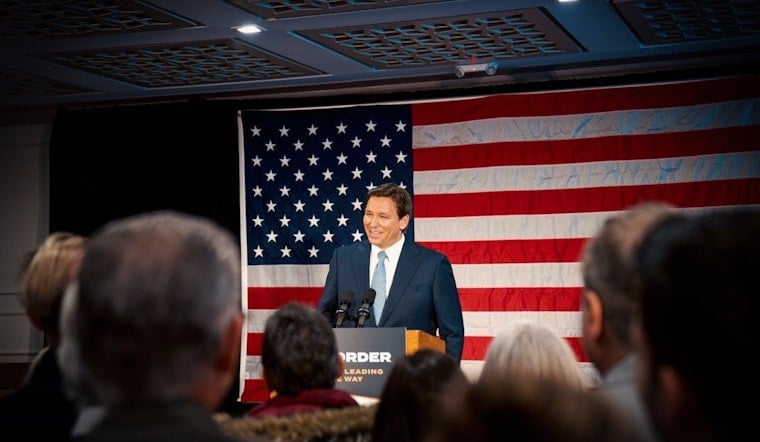
Florida families relying on EBT and TANF benefits could soon find their cards blocked at tattoo parlors, theme parks and tanning salons under a new restriction plan pushed by Governor Ron DeSantis. The proposal would limit public assistance purchases to essential needs like groceries, clothing and medicine, while cutting off a long list of other spending categories. DeSantis says Florida is already working with the Trump administration to get the changes approved.
What Would Be Off-Limits
According to FOX 13 News, the proposed policy would prohibit EBT and TANF purchases of tattoos, tanning beds, video games, theme park and entertainment tickets, adult material, fortune-telling services, tobacco and vaping products, and drugs or intoxicants. Benefits would remain usable for groceries, clothing and medicine, the outlet reports. DeSantis says the goal is to reduce fraud in the public assistance system while pushing recipients toward self-sufficiency.
Florida must first amend its state plan before officials can establish a timeline for rolling out the changes, per the same report. The DeSantis administration says it plans to submit a formal request to the Trump administration soon, and the governor has said he anticipates the proposal will move forward. Notably, the plan would not reduce the monthly dollar amount eligible families receive — DeSantis has said restricting what the money can buy would save taxpayer dollars while preserving assistance for people who qualify.
A Small Safety Net Already Stretched Thin
The stakes for Florida families are shaped by just how modest these benefits already are. Florida's Temporary Cash Assistance program pays a maximum of $303 per month to an eligible family of three with no other income, according to the Florida Department of Children and Families, which notes the state maintains one of the lowest TANF cash benefit levels in the nation. Eligibility is capped at roughly 38% of the Federal Poverty Level, with a 48-month lifetime limit for adult recipients. On the SNAP side, an average of 3.01 million Floridians — about 12.8% of the state's population — received monthly food benefits during fiscal year 2025, per USAFacts, which notes that participation peaked statewide in 2015 at 3.66 million recipients.
DeSantis has pointed to Florida's CARE Portal, a public-private network connecting churches and community nonprofits with families in need, as part of the plan to help recipients become self-sufficient and eventually move off assistance altogether. State officials have framed the faith-based partnerships as a way to support families without expanding cash assistance itself.
Legal Limits Already Tripped Up a Similar Effort
The TANF and EBT restrictions announced this month build on ground Florida had already broken with food stamps. The state's Department of Children and Families launched its “Florida Healthy SNAP” initiative in April, barring SNAP recipients from using benefits to buy sodas, energy drinks, candy and packaged desserts statewide — a rollout that required point-of-sale systems to be updated to block specific product codes, according to Propel.
But that broader push to restrict what SNAP dollars can buy has already run into a wall in federal court. A federal judge ruled in June that federal law already defines which foods can be purchased with SNAP benefits, according to Fox 13 News, and that ruling affected restrictions in 23 states. The case, Aragon v. Rollins, saw U.S. District Judge Amy Berman Jackson find that the USDA exceeded its statutory authority when it approved state waivers letting five states ban SNAP purchases of soda and candy, according to the Civil Rights Litigation Clearinghouse. Jackson determined that Congress explicitly defined SNAP-eligible foods and never authorized administrative waivers to strip out broad grocery categories.
That distinction matters for DeSantis's new proposal. Federal law under Section 3(k) of the Food and Nutrition Act of 2008 defines SNAP-eligible food broadly, excluding only alcohol, tobacco and hot foods ready for immediate consumption, according to the Food and Nutrition Administration. TANF cash assistance, however, operates under different rules. The Middle Class Tax Relief and Job Creation Act of 2012 already requires states receiving TANF block grants to block EBT cash transactions at liquor stores, casinos and adult entertainment venues, giving states like Florida more statutory room to maneuver on cash benefits than on SNAP food purchases.
Part of a Broader National Trend
Florida is not alone in tightening the reins on public assistance cards. At least 25 states have enacted laws placing restrictions on EBT usage beyond the federal baseline, according to the National Conference of State Legislatures, which notes approaches ranging from venue-based ATM blocks to itemized product bans, including in states like Texas. The Trump administration had approved similar SNAP food restriction waivers for 23 states as part of a “Make America Healthy Again” initiative before the June court ruling intervened.
Item-level restrictions also create technical headaches beyond the legal questions. Research published in March found that state EBT purchase restrictions frequently spill over into co-administered federal programs like Summer EBT, which provides $120 per child in food funds using the same retail checkout infrastructure, according to the Center on Budget and Policy Priorities. Retailers must continuously update store register software to flag newly prohibited product codes, the group notes, a burden that would likely grow if Florida's list of banned TANF and EBT purchases takes effect statewide.





