

























































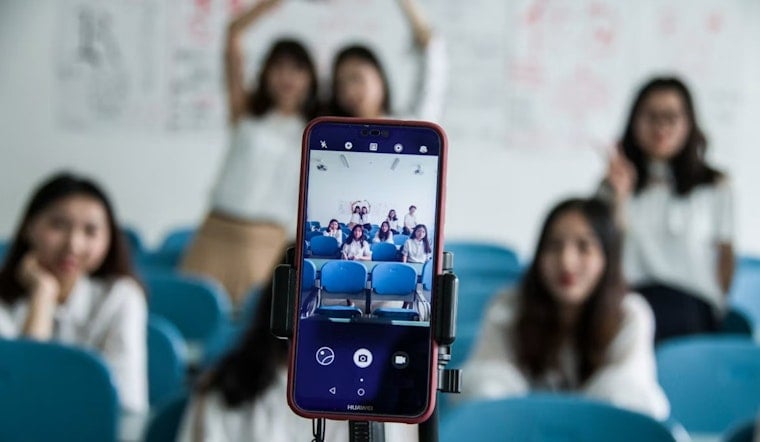
Detroit students will need to keep their phones out of sight from the moment they walk into class until the final bell rings, starting next Monday. Detroit Public Schools Community District Superintendent Dr. Nikolai Vitti told families in a message sent yesterday that the district expects cell phones to remain unused from the entry bell to the dismissal bell across all campuses beginning August 24.
The new rule is not a DPSCD invention. It stems from a Michigan law requiring every public school district and charter academy in the state to adopt some form of student phone restriction for the 2026–2027 school year, as reported by FOX 2 Detroit. Under that statute, Michigan public schools banned phones from class starting this school year, though the law leaves the details of enforcement up to individual districts.
That flexibility means Detroit families won't see a single, uniform rule across every building. Instead, individual DPSCD schools will communicate whether devices are collected and returned daily or whether students must keep phones turned off and put away themselves, according to the district. Some Detroit high schools plan to permit cell phone use during lunchtime only, giving older students a narrow window to check in on their phones during the day.
How Parents Are Supposed to Reach Their Kids
The bell-to-bell restriction has raised an obvious question for parents: what happens if they need to reach a child during the school day? DPSCD's guidance instructs parents needing to relay time-sensitive messages to contact school main offices directly rather than texting students, with office staff facilitating urgent contact so classroom instruction isn't interrupted.
State lawmakers built in several carve-outs when they wrote the underlying statute. Michigan's law allows exemptions for specific teacher-approved academic tasks, health-related exemptions for medical monitoring devices, emergency protocols, and special education plans. Schools may store confiscated phones in lockers or locked pouches, and devices can be returned to students during lunch or breaks depending on local policy.
The Law's Path Through Lansing
The policy traces back to Governor Gretchen Whitmer signing House Bill 4141 into law in February as Public Act 2 of 2026, a bill she championed during her 2025 State of the State address. The Michigan House passed the measure 99-10 in mid-January, followed by a 34-1 Senate vote about a week later, according to Michigan Advance, which credited state Rep. Mark Tisdel and state Sen. Dayna Polehanki with steering the bipartisan deal after earlier versions of the bill stalled. Whitmer said at the time that she led the effort to pass the legislation, arguing that students' grades increase when they put their phones down and that the bills would prioritize academic success and support youth mental health.
A companion measure, Senate Bill 495, was signed the same day as Public Act 1 of 2026 and requires local school emergency operations plans to spell out exactly when and how students may use personal devices during emergencies, according to Miller Canfield. The two bills were tie-barred together, pairing the classroom distraction crackdown with protections for parents worried about losing contact with their kids in a crisis. The statute's restrictions target smartphones and other internet-connected devices, but basic flip phones without web browsing or third-party apps remain exempt, per Civic Media.
Part of a Bigger National Shift
Detroit's rollout lands amid a wave of similar policies nationwide. Michigan became one of at least 40 states that have passed laws, executive orders, or regulations restricting student phone use during the school day, according to the American Legislative Exchange Council. Public opinion on the trend, however, splits sharply by age. A Pew Research Center survey found 77% of U.S. adults support in-class phone bans for middle and high schoolers, up from 68% in late 2024, while a separate January Pew survey found only 41% of teens ages 13 to 17 favored classroom restrictions.
Research on the actual effects of these bans is still emerging. A National Bureau of Economic Research study found that locking phone policies cut personal in-class device use from 61% down to 13%, though the change showed little immediate impact on standardized test scores, as reported by Gizmodo. Teachers in that research reported noticeably better classroom engagement even before test scores moved.
Detroit officials are pairing the phone restriction with other efforts aimed at getting students to school and keeping them there. Mayor Mary Sheffield announced earlier this month that the city's Ride to Rise program, which provides free year-round DDOT transit for Detroit students, is now permanent thanks to $1 million in state funding, according to CBS News Detroit. The city is also deploying transit ambassadors to help student riders on their routes, tying the classroom-focus push to a broader attendance strategy as the new school year begins.




