

























































David Anthony Queen was 42 years old when he set out for his shift at a Baltimore McDonald's on November 6, 2006. He never made it there. His mother reported him missing that December, and for nearly two decades, no one knew what happened to him — until officials in York County, Pennsylvania, announced this week that his identity had finally been confirmed through DNA testing.
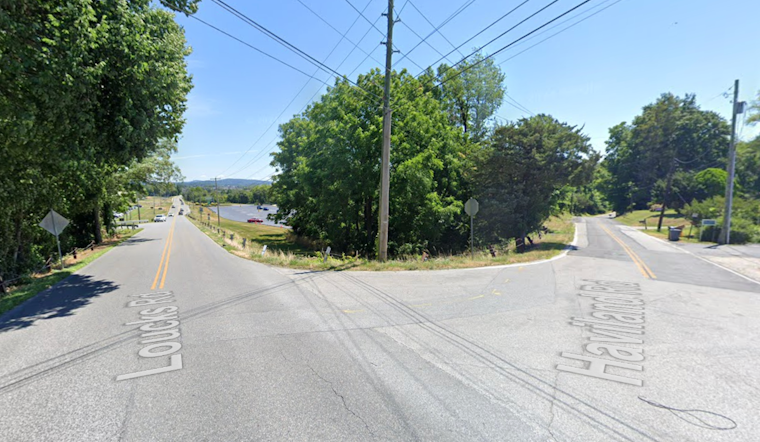
Queen's skeletal remains were discovered on November 18, 2013, by a tree-trimming crew working near the intersection of Loucks Road and Haviland Road in West Manchester Township, according to the National Missing and Unidentified Persons System. That put the remains roughly seven years after Queen was first reported missing, and about 50 miles north of Baltimore, connected by the Interstate 83 corridor, per Realtor.com. York County District Attorney Tim Barker, West Manchester Township Police, and York County Coroner Tania Zech formally announced the identification on Wednesday, appealing to residents in both Pennsylvania and the Baltimore area for any information related to Queen's 2006 disappearance, according to Daily Voice.
Evidence at the Scene Pointed to a Local Life Cut Short
Investigators recovered a black leather jacket, small Knocker brand boxer shorts with a blue-and-red check pattern, purple Mongoose sunglasses, and an upper denture plate alongside the remains, according to the FBI. Forensic examination of the bones revealed signs of physical trauma, which led the York County Coroner's Office and local law enforcement to formally rule the death a homicide, NamUs reports. Barker is investigating Queen's death as a homicide, and per WBAL News Radio's report on the announcement, he said his office and the West Manchester Township Police Department will not rest until the truth is found.
Barker also said, according to the station, that York County should provide solutions and pursue justice for everyone connected to the Baltimore community, and he asked anyone with information about Queen to come forward. He said his office will pursue justice through the conclusion of the case, the outlet reported.
A Years-Long Scientific Detour to a Name
In 2016, West Manchester Township Police sent the remains to the University of South Florida Forensic Anthropology Laboratory, where isotopic analysis of bone and teeth showed the decedent had spent his early childhood in the southeastern United States and consumed a diet higher in corn maize than average, per NamUs. That analysis was one of several scientific steps investigators took to try to narrow down who the man might have been, long before genetic genealogy entered the case.
Early forensic estimates initially misidentified the remains as belonging to a Caucasian or Hispanic male, but subsequent DNA sequencing revealed the victim had approximately 75 percent sub-Saharan African and 7 percent North Atlantic ancestry, according to reporting shared via Facebook by WBAL Radio. That misclassification appears to have been a major roadblock, complicating efforts to match the remains against missing persons reports for years.
Genetic Genealogists Took Over a Cold Case
Although Queen's remains were found in 2013, local police eventually turned the case over to the DNA Doe Project, whose genetic genealogists conducted DNA testing over what the station described as 13 years to reach an identification. The volunteer nonprofit, founded in 2017, has used investigative genetic genealogy and public databases such as GEDmatch to identify more than 160 unidentified deceased individuals across North America, according to a video reported by WRAL. Queen's case adds to that growing tally of cold cases the organization has helped close nationwide.
With Queen's identity confirmed, investigators still have to determine how he ended up roughly 50 miles from home and who is responsible for his death. Barker's office is treating the case as an active homicide investigation, and authorities are asking anyone with information — whether in the Baltimore metro area or in southern Pennsylvania — to come forward as the search for answers continues.





