

























































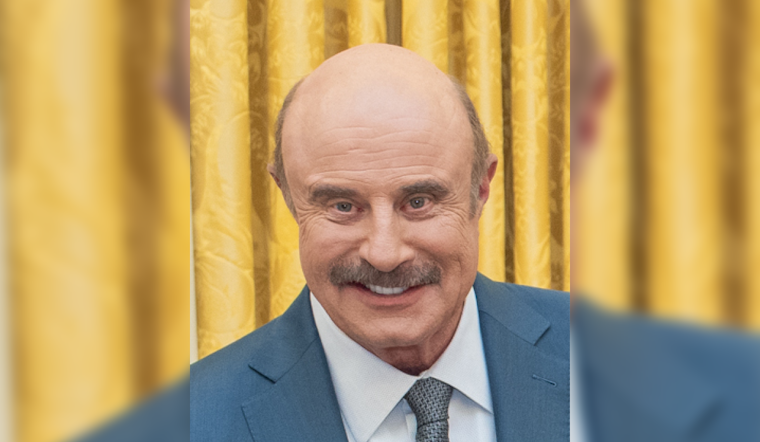
Jerry Sharell spent a decade as Phil McGraw's most trusted spokesman, defending the television psychologist through some of his messiest public battles. Now Sharell is suing his former boss, alleging he was frozen out of McGraw's Texas operation, demoted to contractor status, and ultimately pushed out because he is openly gay.
The lawsuit, filed August 20 in Los Angeles County Superior Court, accuses McGraw and his companies of violating California's Fair Employment and Housing Act through sexual orientation discrimination, hostile work environment harassment, and unlawful retaliation, according to the Los Angeles Times. Sharell worked for McGraw for roughly ten years, dating back to when McGraw recruited him to keep working for him after leaving CBS in 2023, per the newspaper's report.
Sharell had previously served nearly a decade as Vice President and Executive Director of Communications for CBS Television Distribution and Peteski Productions, where he issued official media defenses for McGraw during high-profile litigation, including a 2021 lawsuit over a Utah youth facility, according to a Paramount Press Express release from that era. The lawsuit alleges that after years of that loyalty, Sharell was treated very differently once McGraw moved his operation to Texas.
The Texas Migration and an Alleged Snub
McGraw relocated his production operations from Los Angeles to the Dallas-Fort Worth area in 2023, moving a core group of roughly 20 employees while leaving California-based staff behind, the Times reports. Sharell alleges he was intentionally excluded from that migrating group because he is openly homosexual, and he began traveling monthly to Merit Street's Dallas headquarters starting in spring 2024 even though McGraw had told him he would remain in California, according to the lawsuit.
The complaint also alleges that an IT employee at the company remarked there were too many homosexual people around and that it was evil. Sharell claims that Pastor D, who prayed weekly with employees at the Dallas headquarters and led prayer services at an open house for advertisers and investors, left prayer cards on the desks of employees who did not participate. The lawsuit further alleges employees were asked to sign a statement of faith declaring devotion to Jesus.
Perhaps the most pointed allegation in the suit is a comment Sharell attributes directly to McGraw: that Sharell was gayer than a fruit basket and was not listening. The Los Angeles Times report does not indicate that McGraw's camp has separately addressed that specific remark.
From Employee to Contractor, With a Pay Cut
According to the lawsuit, Sharell continued performing publicity and support work for McGraw and his enterprises, dealing with company executives and receiving assignments and direction from McGraw himself, while his role quietly changed from employee with benefits to independent contractor. That shift meant losing health coverage and other benefits, and the complaint says his compensation was cut by 30 percent. Sharell says he accepted the new arrangement under duress and stress, and that he felt singled out or targeted even as he says he continued to secure media placements and worked through Merit Street's bankruptcy and the establishment of Envoy Media.
Ken Solomon, who served as chief executive of Envoy Media, allegedly reminded Sharell that McGraw valued loyalty, according to the lawsuit. Sharell says he was later singled out again before being put on hiatus. In March 2026, Solomon informed Sharell that his position was being put on hiatus due to financial considerations — even though, per the lawsuit, other employees were not put on hiatus or had their salaries reduced at that time.
The Bankruptcy That Swallowed Merit Street
Sharell's ordeal unfolded against the backdrop of a corporate collapse. McGraw launched Merit Street Media as a television network startup in 2024, structured as a joint venture in which he owned 66.5 percent and Trinity Broadcasting Network owned 28.5 percent, according to court filings reported by the A.V. Club. Those same filings showed text disclosures in which McGraw described a plan to reduce TBN to a passive investor as a gangster move, and Merit Street ultimately sued Trinity Broadcasting Network, described as the largest Christian-based network.
Merit Street filed for bankruptcy protection in 2025, and a federal bankruptcy judge later found evidence that McGraw had deleted text messages to conceal plans favoring certain creditors over others, according to FOX 4 Dallas. The judge ultimately ordered Merit Street liquidated, and critics accused McGraw of filing for bankruptcy in bad faith to escape creditors and fund his next venture, Envoy Media, which he launched around the same period. A spokesperson for McGraw's production company denied that he destroyed evidence and denied that the bankruptcy was filed in bad faith, saying at the time that the company was appealing the ruling, per the station's report.
The bankruptcy also exposed the scale of Merit Street's debts. The Professional Bull Riders league filed objections in the case claiming Merit Street owed it $181 million after reneging on a four-year media rights deal, and Peteski Productions, McGraw's wholly owned production company, separately agreed to pay $925,000 to former Merit Street employees to cover back wages after staff were abruptly terminated when the Chapter 11 filing hit. Merit Street had provided Sharell with an employee handbook during his tenure there, according to the lawsuit.
McGraw's Camp Pushes Back
Envoy Media, now led by Solomon, said in a statement that Sharell was not fired for any reason and not because of his sexual orientation. Chip Babcock, who represents Envoy Media, disputed Sharell's allegations, and Envoy said Sharell had contractually agreed to pending arbitration — meaning his claims could ultimately be routed away from open court and into a private proceeding rather than decided by a jury. Envoy Media and McGraw have said they will defend the claims.
The dispute lands as McGraw's broader media ambitions continue to run into obstacles. Hoodline previously reported on Texas blocking his ICE show, after state officials denied film incentives for a proposed reality series about immigration enforcement under a law barring police agencies from partnering with reality productions. Whether Sharell's discrimination claims will be heard in public court or compelled into private arbitration, as McGraw's side is urging, remains an open question as the case moves forward.




