

























































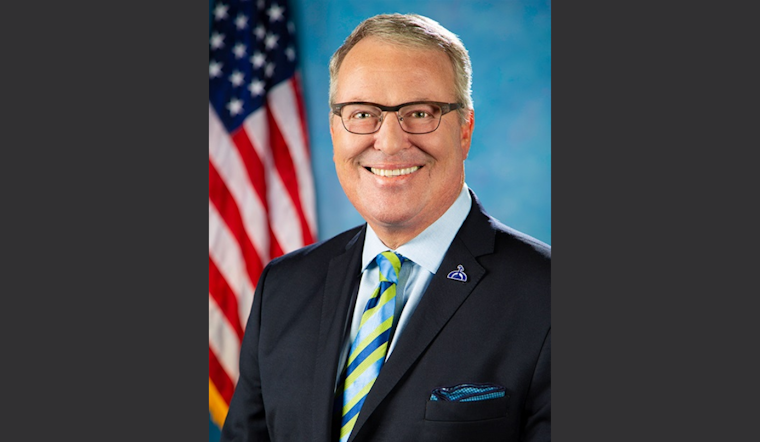
Orlando Mayor Buddy Dyer used his 2026 State of the City address to make the case that the city's property taxes are a bargain — costing residents fewer than $7 a day — even as he warned that a statewide ballot measure could soon force painful cuts to police, fire protection, road repaving, and park hours. Dyer delivered the speech at The Plaza Live, arguing that Orlando's property tax revenue is spent efficiently and represents a wise investment in local services that residents rely on daily.
Dyer's remarks, first reported by the Orlando Sentinel, come as Florida voters prepare to decide the fate of Amendment 3, a constitutional referendum that requires approval from 60% of state voters in November. The measure would begin rolling back taxes on primary homes, creating a $150,000 homestead exemption in 2027 and expanding it to $250,000 by 2028 — a change proponents say would save homeowners thousands of dollars annually. According to the Sentinel's reporting, an Orlando homeowner with a property assessed at $300,000 or more would save roughly $2,500 a year once the $250,000 exemption takes effect in 2028.
But Dyer warned that rolling back taxes on primary homes would come at a cost, telling residents that reduced funding could force cities to make difficult choices about everyday services. He cautioned that new fees could be levied to make up the difference, and that taxes on commercial properties could rise if Amendment 3 passes — a concern that lines up with the amendment's mechanics, which would cut the annual assessment increase cap on non-homestead properties, including commercial real estate and rental housing, from 10% to 5%, according to Orange County Government.
What Orlando's Property Taxes Actually Pay For
The city projects roughly $381 million in property tax revenue next year, money that flows into Orlando's general fund and covers core government services, per the Sentinel's account of Dyer's speech. That funding supports 24-hour police and fire protection, emergency medical response, and the construction and maintenance of 900 miles of roads and 1,200 miles of sidewalks. It also keeps more than 500 traffic signals running and provides access to more than 120 parks, 60 sports fields, 55 playgrounds, and 19 neighborhood centers across the city.
Dyer warned that reduced funding could slow 911 response times, cut back street grass-cutting, shrink summer camps for children, and force parks and neighborhood centers to reduce their hours. Orlando has already implemented a hiring freeze, Dyer said, and the city created a stabilization fund — built from budget surpluses set aside in previous years — aimed at offsetting the initial impacts of Amendment 3 if it passes.
The Dollar Figures Behind the Warning
Per the Sentinel's reporting, Orlando would lose roughly $30 million in 2028 if the amendment passes, growing to $50 million in 2029 and an estimated $80 million every year after 2029. Those local numbers track with a much larger statewide picture: state economists at the Florida Revenue Estimating Conference project Amendment 3 would cut local non-school property tax revenues statewide by roughly $5 billion in its first year, climbing to as much as $11.86 billion to $12 billion annually by year five, according to the Florida Policy Institute.
That structural dependency on property taxes is not unique to Orlando. Data compiled by the Florida League of Cities shows public safety services make up over half of the average Florida municipal budget, and that Florida cities on average already spend more on police, fire, and emergency medical services than they collect in total property tax revenue.
A Fight That Has Spilled Into the Courts
Dyer's political committee contributed $10,000 to the No on 3 committee last month, which is working to defeat the amendment, the Sentinel reported. He is not alone in his opposition — Polk County Sheriff Grady Judd has publicly called the proposal a “train wreck” over concerns it would severely cut funding for local police, sheriffs, and emergency services, according to FOX 13 Tampa Bay.
The measure has also faced legal turbulence. On August 3, Leon County Circuit Judge David Frank invalidated the Legislature's original title and summary for Amendment 3, ruling that the language amounted to misleading political advocacy rather than an objective explanation, as Hoodline reported in its earlier courtroom coverage. Florida Attorney General James Uthmeier responded on August 13 by submitting a rewritten ballot summary, now titled Increased Homestead Exemption; Lower Cap on Increases in Non-Homesteaded Property Assessments, to comply with the court's order.
Public Opinion Softens Once Trade-offs Emerge
Amendment 3 was placed on the November ballot after Florida lawmakers passed House Joint Resolution 1-F during a two-day special legislative session Governor Ron DeSantis convened in June, according to the Florida Senate. DeSantis has separately pushed for Florida to fully eliminate property taxes on primary homes altogether. Notably, the amendment does not address the portion of property taxes allocated to public schools.
Support for the measure appears fragile once voters weigh the trade-offs. A statewide survey of 1,400 registered Florida voters conducted in late July by Targoz Market Research for the James Madison Institute found that while 74% initially supported Amendment 3, that support dropped to 55% — below the 60% threshold needed for passage — once voters were informed of potential cuts to local government services.
State Chief Financial Officer Blaise Ingoglia has argued that tax relief is needed for Florida taxpayers, alleging that cities and counties across the state are overtaxing and overspending, per the Sentinel's reporting. Orlando has held its ad valorem property tax rate at 6.65 mills for its $1.80 billion fiscal year 2025-2026 budget, maintaining the same base millage rate for 13 consecutive years, according to Citizen Portal.
Dyer, who was first elected mayor in March 2003 and stands as Orlando's longest-serving mayor, confirmed in January 2025 that his current term, ending in January 2028, will be his last, according to Florida Politics. That timeline puts his warnings about Amendment 3's fiscal fallout squarely within the final chapter of his tenure, as Orlando and cities statewide brace for a November vote that could reshape how local governments pay for the services residents use every day.



