

























































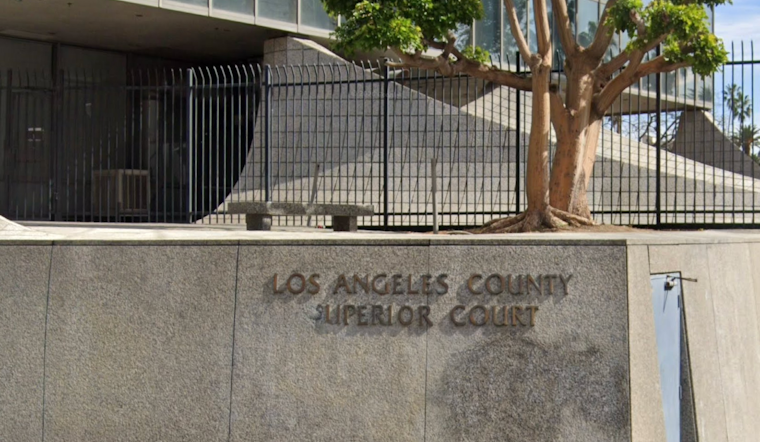
Two fans who say Dodger Stadium security guards forcibly removed them from their seats and injured them are asking a judge to let jurors hear about the infamous 2011 beating of Giants fan Bryan Stow, arguing that the team's post-attack security overhaul created a zero-tolerance culture that led to their rough treatment. Luis Ortiz and Joanna Maria Iniguez filed the lawsuit in Los Angeles Superior Court in January 2025, accusing the Dodgers of assault, battery, false imprisonment, false arrest, negligent hiring, retention and supervision, and civil rights violations.
According to The Independent, the case stems from an October 5, 2024 game between the Dodgers and the San Diego Padres at Dodger Stadium. Ortiz and Iniguez allege that security guards removed them from Dodger Stadium after the pair objected to how two other fans who had run onto the field during the game were treated by security. The lawsuit does not indicate whether Ortiz and Iniguez attended the game together, and it does not describe any relationship between the two plaintiffs.
Per the outlet's report, Iniguez made an obscene finger gesture toward security guards after the two fans who ran onto the field were apprehended, and the pair protested that they had done nothing wrong and were being ejected for objecting to how the field-runners were treated. A female security guard told them they had to leave the venue, and guards then forcibly removed them from their seats. Ortiz and Iniguez say they suffered shoulder injuries, with Iniguez also reporting injuries to her arm, wrist, elbow and hand, along with lost income and emotional distress.
Why the 2011 Stow Case Looms Over This Trial
Under California Penal Code Section 243.83, entering the field of play during a professional sporting event without authorization is only an infraction punishable by a fine not exceeding $250, according to FindLaw. That modest penalty is part of why the plaintiffs' attorney argues the response to the two field-runners, and the subsequent ejection of Ortiz and Iniguez, reflects an overzealous security posture rather than a proportionate one. The plaintiffs' lawyer contends that increased security at Dodgers games resulted largely from the Bryan Stow incident, and argues that this heightened security is relevant to proving the team maintains an alleged zero-tolerance policy that permits guards to use excessive force.
The plaintiffs' lawyer describes the alleged security conduct as running roughshod over minor encounters with patrons, per the same Independent report. Bryan Stow was beaten in a Dodgers venue parking lot in 2011, an assault that became one of the most notorious incidents in the team's history. Following that attack, the Dodgers hired former LAPD Chief William Bratton as a security consultant and implemented enhanced stadium protocols, including increased police presence, additional security patrols and undercover officers wearing rival team jerseys, according to Police1.
The $18 Million Verdict That Still Shadows the Dodgers
A Los Angeles Superior Court jury awarded Stow about $18 million in damages in 2014. The two men who attacked him, Louie Sanchez and Marvin Norwood, were assigned 75 percent of the liability for his injuries, while the Dodgers were assigned 25 percent; former team owner Frank McCourt was assigned none of the liability. Yet under California's joint and several liability rules for economic damages, the Dodgers still ended up responsible for roughly $14 million of the total verdict despite that lower fault share, since defendants found negligent must cover all past and future medical bills and lost earnings, as explained by the ABA Journal.
Sanchez and Norwood had pleaded guilty in state court in February 2014 to charges connected to the March 31, 2011 assault, with Sanchez sentenced to eight years in prison for mayhem and Norwood receiving four years for assault likely to produce great bodily injury, MLB.com reported at the time. Sanchez was later sentenced to an additional three years in federal prison in May 2015 after pleading guilty to being a felon in possession of firearms, weapons that LAPD officers discovered while searching a home during the original beating investigation, according to KQED.
During the 2014 civil trial, a former Dodger Stadium security guard testified that private security was severely short-staffed on Opening Day in 2011, with only 150 of the customary 300 guards present for a rowdy crowd, the Los Angeles Times reported. Staffing and supervision at the ballpark remain central issues in the current case as well, with the plaintiffs seeking to draw a direct line between that historic understaffing, the security buildup that followed, and the treatment they say they received in 2024.
Dodgers Seek to Keep the Stow Case Out of the Courtroom
The Dodgers have filed a pretrial motion to exclude any evidence regarding the Stow attack from the upcoming trial, and the plaintiffs' attorney has filed court papers opposing that motion. Such motions typically rely on California Evidence Code Section 352, which gives trial judges discretion to exclude relevant evidence if its probative value is substantially outweighed by the danger of undue prejudice, confusing the issues, or misleading the jury, according to Justia Law.
Dodgers attorneys have denied the plaintiffs' allegations and said any damages Ortiz and Iniguez suffered were caused by their own conduct. Judge Upinder Kalra is presiding over the case, which is scheduled for trial on November 2, 2026. A key open question ahead of that date is whether Kalra will allow the historical Stow case in as evidence of systemic supervision failures, or exclude it to keep jurors focused strictly on the events of October 5, 2024.
Part of a Pattern of Stadium Safety Litigation
This is not the only premises liability fight the Dodgers are facing this year. In July, Hoodline reported on a separate state court lawsuit alleging a fan suffered ongoing head injuries when a cell phone fell from an upper deck railing into the lower seating area during a July 2024 game. Together, the two cases point to continued scrutiny of spectator safety standards at Dodger Stadium, even as the team's post-Stow security investments were originally intended to make the ballpark safer rather than the source of new litigation.
State lawmakers have also pushed to toughen penalties tied to fan misconduct at California ballparks in the years since the Stow attack. A 2013 measure, Assembly Bill 2464, required major league venues in the state to post contact numbers fans could call or text to report security concerns directly to stadium personnel, according to Fan Conduct Class. Four years later, a bill backed by Major League Baseball and the Dodgers sought to raise penalties for field trespassing from a $250 fine to as much as 10 days in county jail and a $2,500 fine for a first offense, as CBS San Francisco reported at the time.





