

























































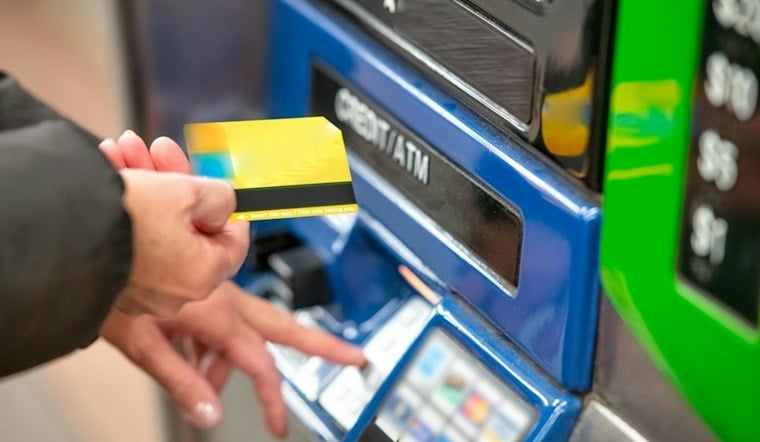
Two unidentified men are wanted in connection with a grand theft case out of Lancaster, where detectives say a stolen ATM card was used to siphon $36,000 from a victim's bank account at multiple locations across Los Angeles County. Investigators released surveillance images to help identify the pair, but authorities still haven't said how they first got their hands on the card.
Surveillance Images Released as Search Widens
According to KTLA, Lancaster Sheriff's Station investigators reported that the suspects obtained a victim's ATM card and then used it to make withdrawals at multiple ATMs throughout Los Angeles County. The sheriff's station published an official bulletin on Thursday seeking the public's help identifying the two men, according to AV Scanner News. Detective Jimenez has been designated to field tips from the public, and authorities are also requesting anonymous submissions through Crime Stoppers, per the same outlet.
KTLA's report notes that authorities have not provided information about the victim and have not explained how the suspects obtained the ATM card in the first place. The case remains an open grand theft investigation, and no arrests have been announced.
How Do You Pull $36,000 From a Cash Machine?
Getting that much money out of ATMs isn't as simple as swiping a card once. Bankrate discusses daily ATM withdrawal limits and possible ways to access larger amounts.
Hoodline has reported on an alleged ATM card-swapping scam in Southern California. In one August case out of San Diego County, two Los Angeles men faced felony charges for allegedly draining thousands of dollars using swapped cards.
What Charges Could the Suspects Face
If caught, the men could face serious exposure under California law. Stealing money or property valued over $950 qualifies as grand theft under Penal Code 487, a so-called wobbler offense that prosecutors can file as either a misdemeanor carrying up to a year in county jail or a felony carrying 16 months to three years in state prison plus fines up to $5,000, according to Eisner Gorin LLP. The alleged $36,000 loss is nearly 38 times the $950 threshold.
Separate statutes target the card itself. Penal Code 484e classifies acquiring or possessing someone else's ATM or debit card without authorization as grand theft, while Penal Code 484g makes fraudulently using an access card to obtain more than $950 in cash or goods a grand theft offense as well, per Shouse Law Group. Since California voters approved Proposition 36 in November 2024, prosecutors have also been able to combine the value of multiple separate withdrawals under Penal Code section 666.1 to reach the felony threshold in a single count, Hoodline has reported.
The known $36,000 loss falls short of the $65,000 mark that would trigger an additional one-year sentencing enhancement under Penal Code Section 12022.6 for excessive financial losses, according to Wallin & Klarich.
What Victims of ATM Fraud Can Recover
For the person whose card was used, federal consumer protections may limit how much is ultimately lost. Under the Electronic Fund Transfer Act and Consumer Financial Protection Bureau Regulation E, a bank customer's liability for unauthorized ATM withdrawals is capped at $50 if reported within two business days of discovering the theft, and capped at $500 if reported within 60 days of the relevant statement, according to the Federal Reserve Bank of Philadelphia. Federal law also bars financial institutions from denying reimbursement based on claims of consumer negligence, such as writing down a PIN.
How to Submit a Tip
Anyone with information is asked to help identify the two men in the surveillance images. Tipsters can reach Detective Jimenez directly at 661-948-8466, or submit anonymous tips to Crime Stoppers at 800-222-8477.
The Lancaster case adds to a string of recent ATM-related crimes across the region. Hoodline has also reported on federal charges against Los Angeles men accused of a separate ATM robbery spree targeting convenience store cash machines. It remains unclear whether the Lancaster case is connected to that case, and whether additional victims or banking institutions in the Antelope Valley have yet to be identified.



