

























































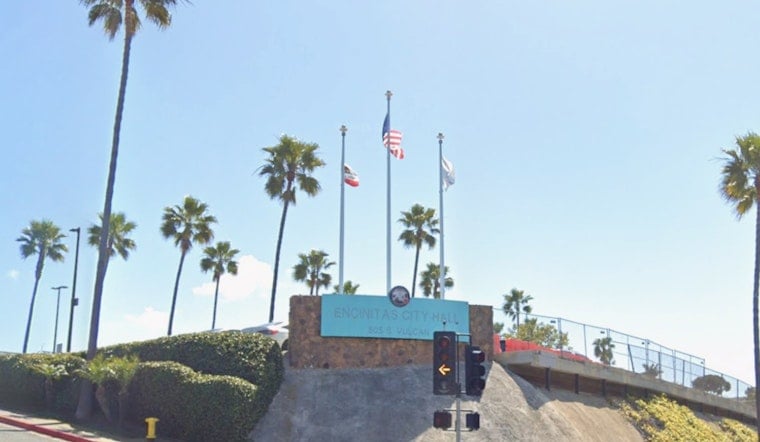
Encinitas is on track to overhaul a wide swath of its development-related fees, a move city officials estimate could funnel nearly $1.5 million in additional revenue into municipal coffers based on the current pace of development. The changes touch everything from coastal development permits to business registration renewals, and the City Council is scheduled to give the plan final approval on September 16.
The centerpiece of the overhaul is a push toward full cost recovery, meaning residents and developers would pay fees that match what it actually costs the city to process their applications, according to The San Diego Union-Tribune. Under the proposed system, fees currently recovering between 80 and 99 percent of service costs would rise to full 100 percent recovery, those between 50 and 79 percent would climb to 80 percent, and any fee recovering less than half the cost would jump to 50 percent. City staff have said the goal is to ensure reasonable cost recovery from the specific users who benefit from a given city service, rather than spreading those costs across the General Fund.
Some of the individual increases are steep. The coastal development permit application fee would rise from $2,492 to $4,061, a jump of roughly 63 percent, while the business registration renewal fee would triple from $24 to $72. The newspaper's reporting notes that Encinitas's service costs have typically run higher than what the city has actually charged applicants, which is the gap the new fee schedule is designed to close.
Appeal Fees Become a Flashpoint
The most politically charged piece of the package involves what residents pay to challenge a Planning Commission decision before the City Council. City staff initially suggested raising the appeal fee from $467 to $1,400, a figure meant to reflect the true cost of processing an appeal — the current $467 fee represents only about 5 percent of the city's actual service cost, per the staff report cited by the Union-Tribune. Encinitas received 10 such appeals last year.
Mayor Bruce Ehlers pushed back on the staff recommendation, proposing a much smaller increase to $500 instead, and the City Council unanimously approved his proposal. Ehlers noted that residents previously paid just $100 to appeal a Planning Commission decision to the council, underscoring how dramatically the fee has already grown even under his lower figure. Council member Jennifer Campbell offered a different take, saying the staff-recommended $1,400 fee would still have been a bargain compared with what some neighboring cities charge for similar appeals.
Those neighboring comparisons are notable: Del Mar charges $1,728 for a comparable appeal, San Marcos charges $2,000, Solana Beach charges $1,118, and Vista charges $756.71, according to the same Union-Tribune report. Even the $500 figure the council settled on keeps Encinitas well below every one of those cities.
Fees Fall Under a Broader Legal Framework
Encinitas's fee-setting system is based on charging a percentage of the city's actual service-provision cost, a structure shaped by California's Mitigation Fee Act and Proposition 26. Under Proposition 26, which California voters approved in 2010, local governments can adjust user fees without going to the ballot only if the fee does not exceed the proportional cost of the service provided to the applicant, according to the Legislative Analyst's Office. Any fee that exceeds that direct cost threshold is legally reclassified as a tax requiring voter approval.
The city built its case for the new fee levels on a Comprehensive User Fee Study and Internal Cost Allocation Plan performed by consulting firm MGT, which examined the direct and indirect operational costs city departments incur when processing permits and appeals, per the City of Encinitas. That audit followed a separate, earlier overhaul: the council approved Resolution No. 2026-34 in May, updating citywide Development Impact Fees after a formal Nexus Study, with those capital exactions taking effect in July. Impact fees fund infrastructure construction, while the user fees now under review cover staff time and administrative processing — two distinct pots of money governed by different rules.
Housing Builders Already Feeling the Squeeze
The fee increases arrive on top of other adjustments already in motion. Effective July 1, Encinitas automatically raised its planning and engineering service fees by 3.8 percent to reflect annual inflation under Council Resolutions 2026-52 and 2026-53, a routine adjustment separate from the broader cost-recovery overhaul. The council also approved a matching 3.8 percent increase in sewer-related engineering and service fees on August 19, according to The Coast News Group.
Homebuilders working on accessory dwelling units are also navigating a shifting fee landscape. State law under Senate Bill 13 waives local development impact fees for ADUs smaller than 750 square feet, but larger units became subject to Encinitas's updated impact fee schedule when it took effect in July, pushing costs up to roughly $18 per square foot, according to SnapADU.
The politics surrounding development costs in Encinitas can't be fully separated from the city's broader housing debate. Mayor Ehlers, elected in 2024 alongside a slate of candidates critical of state-mandated housing growth, has argued publicly that while Encinitas permits high levels of housing compared with regional peers, residents strongly oppose rapid neighborhood densification, per Voice of San Diego. That tension helps explain why the council chose to keep the appeal fee well below the staff-recommended figure even as it pushes toward full cost recovery elsewhere in the fee schedule.
If approved as planned on September 16, the new fee schedule is forecast to take effect in late October, covering categories that include building-plan review, agricultural permits, property boundary line adjustments, and business registration, in addition to the coastal permit and appeal fees already outlined. City financial officials have said in the FY 2026-27 budget forecast that rising labor costs, wage inflation, and aging infrastructure make the update necessary to keep the General Fund from effectively subsidizing private development applications.





