

























































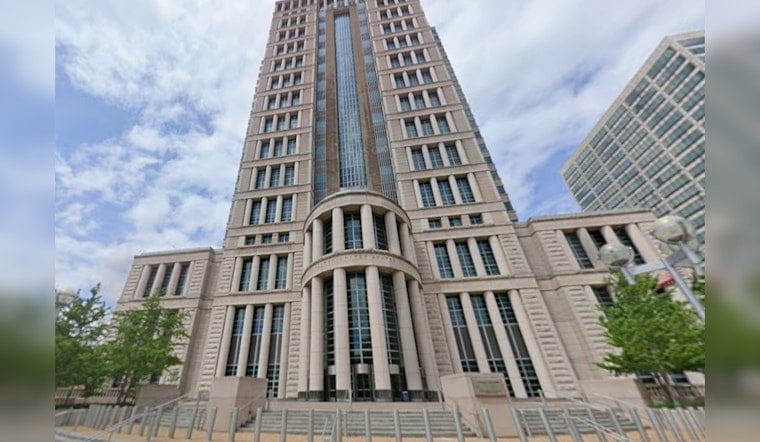
A 47-year-old former candidate for the St. Louis Board of Aldermen has pleaded guilty to theft of government money after admitting he fraudulently collected $51,388.50 in Social Security disability benefits over more than five years. Justin Idleburg entered his plea in U.S. District Court in St. Louis, acknowledging that he hid income from two businesses he ran while telling federal officials he was too disabled to work. The fraudulent payments ran from January 2019 through May 2024.
According to a press release from the U.S. Attorney's Office for the Eastern District of Missouri, Idleburg began receiving federal disability benefits in January 2007, and his eligibility was reviewed twice, in 2018 and again in 2024. Both times, prosecutors said, he maintained his eligibility by reporting severe mental health symptoms and an inability to get along with others. Idleburg's guilty plea in U.S. District Court in St. Louis was first reported locally by KMOV.
Two Businesses, $67,000 in Hidden Grant Money
Prosecutors said Idleburg created Idleburg Consultants LLC in March 2019, then registered the Cabanne District Community Development Corporation in August 2023. Through the nonprofit, he applied for and received $67,000 in grants, which he deposited into bank accounts never disclosed to the Social Security Administration. He served as principal and president of both entities the entire time he was collecting disability payments, according to the same federal account.
That arrangement forms the core of the theft charge Idleburg admitted to: collecting monthly disability checks by reporting he could not work, while simultaneously building and running two organizations. Prosecutors noted he was founding businesses and attending public community events during the very years he claimed disabling mental health symptoms.
Public Advocacy While Claiming Total Disability
Idleburg also gave media interviews in 2023 and traveled to Jefferson City to testify before Missouri state legislators about cultural bias in the energy sector, according to federal prosecutors. His advocacy focused on utility costs and solar energy access for low-income St. Louis residents, per the same account.
Prosecutors say Idleburg admitted exaggerating his symptoms to remain medically eligible for the benefits, even as he ran two organizations and appeared in public forums on energy policy. That contradiction, a public advocate supposedly incapable of holding a job, is what unraveled once federal investigators dug into his finances.
Civic Standing Built Long Before the Fraud Case
Idleburg's public profile in St. Louis predates the fraud case by years. He registered as a Democratic candidate for the Board of Aldermen's Ward 26 seat during the 2019 municipal election cycle, though he did not ultimately appear on the March 2019 primary ballot, according to Ballotpedia. Ward 26 covered several West End and central city neighborhoods.
The city had already honored him: in September 2018, the Board of Aldermen passed Resolution 113 congratulating Idleburg on graduating from the inaugural class of the Neighborhood Leadership Fellows program, according to the City of St. Louis. The fellowship was a joint regional leadership program offered by the University of Missouri–St. Louis and Washington University in St. Louis.
Washington University in St. Louis later placed student interns with both Idleburg Consultants and the Cabanne District Community Development Corporation between 2022 and 2025, assisting with solar energy and neighborhood revitalization projects. The placements ran through the university's civic engagement and environmental studies programs, lending Idleburg's ventures institutional credibility even as their finances were being concealed from federal benefit reviewers, prosecutors say.
Up to a Decade in Prison, Restitution Possible
Idleburg pleaded guilty to a single count of theft of government money, a federal felony under 18 U.S.C. Section 641 covering theft of government property exceeding $1,000, according to the U.S. House Committee on Ways and Means. The statute carries a maximum sentence of up to 10 years in prison along with fines and mandatory restitution, though actual sentences are calculated under federal sentencing guidelines based on offense level and criminal history. His sentencing hearing is scheduled for November 5, 2026, in U.S. District Court in St. Louis, per the U.S. Attorney's Office for the Eastern District of Missouri.
Federal guidance from the U.S. Department of Health and Human Services notes that failing to report business income or grant drawdowns while collecting government benefits can trigger administrative, civil, and criminal enforcement, since agencies cross-reference banking and tax records during joint oversight investigations. It remains unclear whether any of the grants awarded to Idleburg's nonprofit came from public or municipal funding sources, or what administrative reviews, if any, took place before his case became public.





