

























































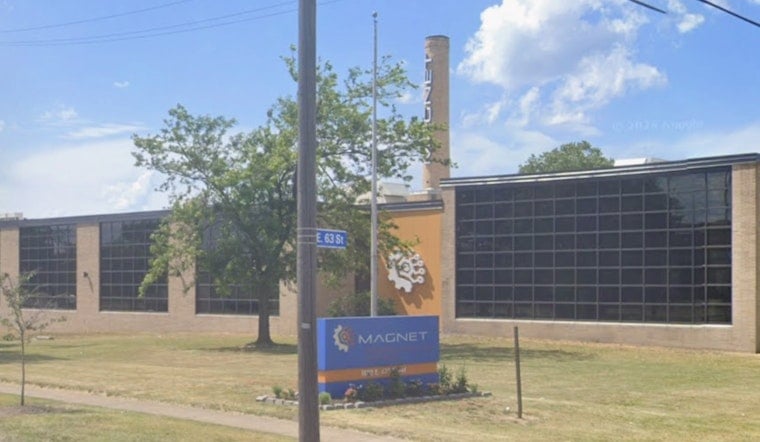
A federal audit released Friday found that MAGNET, the Cleveland-based manufacturing nonprofit, and other Ohio organizations misused millions of taxpayer dollars meant to help small and midsize manufacturers modernize and grow. The audit determined that the Ohio Department of Development and its regional subrecipients did not comply with the terms of their federal awards, and it questioned $20.9 million in costs across the state's Manufacturing Extension Partnership program.
MAGNET alone accounted for about 22 percent of those questioned statewide costs and was cited 81 times in the report, according to Cleveland.com, which reported that MAGNET was flagged 59 percent more often than the other five Ohio MEP centers combined. Auditors found MAGNET failed to report facility rental income and client fees, including $1,039,051 in rental income generated between July 2017 and June 2024, and identified $2.76 million in unreported program income tied to the organization.
The audit, which covered federal fiscal years 2017 through 2024, also flagged specific expenses that struck reviewers as questionable: $15,954 billed for a celebrity speaker who never appeared at a virtual event, $60,252 spent on a headquarters groundbreaking event, and $402,135 spent on public relations and video production. Auditors found MAGNET overbilled indirect costs and paid tens of thousands of dollars in internship wages to two companies whose executives sat on its board.
PPE Sales and Board Ties Under Scrutiny
During the pandemic, MAGNET helped coordinate an Ohio manufacturing effort that involved more than 2,000 manufacturers and produced 50 million pieces of protective equipment. Auditors found the nonprofit had $6,638,327 in unapproved personal protective equipment sales during that period and allocated more than $1 million in related expenses to its federal COVID relief award, though MAGNET said it made no profit from the PPE sales.
The report also found that MAGNET had board members who benefited financially from ties to the organization, and that Ohio State University, whose employee sits on MAGNET's board, received more than $480,000 in contractor payments billed to federal awards. MAGNET said it followed a survey process designed and administered by the National Institute of Standards and Technology and was never instructed to independently audit client estimates.
MAGNET Pushes Back on the Findings
MAGNET Chief Executive Ethan Karp disputed the audit's waste, fraud and abuse claims, and the organization described the findings as reflecting a broken Washington bureaucratic process. MAGNET said its contract is with the state of Ohio rather than the federal government, and it maintained that all expenses submitted to Ohio through the MEP program were valid and appropriate.
The nonprofit said it underwent 18 independent financial audits and three state audits during the years examined, and that it spent roughly $1 million and more than 4,400 hours responding to the federal review. MAGNET, established in Cleveland in 1984 as one of the pilot initiatives that helped model the national Hollings Manufacturing Extension Partnership system, generated $25,353,470 in client revenue from July 2017 through June 2024 while helping small and midsize Northeast Ohio manufacturers adopt technology, train workers and grow.
The Freeze That Preceded the Report
The audit's release caps a process that had already upended Ohio's manufacturing support network months earlier. In December, NIST suspended making new awards to Ohio, and the Ohio Department of Development responded by suspending its own dispensing of money through the MEP program, which it runs statewide through six regional affiliates. That funding freeze forced MEP centers across Ohio to wind down operations, release staff and halt modernization projects for hundreds of manufacturers.
The fallout was immediate and local. Following the funding suspension, MAGNET eliminated 37 positions from its 75-person staff to manage a $5.9 million budget shortfall, according to FreshWater Cleveland. In Bowling Green, the same freeze forced the Center for Innovative Food Technology to suspend operations and close its shared-use Northwest Ohio Cooperative Kitchen, stranding more than 20 active small food manufacturing startups, per WTOL 11. Dayton-based affiliate FastLane, which operated out of the University of Dayton Research Institute, was forced to wrap up existing client contracts and prepare to shutter after 13 years of serving regional manufacturers, according to IndustryWeek. MAGNET is now the last Ohio MEP center still operating.
Why the Freeze Hit So Hard, So Fast
The domino effect stemmed from federal law: under 15 U.S. Code § 278k, non-federal grant recipients in the Hollings Manufacturing Extension Partnership are statutorily required to provide at least 50 percent matching funds for capital, operational, and maintenance costs, meaning a federal suspension automatically freezes the matching state dollars too. Separately, federal Uniform Guidance rules under 2 CFR § 200 Subpart E render promotional items, general public relations, marketing and unapproved conference costs unallowable on federal awards, the standard auditors applied when citing MAGNET's PR and marketing spending on unallowable events.
That created tension with state-level oversight, since preliminary audit records from late 2025 showed state officials had previously approved some of the very expenses federal auditors later questioned, including $48,240 spent by Ohio State University on 11,000 T-shirts and $25,000 spent by MAGNET on a 2021 conference, according to Signal Ohio. The audit ultimately concluded that the Ohio Department of Development and its subrecipients misused millions of taxpayer dollars through the MEP program, and it identified $5 million that should be redirected elsewhere in the national MEP program.
What Happens Next
Auditors recommended that NIST strengthen oversight of the MEP program, recover unallowable costs, and determine whether to terminate the Ohio Department of Development's award altogether. NIST concurred with all six audit recommendations. This is not the agency's first brush with oversight problems: a September 2024 report by the Department of Commerce Office of Inspector General found NIST suffered from inadequate monitoring of MEP centers nationwide, resulting in overstated client sales and investment impact figures reported to Congress, and NIST separately rejected the manufacturer's 2025 economic impact figures.
The Ohio Department of Development, which received tens of millions of dollars in federal awards for the program, said it cooperated fully with the audit. Spokesperson Mason Waldvogel said the department takes the inspector general report's findings seriously, and the agency said it plans to work with NIST to address the report's recommendations, review and revise financial reports where needed, and strengthen oversight of the programs it administers.
With over 680,000 advanced manufacturing workers and roughly 14,000 manufacturing firms statewide, Ohio ranks as the nation's third-largest manufacturing state by employment, a scale that helps explain why MAGNET rallied bipartisan congressional support to save the MEP system on three occasions in 2025 and why Ohio's congressional delegation has asked that MEP funding be reinstated. MAGNET has said small and midsized manufacturers should retain support to adopt technology, train workers and grow, even as the federal audit's findings now cloud the program's future in the state.



