

























































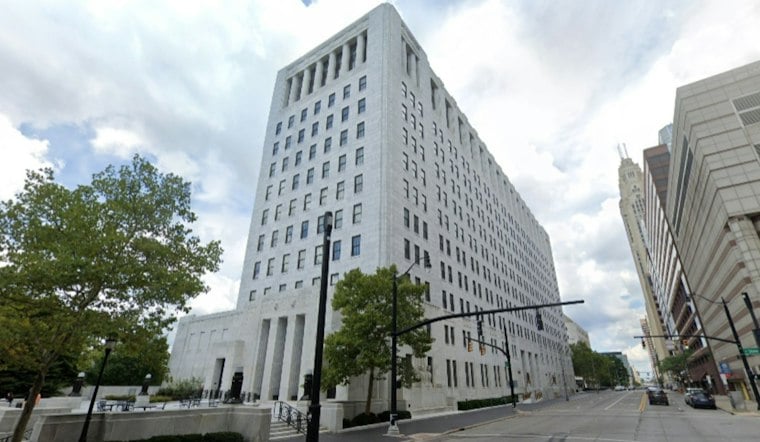
Ohio's Supreme Court has reinstated the rape conviction of a Cleveland man whose case sat unsolved for a decade before cold-case DNA testing identified him as a suspect, ruling that an appeals court applied the wrong legal standard when it threw out the jury's verdict. The high court's decision, issued Thursday, means Robin McClain's conviction for substantial-impairment rape stands, even though the case still isn't fully over.
A Night at a West Park Bar Turns Into a Decade-Long Case
According to WKBN, the case traces back to a night at a bar in Cleveland's West Park neighborhood, where a woman ordered a pizza and a vodka tonic. The station reports that a man approached her and hit on her aggressively before she rebuffed him, and then a second man approached her from the other side. She told investigators she took one sip of her drink and remembered nothing after that, waking up later in a bank parking lot with her pants unzipped, bruises on her face and arms, and blood on her lips.
She went to the hospital, where a sexual assault nurse treated her and a rape kit was submitted to the Bureau of Criminal Investigation, per the same account. No drug test was administered at the time. The case went cold until 2020, when the Cuyahoga County Prosecutor's Office cold-case unit received a lead from a commercial forensic genealogist identifying McClain as a suspect, and DNA collected from him matched the rape kit.
Cold-Case DNA Unit Behind the Break in the Case
That break came through the same infrastructure that has cracked open hundreds of decade-old Ohio sex-crime cases. The Cuyahoga County Prosecutor's Office established its G.O.L.D. (Genetic Operations Linking DNA) Unit in October 2020 using federal Sexual Assault Kit Initiative funding to apply forensic genetic genealogy to cold-case sexual assault evidence. Since the county's Sexual Assault Kit Task Force launched in 2013, it has completed more than 8,000 cold-case investigations resulting in indictments against over 900 defendants, according to the prosecutor's office.
Police later interviewed McClain, who denied the encounter and said he had never been in the bar, per WKBN's reporting. Trial witnesses testified that McClain frequented the area and nearby bars, and others said they saw him interacting with the victim that night. The bar's owner, meanwhile, was installing cameras and reported that a few other women had said they were roofied at the establishment, the station reported.
Jury's Split Verdict and the Appeals Fight
A jury ultimately found McClain not guilty of forcible rape but guilty of substantial-impairment rape, and he was sentenced to six years in prison, according to WKBN. McClain challenged that conviction, arguing prosecutors lacked sufficient evidence that the victim was too impaired to consent and that he had no reason to believe she was substantially impaired.
The Eighth District Court of Appeals agreed with him in a 2-1 decision in March 2025, overturning the conviction. Judge Michael John Ryan wrote for the majority that prosecutors failed to prove McClain knew the victim was impaired without physical evidence of intoxication such as stumbling or slurred speech, according to Ohio Court Watch.
Supreme Court Says Circumstantial Evidence Was Enough
The Ohio Supreme Court reversed that decision in its October 8, 2026 ruling, finding that the Eighth District applied an improper legal standard when it threw out the conviction. Justice Joseph T. Deters authored the majority opinion, in which Chief Justice Sharon L. Kennedy and Justices Patrick F. DeWine, Jennifer Brunner, Daniel R. Hawkins and Megan E. Shanahan fully joined, while Justice Patrick F. Fischer concurred in judgment only, per Court News Ohio.
The majority found that DNA evidence, witness testimony and the victim's lack of memory sufficiently supported the conviction, according to WKBN. Ohio legal precedent requires appellate courts reviewing sufficiency of evidence to assess facts in the light most favorable to the prosecution and ask whether any rational juror could find the elements met — not to re-weigh whether guilt was proven beyond a reasonable doubt, the Supreme Court noted.
What Ohio's Rape Law Actually Requires
Under Ohio Revised Code Section 2907.02(A)(1)(c), substantial-impairment rape requires proof that a victim's ability to resist or consent was substantially impaired by a mental or physical condition, and that the offender knew or had reasonable cause to believe that impairment existed. Ohio law sets no fixed blood alcohol concentration threshold or specific drink count to define substantial impairment, leaving juries to weigh impairment and a defendant's knowledge case-by-case based on the totality of circumstances, as Hoodline detailed in its related look at Ohio's rape statute.
That statutory gap is central to why the Supreme Court's ruling matters beyond this one case: it reaffirms that circumstantial evidence — not just eyewitness accounts of visible intoxication — can be enough for a jury to infer a defendant's knowledge of a victim's impairment.
Case Not Finished Yet
The Supreme Court's ruling doesn't end the legal fight. In reversing the Eighth District, the justices remanded the case back to the appellate court to address McClain's remaining, unresolved claim that improper victim-impact testimony was admitted during his trial. That issue still needs to be decided before the case is fully closed.
The high court heard oral arguments in the case on April 15, 2026, not in a courtroom but at Carrollton High School in Carroll County, part of its 86th “Off-Site Court” civic education program held before an audience of nearly 1,000 students, according to Court News Ohio.



