

























































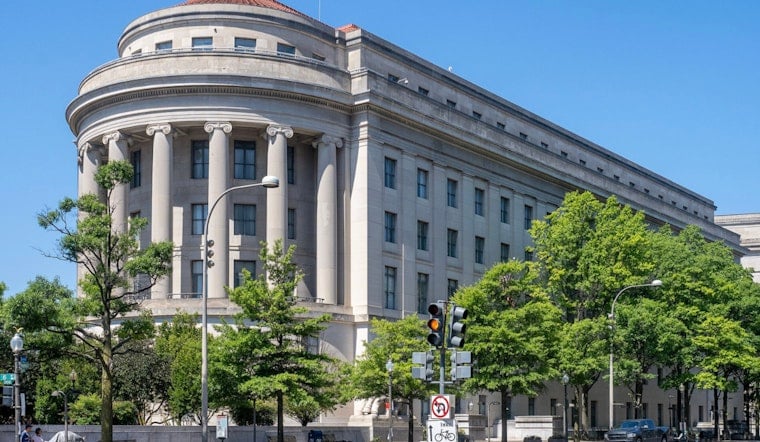
A federal judge in New York has blocked Henkel AG & Co. KGaA, the German company behind Loctite, from acquiring rival construction adhesive brand Liquid Nails in a $725 million deal, delivering a win to federal antitrust regulators who argued the merger would have wiped out competition on hardware store shelves nationwide.
The ruling, issued Monday, sides with the U.S. Federal Trade Commission, which sued in December to stop the acquisition, arguing it would eliminate competition between the two main construction adhesives available to U.S. consumers, according to Reuters. The judge gave the companies time to request redactions to sensitive information before the full written decision is made public, and has not yet publicly released that complete opinion. Reuters reporter Jody Godoy covered the ruling out of New York, with the article edited by Chizu Nomiyama.
The case, filed as No. 1:25-cv-10371-KPF before U.S. District Judge Katherine Polk Failla in the Southern District of New York, went through a full bench trial that opened on July 14 and ran through the summer, according to Arnold & Porter. Per Dechert LLP, the Henkel-Liquid Nails fight was the only contested merger challenge stemming from a 2025 deal announcement to actually proceed through a full federal trial in 2026, since most contested acquisitions get resolved through negotiated settlements or get abandoned before ever reaching a courtroom.
A Market Regulators Say Was Headed Toward Monopoly
In its December complaint, the FTC alleged that Loctite and Liquid Nails together already hold a combined retail market share of 70% to 80% in U.S. construction adhesives — a concentration that would have given Henkel more than 80% control of the market after the merger, a level presumptively unlawful under Section 7 of the Clayton Act. FTC filings state that Loctite and Liquid Nails compete head-to-head in regular product line reviews for shelf space and pricing at major national retailers including The Home Depot, Lowe's, Menards, and Ace Hardware.
Henkel pushed back in court, arguing that Loctite and Liquid Nails actually serve distinct market sub-segments — with Loctite positioned as a premium brand and Liquid Nails marketed as a budget-conscious alternative rather than a direct substitute, according to ECHEMI. That argument over how to define the relevant market is typically the central legal battleground in federal merger litigation, and in this case, the court did not buy it.
How a Private Equity Flip Turned Into a Federal Case
The deal's backstory involves a fast financial turnaround. Private equity firm American Industrial Partners acquired Liquid Nails in December 2024 as part of a $550 million buyout of PPG Industries' entire North American architectural coatings business, which it then began operating under the newly formed Pittsburgh Paints Company. Just four months later, in April 2025, American Industrial Partners agreed to sell the standalone Liquid Nails brand alone to Henkel for $725 million — a transaction that stayed confidential until regulators announced their lawsuit in December.
The FTC's enforcement action was also framed around housing and repair affordability. The agency's challenge came as U.S. Bureau of Labor Statistics Producer Price Index data showed wholesale construction materials and components prices had risen 2.8% year-over-year in late 2025, according to Engineering News-Record. Regulators explicitly cast the lawsuit as a measure to protect home construction and renovation budgets for everyday consumers.
A Procedural Shift for FTC Merger Enforcement
The case also reflects a notable strategy shift inside the FTC. When it challenged the deal in December, the agency opted to seek a permanent injunction directly in federal district court under Section 13(b) of the FTC Act, skipping a parallel in-house administrative hearing — a deliberate move to streamline merger litigation, per Wiggin and Dana LLP. Critics had long faulted the agency's older dual-track approach of litigating simultaneously in federal court and before its own internal administrative law judges.
Henkel's U.S. footprint has already been shrinking on other fronts. The company, which markets adhesives brands including Loctite, LePage, and Technomelt, announced in May that it would eliminate 57 positions at its Oak Creek, Wisconsin production facility through early 2027 as part of broader operational realignments — cuts Hoodline reported on at the time. With the Liquid Nails deal now blocked, Henkel's plans to expand its share of the U.S. adhesive aisle have hit a firm wall, at least for now.





.jpg)