

























































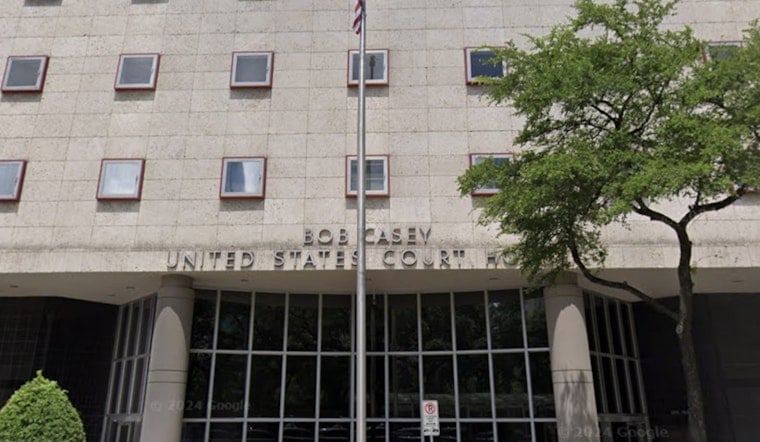
Five Houston-area residents are facing federal charges after prosecutors say they conspired to cash a counterfeit U.S. Treasury tax refund check worth more than $1 million, then scrambled to move the money before authorities could catch on. The defendants — Torik M. Blade, 39, of Missouri City; Rickelle D. Taylor, 38, of Spring; Kendra L. Folkes, 37, of Katy; Stephen G. James, 42, of Houston; and Raven N. Morris, 34, also of Houston — each made initial court appearances before U.S. Magistrate Judge Yvonne Ho.
According to the U.S. Attorney's Office for the Southern District of Texas, a federal grand jury returned a 33-count indictment on July 22 charging the five with conspiracy, passing a counterfeit Treasury check, bank fraud and money laundering. As reported by FOX 26 Houston, the counterfeit check at the center of the case was worth $1,052,615.97. Judge Ho, who presided over the defendants' initial appearances, was appointed to the bench in March 2022 and became the first Asian American Pacific Islander magistrate judge in the Houston Division, according to the U.S. District Court for the Southern District of Texas.
How Prosecutors Say the Scheme Unfolded
Prosecutors allege that Blade allowed someone else to deposit the counterfeit Treasury check into his business account, according to the government's account of the case. From there, the group allegedly worked to obtain the fraudulent funds through a combination of direct cash withdrawals, cashier's checks and transfers between different financial institutions, per the same account. It remains unclear who originally deposited the check or how the counterfeit document was generated or acquired, and prosecutors have not said publicly whether any of the fraudulently withdrawn money has been frozen or recovered.
Court records describe Blade as having allegedly worked alongside four co-conspirators to obtain money from the fraudulent check. The pattern described — a large-value government check landing in a commercial account with no matching business activity, followed quickly by cashier's check conversions and cash withdrawals — mirrors the exact red flags that bank compliance officers and federal investigators are trained to watch for, according to guidelines from the Financial Crimes Enforcement Network and Accredited Standards Committee X9.
Potential Penalties Add Up Fast
The stakes for the five defendants are steep. Conspiracy charges carry up to 20 years in prison and $500,000 in fines, while passing the counterfeit check itself carries up to 20 years and a $250,000 fine. Money laundering charges also carry up to 20 years in prison and $500,000 in fines.
The bank fraud counts carry the heaviest exposure of all. Under 18 U.S.C. § 1344, each bank fraud count can bring up to 30 years in federal prison and a $1 million fine when the alleged conduct targets a federally insured institution, according to the U.S. Department of Justice. Because multiple counts can be charged per fraudulent transaction, that statute compounds the defendants' total potential prison exposure well beyond a single case's face value. If convicted, all five could face federal prison time and millions of dollars in potential fines combined, though the case remains only at the charging stage and every defendant is presumed innocent unless proven guilty in court.
Part of a Bigger Federal Crackdown
The case was investigated jointly by the Treasury Inspector General for Tax Administration, IRS Criminal Investigation and the U.S. Secret Service, with Assistant U.S. Attorney John R. Lewis leading the prosecution. Lewis has handled major financial crime cases in Houston before, including a 2023 prosecution of four co-conspirators charged in a $200,000 bank fraud and illegal wire transfer scheme, according to the Department of Justice.
This indictment lands amid a broader national spike in Treasury check fraud. The U.S. Department of the Treasury has reported that check fraud jumped 385% nationwide following the COVID-19 pandemic, prompting its Office of Payment Integrity to deploy artificial intelligence tools that recovered more than $375 million in fraudulent payments during fiscal year 2023. Financial institutions filed more than 680,000 check fraud-related Suspicious Activity Reports with FinCEN in 2022 alone — nearly double the roughly 350,000 filed the year before.
The Southern District of Texas, which handles federal prosecutions across 43 counties and more than nine million residents in seven court divisions, has been especially active on this front. In May, federal prosecutors in the district unsealed charges against a Houston-area banker accused of helping a multimillion-dollar bank fraud conspiracy built on falsified tax returns and doctored statements. And back in February 2024, two men were sentenced in Houston federal court to 90 months and 42 months in prison, plus nearly $4.5 million in restitution, after a conviction in a stolen IRS tax refund check scheme.





