

























































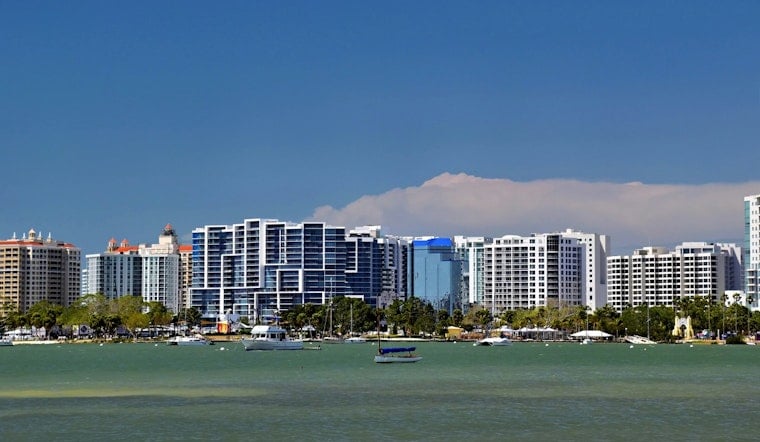
Florida tourism slid for a second consecutive quarter in the first half of 2026, with Canadian visitation collapsing 13.9% compared with the same stretch last year as trade tensions and lingering inflation chipped away at the Sunshine State's biggest economic engine. The state pulled in 73.5 million visitors during the first six months of 2026, down from roughly 74.5 million a year earlier, while overall tourism dropped 1.4% for the half and 0.7% in the second quarter alone.
The numbers, first reported by CBS News Miami, show Canadian travel to Florida fell 4.2% in the second quarter compared with the same period of 2025, part of a broader slide that has now stretched across both quarters this year. Florida drew just 721,000 Canadian travelers in the second quarter, a steep drop from the 848,000 who visited during the same three months back in 2019. For the full first half of 2026, the state received 1.68 million Canadian visitors, down from the 2.29 million who came during the first half of 2019.
Domestic and overseas travel also softened slightly in the April-through-June window compared with a year earlier, according to the state data cited by CBS News Miami. Domestic travelers accounted for 31.08 million of Florida's visitors in the second quarter of 2026, compared with 31.22 million in the same period of 2025, while overseas visits fell 3.7% for the quarter. Even so, overseas travel to Florida rose 2.2% for the year overall, and the state has topped its pre-pandemic peak of 131 million annual visitors every year since 2022 when Canadian numbers are excluded.
Border Data Shows Historic Canadian Pullback
The pullback in Canadian travel matches what Statistics Canada has documented at the border: return crossings from the United States have declined for 11 consecutive months, marking the deepest and most sustained year-over-year drop on record outside the COVID-19 pandemic. Per that agency's data, a year-over-year decline exceeding 30% in Canadian return crossings has happened only once before since 1972 — in September 2001, following the terrorist attacks of that year. Statistics Canada reported that return crossings in early 2026 were running at levels similar to where they stood at the end of 2025, suggesting the slide has not yet bottomed out.
The trade friction behind the pullback intensified in July 2026, when the White House imposed a new round of tariffs on Canadian goods. President Donald Trump signed Section 338 proclamations placing 50% retaliatory tariffs on roughly $20 billion in Canadian imports, including wine, hockey sticks, and dairy products, according to a White House fact sheet. The move came after Trump repeatedly labeled Canada the 51st state, rhetoric that CBS News Miami's report notes may have contributed to Canadian consumers' aversion to visiting the United States. Canadian Prime Minister Mark Carney has called the U.S. offer a bad deal, saying at one point that “sometimes its signature is written in pencil.”
Inflation Squeezes Budgets on Top of Trade Fight
Trade politics are not the only headwind. Florida TaxWatch has found that persistent inflation in housing, dining, and insurance pushed up the overall cost of a Florida vacation, with price growth outpacing wage growth statewide and driving heavier reliance on credit, per Florida TaxWatch. Federal economic forecasts have also flagged continued deceleration in construction and real estate alongside slowing tourism growth, a combination that has squeezed the discretionary travel budgets even domestic tourists bring to the state.
Florida's real gross domestic product still reached $1.85 trillion in late 2025, and out-of-state visitor spending generated $133.6 billion in overall economic impact in 2024, saving the state's 9 million households nearly $2,000 each in local and state taxes, according to an economic impact study released by Visit Florida. That scale underscores what is at stake if the current softening continues, particularly for a state with no personal income tax that leans heavily on tourist spending and sales taxes to fund public services.
State Tries to Fill the Gap With Rural and Historic Tourism
Bryan Griffin, president and CEO of Visit Florida, has pointed to a new push into the state's smaller communities as one way to counter the downturn. The agency has launched a concentrated effort to attract tourists to rural areas and is leaning into the state's historic attractions during the America 250 celebration. “Tourism and travel make such a big difference for a Main Street, restaurant, lodging or attraction around the state,” Griffin said, speaking in Bristol.
That strategy builds on Visit Florida's broader push to diversify its visitor base, including its 2026 partnership with the Michelin Guide to expand restaurant coverage statewide and promote culinary destinations beyond Miami and Orlando, an effort Hoodline covered in April. The Florida Legislature backed those marketing efforts by keeping Visit Florida's state funding at $80 million for the 2026-2027 fiscal year, matching the prior year's appropriation despite debate in Tallahassee over the agency's future.
Not every corner of the state is feeling the pinch equally. Central Florida tourism generated a record $98.6 billion economic impact in 2025 on 76.7 million visitors, buoyed by the May 2025 opening of Universal's Epic Universe theme park, which pushed Orange County's hotel tax collections to consecutive monthly records exceeding $33 million. Coastal Pinellas County likewise pulled in more than $10 billion in tourism-driven economic impact in 2025, generating $153 million in Tourist Development Tax revenue for beach nourishment and infrastructure, according to Visit St. Pete Clearwater.
Winter Season Looms as Next Test
State revenue forecasters updated Florida's official projections on August 14, weighing the tourism slowdown against the rest of the economy. The renewed tensions between Canada and the United States may affect the coming winter tourist season, when Canadian snowbirds have traditionally poured into Florida for extended stays. Florida's tourism industry was crushed by the COVID-19 pandemic in 2020, and while the state has rebounded well past its pre-pandemic peak overall, the current Canadian decline is unfolding as a slower, sustained erosion rather than a single sharp shock — one that Griffin's agency and state lawmakers are now racing to offset before the high season begins.





