

























































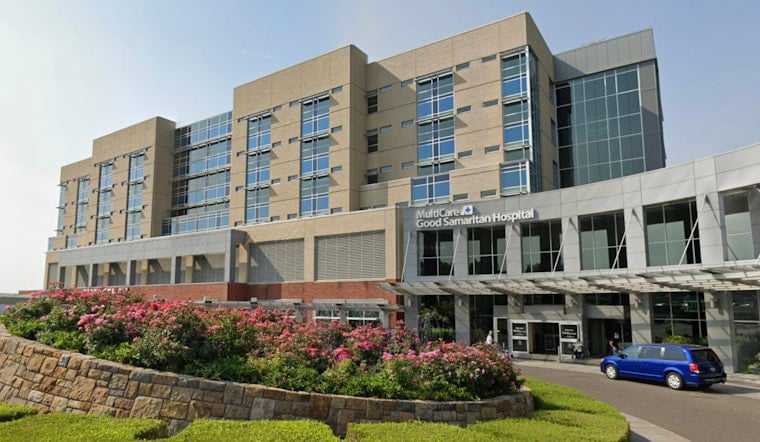
A former registered nurse at MultiCare Good Samaritan Hospital in Puyallup has filed a proposed class-action lawsuit accusing the Tacoma-based health system of systematically shorting non-exempt employees on wages and denying legally required meal and rest breaks. Sylvia Marin, who worked at the Puyallup hospital from roughly August 2021 to February 2025, says she and potentially dozens of coworkers were never paid what they were owed.
Marin's attorney filed the complaint in Pierce County Superior Court on August 10, according to The News Tribune, which first reported the suit. The complaint accuses MultiCare of systematic violations of Washington's wage-and-hour laws, including failure to pay wages earned in prior and final pay periods, failure to pay final paychecks at the end of an established pay period, and failure to compensate employees for missed and otherwise unlawful meal periods and rest breaks. It also alleges a willful refusal to pay wages, a characterization that matters under state law.
What the Lawsuit Claims Happened on the Floor
Marin worked as a non-exempt RN at Good Samaritan roughly three days a week, with shifts lasting 12 hours or longer, the outlet's report states. The complaint alleges MultiCare failed to pay Marin and the proposed class all wages due, including unpaid regular, minimum, and overtime wages. The proposed class as described in the complaint would include at least 30 current and former non-exempt employees.
Washington law sets specific rules for shifts of that length. Under Washington Administrative Code WAC 296-126-092, non-exempt workers are entitled to an unpaid 30-minute meal period for any shift over five hours and a paid rest break for every four hours worked, and any interrupted or duty-restricted meal period must be paid as work time, according to the Washington State Department of Labor & Industries. Separately, RCW 49.12.480 requires hospitals to provide direct patient-care employees with uninterrupted meal and rest breaks, a standard the Washington State Nurses Association notes has driven quarterly missed-break compliance reporting for acute care hospitals, with new voluntary break-waiver flexibility taking effect under HB 1879 in January 2026.
Why the Willfulness Claim Raises the Stakes
The willful-refusal allegation is significant because Washington is one of the few states offering mandatory double damages for willful wage non-payment. Under RCW 49.52.070, employers who willfully withhold earned wages or miss final paychecks face statutory double damages equal to twice the unpaid amount, plus mandatory attorney's fees and court costs. Marin is seeking damages to be determined at trial, along with attorneys' fees and interest, and her suit seeks formal class-action status.
MultiCare has pushed back firmly on the claims. The health system said the allegations are without merit and maintained that employees are paid fairly and accurately, per the same News Tribune report. MultiCare also said it takes employee concerns seriously and works to address them thoughtfully and appropriately, adding that it maintains robust processes, training, and oversight to support compliance and regularly reviews its practices. The system said it is committed to complying with federal and state wage and hour laws.
A Familiar Fight for MultiCare
This is not the first time MultiCare has faced wage-and-hour litigation. In November 2022, a King County Superior Court judge barred MultiCare from deducting funds from employee paychecks without individual written consent to recoup alleged overpayments tied to a Kronos timekeeping outage, following a lawsuit brought by the Washington State Nurses Association, SEIU Healthcare 1199NW, and UFCW 3000. MultiCare also faced a Pierce County Superior Court wage-and-hour class action, Knight et al. v. MultiCare Health System, which reached a final settlement approval hearing, according to case records from CPT Group. And in May 2018, MultiCare was named in a separate proposed class action filed on behalf of phlebotomists alleging failure to pay non-exempt employees for all hours worked, per ClassAction.org.
The Puyallup hospital at the center of the new lawsuit is a sizable operation. Good Samaritan Hospital is a 388-licensed-bed facility with a Level III trauma center and a Level III neonatal intensive care unit, and it recorded 21,796 patient admissions and 175,011 emergency department visits, according to figures from MultiCare itself. The City of Puyallup has approved a 20-year Master Plan for the campus that includes a new 240,000-square-foot patient care tower adding up to 200 net new licensed beds, eventually pushing total inpatient capacity there past 500 beds.
Part of a Larger Pattern at MultiCare
MultiCare grew substantially in October 2024 when it affiliated with Overlake Medical Center & Clinics, expanding to 13 hospitals and more than 26,000 employees across Washington, Idaho, and Oregon, according to Chief Healthcare Executive. Tax filings compiled by ProPublica Nonprofit Explorer show MultiCare reported total revenue of $5.01 billion for the 2024 tax year, underscoring the financial scale of the nonprofit health system now facing Marin's claims.
The lawsuit lands amid a broader stretch of labor friction at Good Samaritan. Registered nurses there staged an informational picket over staffing protections, workplace safety, and racial bias claims, as Hoodline reported in a informational picket over staffing earlier this year. MultiCare has also been negotiating contract terms with Premera Blue Cross that could affect Tacoma-area patients' insurance coverage, a separate dispute Hoodline has also covered. It remains unknown how many non-exempt employees will ultimately join Marin's proposed class or whether MultiCare's internal timekeeping systems automatically flagged missed breaks, questions that are likely to shape how the case proceeds in Pierce County Superior Court.





