

























































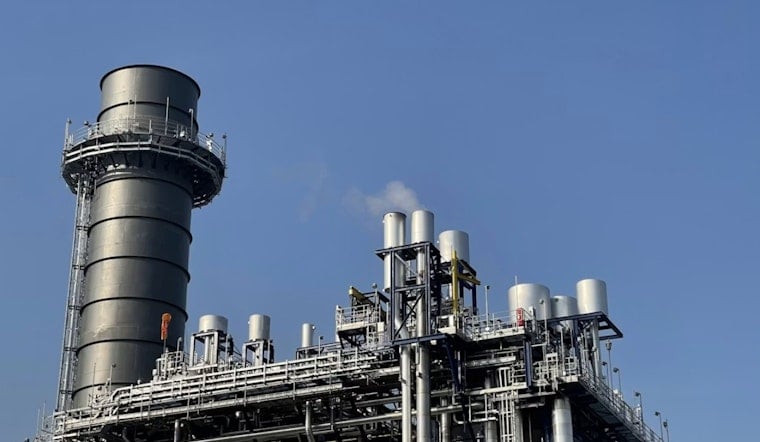
A Fort Worth energy development company is helping assemble a $5 billion refinery proposal in the Persian Gulf, with plans to process 200,000 barrels of crude each day. The project is still searching for a host country and site, but its pitch is built around energy security in one of the world's most volatile oil corridors.
Fort Worth-based MWG Group is a key partner in MERA Oil, the consortium behind the proposed facility, according to the Fort Worth Report. The partnership also includes the Patel Family Office and PWS, a company associated with Saudi AHQ Group, with three possible locations under consideration across Gulf Cooperation Council countries.
MERA Oil says the refinery would combine energy-efficient refining technology with advanced emissions-control systems. The proposed complex would also include crude storage, export facilities and a deepwater port, and would be built outside the Strait of Hormuz, the narrow maritime gateway that handles a major share of global oil trade.
Three Gulf Locations Are Still In The Running
The consortium plans to select a host site by the end of 2026. Until then, the project remains a development proposal rather than a refinery under construction, with its sponsors describing the capital strategy and development concept as defined but the final location still unsettled.
That uncertainty matters because the Strait of Hormuz has become an even bigger energy-security concern during the ongoing Middle East conflict. The International Energy Agency said oil flows through the strait had fallen sharply from pre-conflict levels, and that bypass options were limited, while the Associated Press reported that Gulf producers are accelerating pipeline and port projects designed to route oil around the chokepoint.
For North Texas, the proposal adds another international energy bet to the region's already broad oil-and-gas footprint. Rey Trevino III, director of operations for Fort Worth-based Pecos Country Energy, said the project could help ease pressure on the energy industry, particularly as demand rises and shipping disruptions complicate access to refined products, the Fort Worth Report said.
North Texas Firms Are Also Linked To A Texas Refinery Bid
The Gulf plan is unfolding alongside another major refinery proposal involving a North Texas company. Irving-based Fluor said in April that it had won the front-end engineering and design contract for America First Refining's planned Brownsville facility, which the company described as the first new U.S. refinery to be constructed in more than 50 years.
Fluor said the Brownsville project is expected to process more than 60 million barrels of domestic crude annually into gasoline, diesel and jet fuel, according to the company's April announcement. The comparison comes with an industry footnote: The U.S. Energy Information Administration says a small 45,000-barrel-a-day refinery in Galveston began operating in 2022, while the newest refinery with significant downstream capacity dates to 1977.
That distinction underscores how ambitious the projects are. Both the Brownsville and Persian Gulf proposals are aimed at processing domestic or U.S.-linked crude on a large scale, but the MERA project is further behind, with no host country, final site or construction schedule announced.
MWG Group operates across energy development and other ventures led by Fort Worth entrepreneur Marc W. Gunderson, who also founded MWG Enterprises. The firm's role in MERA Oil puts a local business at the center of a project shaped by global shipping routes, Middle East security concerns and the increasingly expensive effort to keep oil moving when Hormuz becomes a bottleneck.





