

























































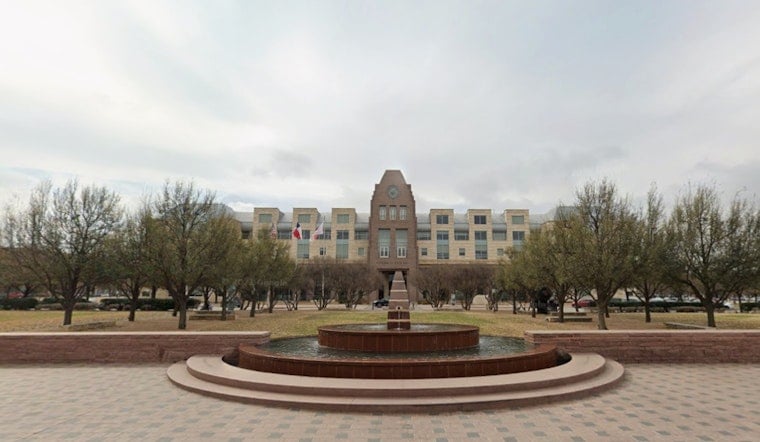
Frisco homeowners could see their city property tax bill climb for the first time since 2017 under a $325.3 million municipal budget now moving through City Hall. The Frisco City Council reviewed the proposed spending plan and a new tax rate during an August 10 work session, weighing general fund expenditures, service rate increases, and additional public safety resources and personnel against the reality that this marks the city's first proposed rate increase in nearly a decade.
The proposed maximum rate of $0.441289 per $100 valuation would represent a 3.71% increase over the current FY 2025-26 rate of $0.425517, according to Community Impact. It's a notable shift for a city that held its rate at $0.4466 per $100 valuation from 2018 through 2023 before cutting it in recent years, and it marks Frisco's first proposed increase since 2017. For a median-valued Frisco homestead assessed at $560,395, the new rate would translate to an estimated annual city tax bill of $2,472.96 for FY 2026-2027 — an increase of $161.48 over this year's $2,311.48 bill, per city council agenda materials prepared for the work session.
How the Numbers Stack Up Against a No-Hike Baseline
City staff built their proposal against a no-new-revenue baseline of $0.418124 per $100 valuation, the rate that would generate the same revenue as the current year excluding new construction. Frisco Chief Financial Officer Angelia Pelham said strong sales tax performance has supported general fund revenues, even as the city leans on a modest rate increase to cover rising costs. The FY 2026-27 general fund is projected to bring in $318.8 million in revenues, with total general fund expenditures reaching $325.3 million and general fund-specific expenditures at $318.7 million, according to the same budget materials reviewed by the council.
Despite the increase, Frisco's proposed rate would still undercut several neighboring North Texas cities, including Prosper, Little Elm, Richardson, and The Colony, Community Impact reports. Commercial tax base growth in northern Frisco is one factor helping to absorb rising municipal operational costs relative to nearby residential-heavy suburbs. Major commercial projects in that corridor are anticipated to be completed and operating by 2027, according to the budget documents.
Utility Bills Climb Too, on Top of Tax Rate Increase
Property taxes aren't the only bill going up. City staff have recommended a 9% increase in water rates, a 5% increase in sewer rates, and a 10% increase in stormwater rates, which combined would raise an average monthly residential bill by $9.99, plus another $0.73 tied specifically to the stormwater increase, per the budget materials. Commercial customers would also see a 5% increase in environmental service rates under the staff recommendation.
City Manager Wes Pierson said the budget provides a strong foundation for the coming year. The total FY 2026-27 budget represents a 7.01% increase over last year's $304 million spending plan, with the general fund budget itself including $6.6 million in assigned fund balance. Frisco's sales tax revenue is projected to grow 5% year over year, with FY 2025-26 estimated sales tax revenue expected to reach $75.92 million.
Where the New Positions and Dollars Are Going
The budget proposes funding for 43 new full-time positions across city departments, including seven police positions, 14 utility fund positions, nine parks and recreation-related positions, four stormwater-related roles, four human resources positions, two information technology positions, one environmental waste specialist, one web and digital content specialist, and a new director of sports and events. Police and fire services together account for $151.7 million of the total budget. Police funding will go toward replacing 31 vehicles, portable radios, ballistic helmets, and an AI call-processing system, while fire expenditures will cover replacement of chest compression devices, a hazmat truck and trailer, and emergency operations center upgrades.
The Development Services Department saw the largest departmental funding increase of any city department, up 9.9% from last year's budget. City leaders have pointed to the department's growth as tied to ongoing commercial and residential development activity across Frisco.
Homestead Exemptions and Reserves Offer Some Cushion
Frisco already offers homeowners a 20% local homestead property tax exemption — the maximum percentage allowed under Texas law — along with an $80,000 exemption for qualifying senior citizens and residents with disabilities, according to the City of Frisco. The council expanded that exemption from 15% to 20% in June 2025, ahead of adopting the current fiscal year's budget. City financial policy also requires unassigned general fund reserves to stay at or above 25% of operating expenditures, and reserves currently sit at roughly 30% heading into this budget cycle, giving the city a financial buffer as it weighs the rate increase.
The tax hike also lands alongside other financial pressures on Frisco households. Frisco ISD adopted a $751.9 million operating budget and a proposed tax rate of $1.0194 per $100 valuation for the coming academic year, after working through an estimated $28.6 million budget deficit earlier in 2026, per Frisco ISD's own budget materials. Frisco has also topped statewide rent rankings, with average monthly rents hitting $1,477 amid a broader statewide trend of cost-burdened renters. The city's sustained growth — Frisco has kept a roughly 188-to-100 ratio of inbound to outbound residents even as Texas' overall migration boom cooled — continues to drive demand for the very services this budget funds.
What Happens Next
The Frisco City Council is scheduled to hold a public hearing on the budget on August 18, followed by a second hearing on September 1. The council will then vote on adopting the budget and the new tax rate on September 15. If approved, the budget and tax rate would take effect on October 1





