

























































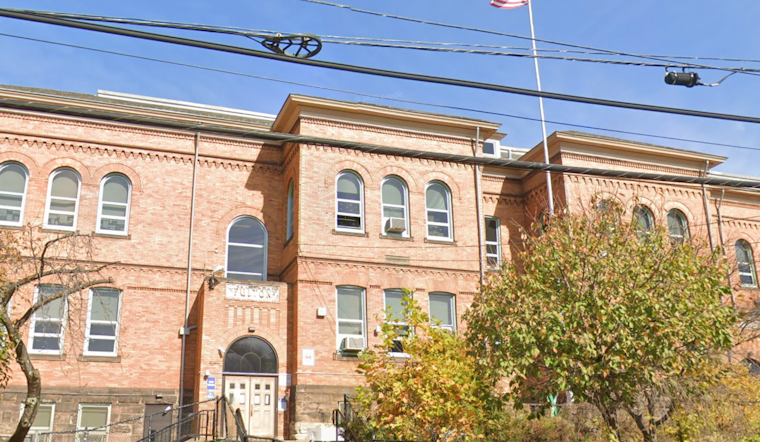
Sienna Striner is 10 years old, minimally verbal, and living with Down syndrome — and for years, Fulton Elementary in Pittsburgh has been the place where she has thrived. Now that school is set to close in June 2027, and her mother is bracing for what comes next.
Sienna spends 73% of her school day included in general education classrooms at Fulton, according to figures reported by TribLIVE. She has regular playdates with school friends, gets weekly occupational, physical and swim therapies, and receives an aide at lunch — support made necessary after a swallow study confirmed she needs supervision during meals. Sienna has dysphagia, a swallowing disorder that causes choking, and has experienced choking episodes when eating quickly while nervous.
Fulton is one of nine buildings closing under the district's Future-Ready Facilities Plan, which the Pittsburgh Public Schools board approved in June 2026 after hearing more than 80 public testimonies, per the same TribLIVE report. The board had voted against an earlier version of the plan in November 2025, before it was reintroduced in February 2026 and ultimately approved with a 6-2 vote and one abstention in May 2026, according to TribLIVE. The plan closes 12 schools across nine buildings and aims to eliminate more than $100 million in projected facility expenses. Discussions about restructuring the district first began in March 2022.
A Long Road to Full-Time Inclusion
Sienna's path to Fulton was not straightforward. Her mother, Shannon Striner, initially sent her to private school, where Sienna was not provided an aide and was not allowed to attend the full school day — a gap her mother attributes to the fact that private schools are not bound by the same legal obligations as public schools. Striner met with public schools around Pittsburgh, but none could guarantee Sienna an aide.
Shannon Striner first heard about the possibility of Fulton closing during Sienna's first-grade year. At the time, Sienna transitioned from private school to Fulton through dual enrollment, spending half the week at her former school and half at Fulton, before moving to full-time attendance there by first grade. Ed Littlehale, Fulton's principal at the time, reassured Shannon that Sienna would receive the support she needed.
Since then, Fulton has used peer modeling to help Sienna develop her own academic skills alongside anxiety that Sienna has started taking medication to manage. She also lives with pathological demand avoidance, which causes her to shut down when she feels overwhelmed or nervous. Shannon and Sienna's sister, Haley Striner, work on academics with Sienna at home, and the family attends The Children's Institute every Tuesday, Wednesday and Thursday.
Systemic Pressure Behind the Closures
The closures stem from a district in freefall demographically. Enrollment across Pittsburgh Public Schools has dropped by nearly 20,000 students since 2001, leaving roughly 19,000 students spread across a network of buildings the district says are now significantly underutilized, per TribLIVE's reporting.
The financial and legal stakes around special education specifically are steep. District data reported in April 2026 by Pittsburgh's Public Source showed the district placed just 57% of its special education students in general education classrooms for at least 80% of the school day — short of Pennsylvania's statewide benchmark of 63%. Separate Public Source reporting from July 2026 found the district spent $1.4 million on special education legal settlements amid ongoing advocacy from parents seeking required accommodations for their children.
Under Title 22 Chapter 14 of the Pennsylvania Code, public school districts are legally required by federal IDEA regulations to provide supplementary aids and services in general education settings before moving a student with disabilities into a more restrictive environment, according to the Pennsylvania Department of Education. Separately, Title 22 Chapter 15 mandates that districts provide protected handicapped students equal access through 504 Service Agreements, covering accommodations for physical or mental impairments regardless of whether a student qualifies for special education under Chapter 14.
What Comes Next for Sienna
Sienna will enter fourth grade for the 2026-27 school year, and students at closing schools, including Fulton, will prepare to attend their next-closest neighborhood school. For Sienna, that means Dilworth Elementary starting in August 2027. As part of the district's transition plan, students will attend transition events during the school year before their building closes.
The district's implementation plan for the closures sets aside $500,000 for physical relocation and equipment expenses, $20,000 for a parent ambassador program, and $40,000 annually for transition communications, according to reporting by the Pittsburgh Post-Gazette. Pittsburgh Public Schools has also said it will have specialized programming, including a life-skills classroom, in every building going forward, and city connections programming intended to prepare students for life after graduation.
Shannon Striner wants details about the Dilworth transition and plans to work with school administration on a transition plan for her daughter. She intends to schedule an IEP meeting at the start of the 2027-28 school year to make sure Sienna's needs at Dilworth are documented, since IEP and 504 plans provide accommodations based on students' disabilities and are legally binding on public schools. Striner, who serves as a disability-rights policy advocate and sits on the Pittsburgh Local Task Force on the Right to Education — a group that holds monthly meetings and advocates specifically for Pittsburgh Public Schools students with disabilities, distinct from Local Task Force 3, which serves the county's other 42 districts — also maintains a website called This Life We Got. Patti Camper serves as executive director of the district's Program for Students with Exceptionalities, and Rachel Schlosser is Sienna's education advocate. Parents who believe their child lacks required support can file a state complaint.
Elsewhere in the district, Pittsburgh Public Schools has been expanding in-district options for students with intensive needs. The board voted in July 2026 to expand its Pittsburgh Bridges Academy program to K-2 students at Weil PreK-5, after three students required costly out-of-district placements the previous school year. Student enrollment in special education categories, meanwhile, has increased across the district even as overall enrollment has declined.
Down syndrome is the most common chromosomal condition in the country, occurring in about 1 in every 700 live births and affecting roughly 5,700 newborns annually, according to the Centers for Disease Control and Prevention. Dysphagia, the swallowing disorder Sienna experiences, accounts for 12% of deaths among people with Down syndrome, per a National Library of Medicine study. For Shannon Striner, the stakes of getting Sienna's next transition right are deeply personal.


