

























































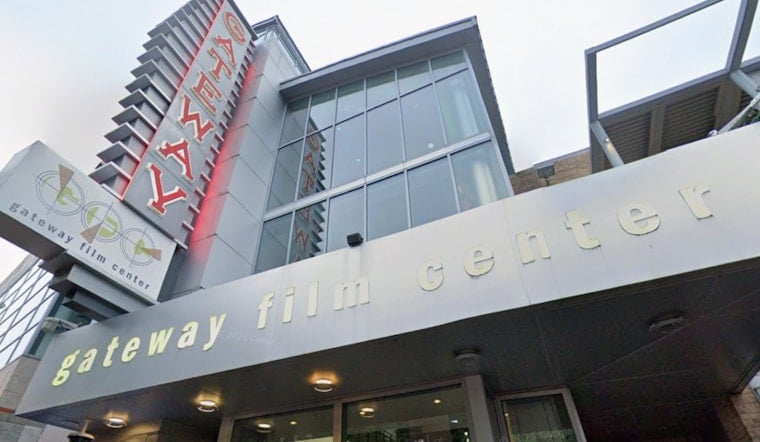
Gateway Film Center is spending the next month proving that the decade of $7,225 movies and Palme d'Or winners still packs a theater. The Columbus art-house cinema's Indie 90s: The Revolution That Changed Cinema series begins this weekend and runs a solid month, screening 22 independent films that reshaped how Hollywood — and audiences — thought about low-budget filmmaking.
The series was reported by Columbus Underground, whose Hope Madden detailed the full slate of films and screening dates. Jason Tostevin, co-curator of Indie 90s, said the 1990s independent-film revolution challenged studio control and transformed how movies were discovered and valued, according to the outlet's reporting. That framing runs through the whole lineup, which opens with Kevin Smith's Chasing Amy on August 15 and 16 and closes with Quentin Tarantino's Pulp Fiction on September 26 and 27.
A Month of Firsts and Breakthroughs
Between those bookends, the series traces a decade that began well before Chasing Amy hit screens in 1997. Gus Van Sant's My Own Private Idaho, released in 1991, screens August 17 and 18, followed by Noah Baumbach's Kicking and Screaming, from 1995, on August 19 and 20. Allison Anders's Gas Food Lodging, released in 1992, screens August 21 and 22, and Robert Rodriguez's El Mariachi follows August 23 and 24.
El Mariachi's inclusion carries particular weight for the guerrilla-filmmaking mythology that defines the era. Rodriguez made the 1992 film for just $7,225 and it went on to earn over $2 million worldwide, a feat that still holds a Guinness World Record for the lowest-budget film to gross over $1 million at the U.S. box office. Rodriguez famously raised part of that production money by volunteering for clinical drug trial testing, a detail that has become shorthand for just how scrappy 1990s indie filmmaking could get.
International Voices Enter the Mix
The lineup also makes room for films that arrived in American theaters through unconventional channels. Jim Jarmusch's Ghost Dog: The Way of the Samurai, from 1999, screens August 25 and 26, while Wong Kar-wai's Chungking Express, released in Hong Kong in 1994, follows August 27 and 28. Chungking Express didn't reach U.S. theaters until March 1996, when it became the flagship release of Rolling Thunder Pictures, a specialty Miramax imprint founded by Tarantino after he championed the film following a screening at the 1994 Stockholm International Film Festival.
Paul Thomas Anderson's Magnolia, from 1999, screens August 29 and 30, and John Sayles's Lone Star, released in 1996, follows September 2 and 3. Richard Linklater's Before Sunrise, from 1995, screens August 31 and September 1, and Tom Tykwer's Run Lola Run, released in 1998, screens September 6 and 7.
Horror and Camp Round Out the Slate
Todd Haynes's glam-rock drama Velvet Goldmine, released in 1998, screens September 4 and 5, and Todd Solondz's Welcome to the Dollhouse, from 1995, screens September 8 and 9. The series also includes a 4K restoration of Cronos, Guillermo del Toro's first international hit, screening September 9 and 10.
George Wolf, Gateway's Fright Club co-curator and co-host, said the 1990s moved horror films beyond predictable guilty pleasures and brought more international horror films to U.S. screens, per Columbus Underground's report. That observation applies directly to Cronos, a 1993 del Toro feature that helped open American screens to Latin American genre filmmaking well before the director's later Hollywood success.
Why Pulp Fiction Closes the Show
The series ends where the decade's commercial breakthrough actually happened. Pulp Fiction grossed over $213 million worldwide on an $8 million budget after winning the Palme d'Or at the Cannes Film Festival, and it became the first independent movie to break $100 million at the U.S. domestic box office, according to figures cited by Wikipedia. That kind of box-office multiplier — a modest budget turning into a nine-figure gross — is exactly what made studios take notice of the directors the series celebrates, and it's why Indie 90s culminates with Pulp Fiction screenings rather than opening with them.
Steven Soderbergh's Sex, Lies, and Videotape isn't part of the Gateway lineup, but its 1989 debut looms over the whole premise of the series. The film won the Palme d'Or at Cannes and the Audience Award at Sundance, and film historians widely credit it as the spark that launched the 1990s American independent cinema movement, according to the Sundance Institute. Produced for $1.2 million, Soderbergh's film put both the Sundance Film Festival and Miramax on the international map, setting the stage for everything Gateway is now screening.
A Venue Built for This Kind of Programming
Gateway Film Center, established in December 2009 and operated by the nonprofit Gateway Film Foundation, has been designated a Top-20 North American art-house cinema by the Sundance Institute, according to Ohio.org. The eight-screen venue at 1550 N. High Street near Ohio State University screens over 750 films and serves more than 200,000 visitors annually, and it offers a $14.95 monthly subscription for unlimited regular admissions, per reporting from The Lantern. The building also houses an undersea-themed bar called The Torpedo Room.
The retrospective arrives as Gateway keeps a busy calendar of film events tied to Columbus's broader movie scene. Just this week, the theater hosted a screening and Q&A for the Ohio-filmed drama Union County featuring actor Will Poulter, Hoodline reported ahead of its Friday commercial release. That event, paired with the Indie 90s launch, underscores Gateway's role as a hub for both premieres and repertory programming in the same month.
Part of a Bigger Local Film Moment
The series also lands alongside signs of growth in central Ohio's film production landscape. Franklin County offers Ohio's first local film incentive, a 10% cash-back rebate stackable with state tax credits, which enabled two feature films to shoot simultaneously in central Ohio earlier this year, according to WOSU Public Media. Columbus Film Commissioner John Daugherty noted that the dual productions reflected growing local crew depth, the station reported.
Columbus audiences already have an appetite for this kind of retrospective programming. The Columbus Association for the Performing Arts held its 57th annual Summer Movie Series from June 18 through August 16, screening 28 classic and cult films at the historic Ohio Theatre downtown, according to Experience Columbus. Gateway's Indie 90s series builds on that same tradition of repertory moviegoing, with tickets and information available at gatewayfilmcenter.org.





