

























































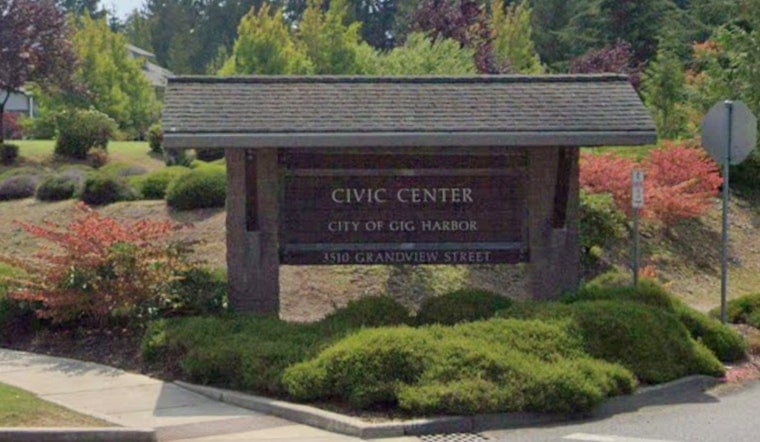
A shopping center that Gig Harbor residents were promised more than a decade ago still sits undeveloped at Borgen Boulevard and Harbor Hill Drive, and now city leaders are considering a tax break that could turn the 18.5-acre parcel into apartments instead of storefronts. The Gig Harbor City Council is set to vote on a proposed 12-year Multi-Family Tax Exemption ordinance during a second reading on September 28, following a first reading scheduled for September 14.
The property, known as Village at Harbor Hill, was originally envisioned as a business park with a grocery store, banks, restaurants, shops and medical services, according to the Tacoma News Tribune. Development talks for the site date back at least a decade, and the plans have stalled for years, in part due to a failed anchor grocer deal. As reported by Gig Harbor Now, Town & Country Markets agreed in 2015 to anchor the commercial center, but the project fell through when construction costs escalated rapidly.
That grocer setback had ripple effects. Roughly 28% to 29% of small retailers that had pre-leased space in the proposed development canceled their commitments during the prolonged delay, even though at its peak 80% of non-anchor space had been pre-leased, per the same outlet's reporting. City officials pushed to salvage the retail vision as recently as a June 2024 public meeting, when they disclosed preparing updated local income and demographic data to present to Trader Joe's in an attempt to recruit the grocer to the site.
A Decade of Stalled Plans Meets a New Housing Push
Now the site's owner, Raydient Places + Properties — a subsidiary of Florida-based timberland company Rayonier — is considering adding multifamily housing to the property instead. Jon Rose, Raydient's vice president of real estate, told the news outlet that the Village project is nearing a point where the company may share more news, and described the proposed tax exemption as a balancing act for the city. Rose said he lacked enough information about the proposed MFTE program to fully assess its effect on Village at Harbor Hill, and added it was uncertain whether a developer would embrace the exemption at a 70% income threshold.
Raydient explored selling the property to another developer in May, and earlier cost estimates for the project — pegged at $44 million — are now considered outdated. The site already carries zoning that allows multifamily housing, and the project is expected to undergo a serious redesign regardless of which direction it takes. Raydient's development agreement with Gig Harbor has remained unchanged since 2021, even as a legal dispute over transportation impact fees between the city and the developer ended in a settlement.
How the Tax Exemption Would Work
Under the MFTE program as currently discussed, at least 20% of units in a qualifying project would need to be rent-restricted, with a minimum of 20 total housing units required and no maximum cap. Rent-restricted units are intended for renters earning 80% of area median income or below. In Gig Harbor, where the area median income is roughly $118,000 annually for a family of four, that threshold translates to about $94,400 a year for a household of four, and affordable rent at that income level works out to roughly $2,360 per month including utilities — compared to a market-rate two-bedroom apartment currently renting for about $2,500 to $2,550 per month including utilities.
City council members have also considered lowering income eligibility to 70% of area median income, which would equal $82,600 annually for a family of four. Council member Ben Coronado supported an alternative approach requiring at least 10 total units with 25% rent-restricted, while others have floated expanding the program beyond its currently proposed footprint, which is limited to designated areas near State Route 16, including Gig Harbor North, the Kimball area and Uptown Gig Harbor. None of these thresholds are final, since the council has not yet officially approved the ordinance.
Community Development Director Eric Baker estimated that the annual increase in Gig Harbor residents' property taxes tied to the exemption could range from $0 to $80, a tax shift that would result from the program if it passes. Baker said substantive council deliberations are expected at the September 28 meeting, and he anticipates substantial public comment on the proposal.
State Mandates Collide With Local Tax Wariness
The push toward multifamily housing isn't happening in a vacuum. Washington's Growth Management Act requires cities and counties to actively support affordable housing creation, and House Bill 1220, passed in 2021, further mandated that jurisdictions plan for housing across all income brackets rather than simply encouraging general affordability, according to the City of Gig Harbor. Under Pierce County's countywide planning allocations, Gig Harbor was tasked with accommodating 892 additional housing units between 2020 and 2024, more than 600 of them for households at or below 120% of area median income.
A 2023 Housing Needs Assessment prepared for the city found a structural mismatch driving some of this urgency: 68% of Gig Harbor households consist of one or two people, yet 78% of existing housing units have two or more bedrooms. Shealynn Smiley, the city's housing, health and human services program manager, has defined affordable housing simply as below market-rate housing, and the city held a town hall in July 2025 to gather public feedback and provide affordable-housing education ahead of these ordinance discussions.
Any tax exemption carries political risk in a city where voters rejected a property tax levy lid lift in April 2024, with more than 69% voting against the measure, forcing leaders to lean on sales taxes and fee increases instead, as previously reported by Gig Harbor Now. State law under RCW 84.14 requires cities offering the 12-year exemption to ensure at least 20% of units remain affordable to low-income households and to file annual performance reports with the state Department of Commerce, per the Puget Sound Regional Council. That same statute allows cities to extend an expiring 12-year exemption for another 12 years if the affordability covenant is maintained.
The council typically hears ordinances twice before adopting them, though it may also adopt an ordinance on first reading with a super-majority vote. Raydient's broader Harbor Hill master-planned community already includes roughly 500 single-family homes, 500 multifamily units, the Herons Key senior living facility, four public parks, a YMCA and Swiftwater Elementary School, according to Kitsap Business — leaving the 18.5-acre Village parcel as the last major undeveloped piece of that master plan. Whether it ultimately becomes the retail hub residents were promised or a mixed-use development with affordable apartments may become clearer once the council takes up substantive deliberations in September.



