

























































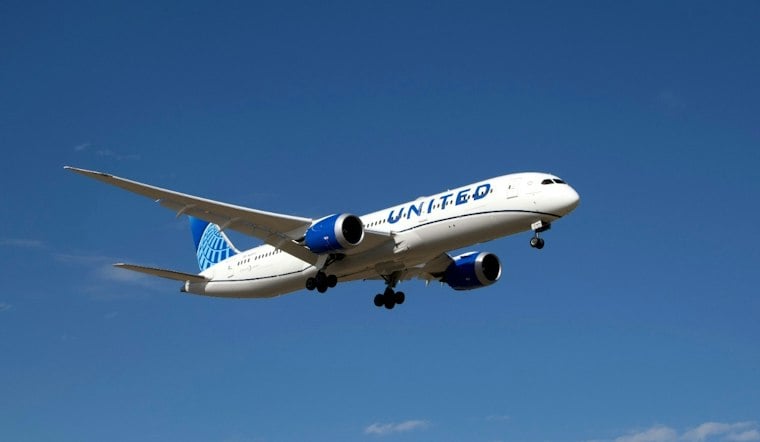
A United Airlines passenger collapsed and turned deep purple roughly 6.5 hours into a 10.5-hour flight from Tokyo to Denver, prompting the crew to divert the wide-body jet to Seattle-Tacoma International Airport for an emergency landing. Three off-duty firefighters who happened to be aboard rushed to the man's side and provided medical assistance as he lay on the cabin floor.
The medical emergency unfolded midway through the transpacific route, according to TMZ, which reported that the flight had departed from Narita International Airport in Japan and was scheduled to land at Denver International Airport in Colorado.
The flight diverted to Seattle and landed there, where medical personnel met the aircraft.
Why the Man's Skin Turned Purple
The deep blue-purple discoloration described aboard the flight is consistent with central cyanosis, a severe indicator of critical blood oxygen depletion often triggered by acute respiratory failure, pulmonary embolism, or cardiac collapse, according to Sakra World Hospital. Commercial cabins are typically pressurized to an altitude equivalent of 5,000 to 8,000 feet, which can reduce a passenger's baseline blood oxygen saturation by 3% to 4% and aggravate existing heart or lung conditions, per research cited by Core EM.
That altitude-driven oxygen drop helps explain why medical emergencies happen at all during long-haul flights, though outright diversions remain uncommon. A 2025 study in JAMA Network Open, which analyzed 77,000 in-flight medical calls across 84 airlines, found that emergencies occur in about 1 of every 212 commercial flights worldwide, but only 1.7% are severe enough to force an unscheduled landing, according to Duke Health. Neurological conditions and cardiovascular issues account for the bulk of the diversions that do happen, with suspected stroke and acute cardiac events carrying the highest likelihood of grounding a flight early, per data cited by the National Institutes of Health's PMC repository.
Off-Duty Firefighters Filled a Critical Gap
The firefighters' intervention lines up with a broader pattern in aviation medicine: passenger volunteers assist in nearly a third of all in-flight medical emergencies, and their involvement is strongly correlated with diversions because these bystanders tend to be called upon for the most critical cases, Duke Health also reported. Under 14 CFR 121.803, U.S. commercial airliners must carry emergency medical kits, with required kit counts varying by passenger capacity. The Aviation Medical Assistance Act of 1998 offers legal protections to physician volunteers, with exceptions for gross negligence or willful misconduct.
Once the plane reached Seattle-Tacoma International Airport, medical personnel met it on arrival, and the flight later continued on to Denver after the emergency landing concluded. As of publication, authorities had provided no update on the man's condition or what caused his collapse.
A Costly, Rare Operational Call
Diverting a wide-body jet mid-ocean is not a decision crews make lightly. Unscheduled medical diversions can cost airlines between $500,000 and $1,000,000 per event, according to FPnotebook. During severe transoceanic emergencies, flight crews typically coordinate with ground-based medical advisory services to evaluate a passenger's vital signs and identify the nearest suitable airport with emergency teams on standby — a role Sea-Tac filled in this case, per the Flight Safety Foundation.




