

























































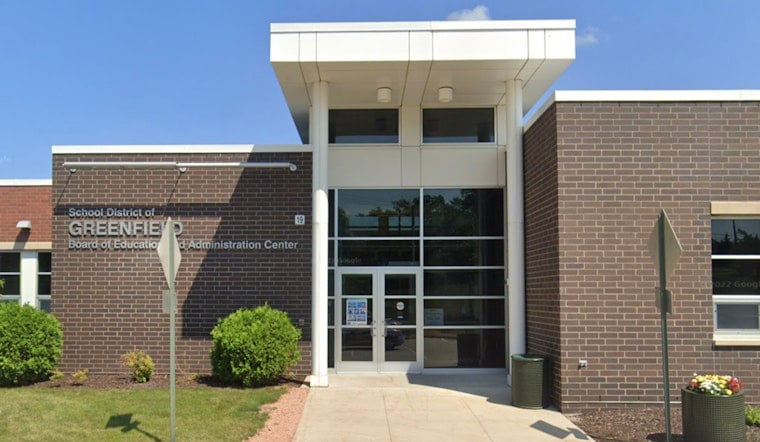
Greenfield School District voters will face two separate money questions on their November 3 ballot this fall: a renewal of an existing $5 million-a-year operational levy and a new $35 million request to overhaul aging school facilities. The Greenfield School Board agreed to place both referendum questions before voters on August 10, setting up a decision that will shape the district's budget for years to come.
The operational referendum is not new money in the traditional sense. According to the Milwaukee Journal Sentinel, it's a renewal of the district's 2022 operational referendum, which provided $5 million per year for four years — a total of $20 million — to support student learning and district operations. That funding expires at the end of the 2026-27 school year, and Superintendent Lisa Elliott has described the new ask as essentially a continuation rather than an increase, with the district projecting no additional property tax impact from the operational question alone.
The capital referendum is where things get more expensive. Greenfield is seeking $35 million for facility improvements that would touch nearly every corner of the district, including building-system, safety and security upgrades, roof, heating, ventilation, air-conditioning, mechanical and electrical work, and parking, traffic and bus loop improvements. The plan also calls for updates to the performing arts center, pool, tennis courts and track-and-field surfaces — the same facilities Greenfield voters built with a 2010 referendum that funded the high school's current performing arts center, swimming pool, academic wing and fitness center, according to background compiled by Wikipedia.
What It Would Cost Homeowners
The facilities referendum alone is projected to raise the tax rate by 9 cents per $1,000 of property value, per the district's estimates cited by the Journal Sentinel. Whether voters approve just the capital question or both questions together, the projected tax impact is the same: 9 cents per $1,000, or a projected additional $27 per year for the owner of a $300,000 home. The preliminary 2026-27 school tax rate stands at $6.21 per $1,000 of property value, and the school board is set to formally approve the tax levy and rate on October 26.
District leaders point to a familiar set of pressures behind the request: state-imposed revenue limits combined with rising costs for staffing, utilities, transportation, insurance, technology and maintenance. Those revenue limits date back to 1993 under Section 121.91 of the Wisconsin Statutes, which caps the combined total of local property taxes and state general aid a district can collect without asking voters directly, according to the School District of Reedsburg. That statutory ceiling is the mechanism forcing districts statewide to turn to referendums simply to keep operations running.
Community Input Shaped the Final Ask
Before settling on the $35 million figure, Greenfield spent months on planning and community engagement, including an independent survey that drew 557 responses in May and June. That survey presentation asked residents to weigh in on facilities options ranging from $26 million to $38 million, though the final $35 million package presented to the board wasn't among the specific options tested. A $31 million option had drawn 61.5% weighted support, while a $36 million option received 52.2% support — support that the board used, along with feedback on project scope and cost, to shape the final referendum question. On the operational side, survey respondents backed a four-year, $5 million-per-year renewal at a 66% definitely-or-probably rate.
Greenfield serves roughly 3,410 pre-kindergarten through 12th-grade students across six facilities — Greenfield High School, Greenfield Middle School, and four elementary schools: Edgewood, Elm Dale, Glenwood and Maple Grove — according to background from Wikipedia. Elliott, who has led the district since 2012, was recently chosen to represent CESA Region 1 on the Wisconsin Association of School District Administrators Board of Directors for the 2026-2027 term, per the association's own listing.
Part of a Statewide Pattern
Greenfield's dual-question ballot mirrors a trend playing out across Wisconsin. In 2024, the state set a record with 241 school referendums seeking a combined $5.9 billion, driven by the same revenue caps and the expiration of federal pandemic relief funds, according to the Wisconsin Policy Forum. But voter appetite has cooled somewhat since then — the Wisconsin Policy Forum found that this spring, voters approved 46 of 75 school referendums statewide, a 61.3% passage rate, down from 70.1% in 2024.
The pressure has also spilled into the courts. In February, a coalition of Wisconsin school districts, parents and educators sued the state Legislature, arguing that state general aid has failed to keep pace with inflation and unconstitutionally forces school boards onto the property-tax-referendum treadmill just to cover basic operating costs, as reported by Wisconsin Watch. Nearby districts are feeling the same squeeze: Brown Deer has a $2.8 million-per-year, five-year operational referendum plus a $35 million capital referendum on its own November ballot, and Hoodline previously reported that the Glendale-River Hills district sought an identical $5 million four-year operational referendum in March to preserve programs and avoid staffing cuts.
Relief Options for Fixed-Income Homeowners
For older Greenfield residents worried about the added tax burden, the district already runs a Senior Tax Exchange Program that lets homeowners 62 and older earn up to $500 annually in property tax credits by volunteering in district classrooms at $6.50 an hour, according to the School District of Greenfield. It's a modest offset, but one the district points to as it makes its case to voters this fall. Greenfield's revenue limit per student also runs $1,220 higher than neighboring South Milwaukee's, according to comparisons published by the South Milwaukee School District, underscoring how funding levels vary even among adjacent Milwaukee County suburbs.
Voters will decide both questions on November 3, with the school board finalizing the resulting tax levy and rate on October 26. Whether both measures pass, only one, or neither, the outcome will determine how much of Greenfield's aging infrastructure gets rebuilt and whether the operational funding that's supported classrooms since 2022 continues into the next school year.





