

























































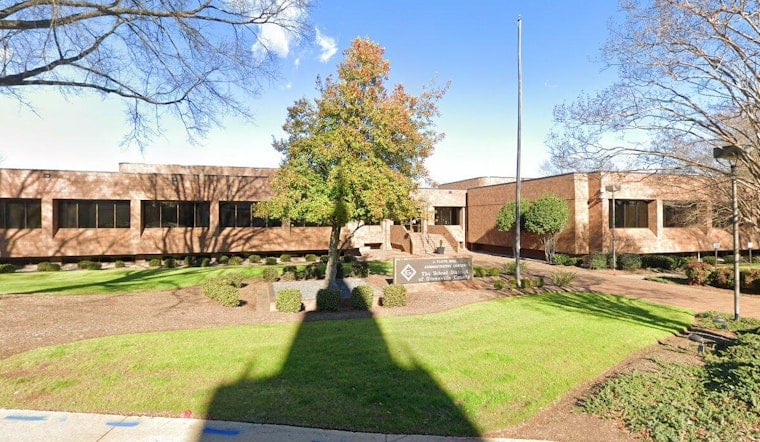
Greenville County students are facing a more rigorous grading system this school year, one where the score they earn is the score that lands in the gradebook. Gone is the district's decade-old policy that quietly padded failing marks, a change driven by a new state law that took effect this summer.
Under the old system, a student who earned 30% on a quiz would have that score bumped up to 50% in the gradebook, according to FOX Carolina News. That so-called grading floor prevented scores on individual assignments from falling below a certain threshold, though the exact cutoff varied by grade level. Greenville County Schools first introduced the 50% floor in middle schools during the 2016–2017 school year, based on a principal's recommendation.
A Statewide Mandate Forces the Issue
The change was already in the works locally, but it became mandatory under South Carolina Act No. 204, also known as House Bill 5073, which Governor Henry McMaster signed into law in May 2026. The legislation, sponsored by Rep. Fawn Pedalino, established a statewide ban on K-12 public school grading floor policies effective July 1, 2026, per the South Carolina State Legislature. Districts caught violating the ban face a steep penalty: the state Department of Education must withhold 10 percent of a district's State Aid to Classroom funding.
The law does more than ban minimum grades. It also conditions student eligibility for credit recovery and content recovery programs on completing all required assignments, and it directs the State Board of Education to form a task force that will recommend revisions to the state's Uniform Grading Policy, the legislature's bill text shows. Greenville County Schools was already planning to eliminate its grading floor before the state mandate took effect, but the law removed any ambiguity about the timeline.
Grading Floors Were Widespread Across South Carolina
Greenville County was far from alone in relying on this kind of policy. A 2025 report by the Palmetto Promise Institute identified six South Carolina public school districts with posted minimum-grade policies, while an administrator survey identified 12 additional districts with some high-school policy, according to the institute's research published on its website. Minimum assignment thresholds discussed in connection with the policies ranged from 25% to 60%. Minimum grade policies had expanded significantly across the state after 2016.
Public opinion had shifted against the practice by the time lawmakers acted. A statewide survey by the South Carolina Policy Council in August 2025 found that 51% of South Carolina voters supported legislation banning grading floors, while 47% of residents said they were dissatisfied with the state's public education performance. A 43rd-place national ranking has also been cited, even as high school graduation rates climbed from roughly 74% in 2010–2011 to over 82% in recent years, a gap that critics argue reflects artificial grade inflation rather than genuine gains in student learning.
The Debate Over Zeros on a 100-Point Scale
The fight over grading floors reflects a real tension in education policy. Political and policy leaders have argued that minimum grades mask student failure and undermine accountability, while educational psychologists and teachers have cautioned that mathematical zero-scoring on a 100-point scale can permanently demotivate struggling students, as Education Week has reported. Research cited in that debate suggests a 100-point scale can be disproportionately punitive for failing grades compared with other scoring systems. The structure of a 100-point scale helps explain the debate over zeros. According to Purdue University, a single zero can have an outsized effect on a student's grade average when grades are calculated on a 0-100 percentage scale.
South Carolina's move comes alongside Texas's ban on minimum-grade requirements. During remote learning, many schools adopted such policies ad hoc, per Education Week's reporting.
Support Still Available for Struggling Students
Despite the tougher grading standards, academic resources remain available to help struggling students in Greenville County, and district officials have encouraged students and parents to communicate with teachers if students begin falling behind. The change comes as Greenville County Schools, the largest K-12 school district in South Carolina, serves approximately 74,500 students across 100 schools while navigating a third consecutive year of projected enrollment decline for the 2026–2027 school year, according to the Post and Courier. Enrollment fell from 78,115 students in August 2024 to about 74,500 in fall 2025.
The grading overhaul is not the only major shift underway in Greenville County classrooms this year. The district also introduced Administrative Rule IA, which limits student screen time and sets standards for generative artificial intelligence use, a policy Hoodline detailed in its screen-time and AI rules report. That policy was developed by a school board ad hoc committee. Together, the two changes mark a broader recalibration of how Greenville County evaluates and manages student learning heading into the new school year.





