

























































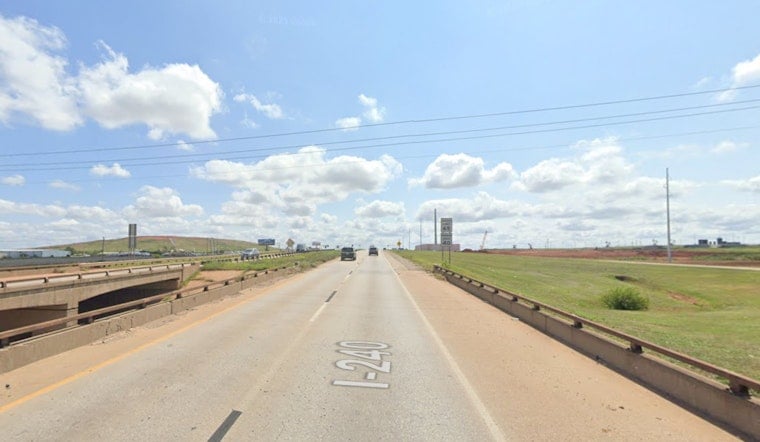
Hapco Pole Products has officially broken ground on a 270,000-square-foot manufacturing facility in southern Oklahoma City, marking the pole maker's first major expansion beyond its longtime home base in Virginia. The new plant, located off I-240 between South Bryant Avenue and South Eastern Avenue, is expected to create more than 80 new jobs in the Oklahoma City area, according to the company.
As reported by News 9, the Oklahoma City facility will produce a wide range of products, including hinged poles, direct buried poles, anchor base poles, small cell 5G antenna poles, decorative poles, solar poles, and camera poles. Hapco says the investment is meant to strengthen domestic manufacturing capabilities and support growing demand for transportation, utility, and commercial infrastructure projects across the country. The company said the move reflects confidence in the region, its customers, and the long-term future of American infrastructure manufacturing.
The timing lines up with a milestone year for the company. Founded in 1951 as the Hubbard Aluminum Products Company, Hapco is marking its 75th anniversary in 2026, according to US Lighting Trends. The manufacturer has been a subsidiary of private investment firm The Dyson-Kissner-Moran Corporation since 1958 and has long operated out of a 325,000-square-foot flagship campus in Abingdon, Virginia — meaning the new Oklahoma City plant will be nearly as large as the company's original production hub.
Why Southern Oklahoma City
The new plant is rising inside OKC 577, a 577-acre master-planned commerce park along the Interstate 240 corridor designed for heavy industrial, manufacturing, and distribution use, the same outlet reports in a separate piece from Oklahoma Business Voice. The park sits adjacent to BNSF Railway lines and near the I-35 and I-240 interchange, giving tenants direct rail and highway access alongside dedicated electrical substations and heavy gas and water utilities, according to Robinson Park.
Oklahoma Business Voice reports that Hapco chose the site specifically to increase overall manufacturing capacity and significantly cut shipment delivery times to customers across the western and central United States. A central Oklahoma location shortens the supply chain for utility and infrastructure contracts that have been expanding in that part of the country.
Hapco isn't the only company betting on the corridor. Hoodline reported in June that Oklahoma City-based retailer Hobby Lobby bought 30 acres nearby for $5.1 million to expand its logistics footprint near the park's BNSF intermodal facility, underscoring the momentum building around OKC 577 as a magnet for major industrial and commercial land purchases.
Who's Building It
Several regional firms are handling the project. Design, construction, and commercial roles have been attributed to Pascal Aughtry & Associates, Van Hoose Construction, Cooper Project Advisors, and regional sales representative SESCO Lighting, per a more recent report from US Lighting Trends. State and municipal economic development organizations also supported the project, according to the same outlet.
Hapco brings decades of specialized engineering to the new plant. The company holds numerous technical design patents, including Federal Highway Administration-accepted direct-buried breakaway aluminum poles engineered to reduce collision severity on roadside impacts, US Lighting Trends notes. That kind of technical pedigree has made Hapco a longtime supplier for Department of Transportation and municipal lighting contracts.
Fitting Into a Bigger Manufacturing Push
The Oklahoma City metro maintained roughly 34,700 manufacturing jobs as of June 2026, according to preliminary data from the U.S. Bureau of Labor Statistics, out of total nonfarm employment topping 710,000 in the metro. Hapco's promised 80-plus positions would add to that existing industrial base rather than create it from scratch.
The project also fits into a broader wave of industrial investment across the state. Statewide private capital investment in Oklahoma reached nearly $13.7 billion during 2025, driven by multi-million-dollar expansions in advanced manufacturing, defense, and industrial facilities, according to Oklahoma WorkTrends 2026. Continued domestic migration has helped bolster the local industrial workforce pool available to fill jobs like the ones Hapco is promising in southern Oklahoma City.





