

























































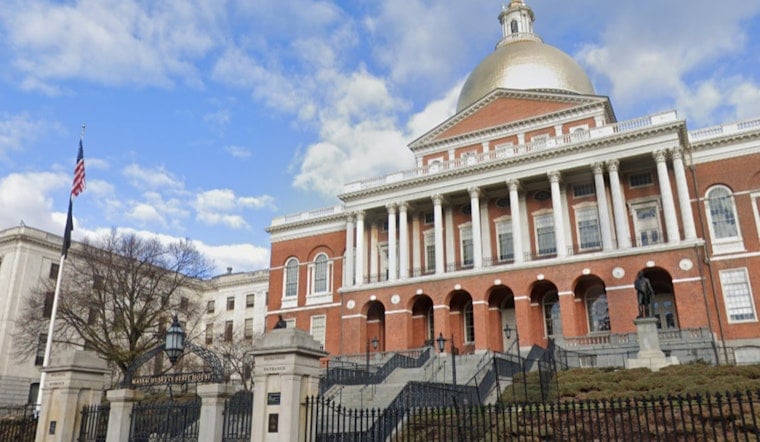
The Massachusetts Governor's Council voted 6-2 Wednesday to confirm Kaitlyn O'Leary, a former prosecutor, to the state's Parole Board, filling a seat that had sat vacant as the agency faced mounting criticism over high-profile releases. O'Leary previously served as an assistant attorney general in the Massachusetts Attorney General's Office and as an assistant district attorney in both the Bristol County and Plymouth County District Attorney's Offices.
The vote brings the Parole Board back up to six of its statutorily required seven members, according to the Boston Herald. Governor Maura Healey nominated O'Leary in July, saying filling the vacancy was important and describing her as smart, thoughtful, compassionate, collaborative and fair. Healey served as Massachusetts attorney general at the same time O'Leary worked in that office.
Unlike Healey's previous nominee, O'Leary was already working inside the agency, holding the roles of deputy general counsel and interstate compact administrator for the board. Ahead of the vote, she received formal endorsements from a broad coalition of judges, prosecutors, defense attorneys, victim advocates, and Parole Board Chair Angelo Gomez, who highlighted her experience balancing public safety with victim rights and reentry support, according to a Mass.gov announcement.
A Rare Rejection Still Looms Large
The confirmation comes just months after the Governor's Council rejected Healey's previous Parole Board nominee, prosecutor Vincent DeMore, in May. That rejection marked the only time the council turned down a Healey appointee across more than 110 judicial and board nominations during her administration, according to BINJ. Councilors Tara Jacobs, who represents Western Massachusetts, and Christopher Ianella both voted against DeMore in May and against O'Leary this time as well.
Jacobs argued that O'Leary's prosecutorial background would add no value to the board, saying the Parole Board evaluates rehabilitation and safety for re-entry into society rather than guilt or punishment. She noted that prosecutors can already pursue diversion, treatment, mental health services, substance use treatment and other rehabilitation-focused resources within their own role, and said victims are represented in the parole process already, even though some fall through the cracks. Jacobs also praised the board's overall work and said it deserves support, while Ianella said he would prefer more board members with social-work and psychology backgrounds. Councilor Paul DePalo of Worcester also voted against O'Leary.
Councilor Tamisha Civil of Stoughton, who voted in favor of O'Leary, said a former prosecutor can still serve effectively on the Parole Board. Ianella and Civil both ultimately backed O'Leary's confirmation despite Ianella's stated preference for more behavioral-health expertise on the panel.
Statutory Balance and Reform Pushback
Under Massachusetts General Laws Chapter 27, Section 4, the Parole Board is required by statute to have seven members appointed by the governor for five-year terms, with qualifications spanning parole, probation, corrections, law, law enforcement, psychology, psychiatry, sociology or social work. A coalition of criminal justice reform groups and more than 400 individuals signed a letter opposing the appointment of former prosecutors to the board this year, arguing it already overrepresents law enforcement backgrounds at the expense of behavioral health and reentry experts, per BINJ's reporting.
That debate has intensified as the board's release record has drawn scrutiny. In 2025 and early 2026, the board approved early release for 39 of 51 prisoners serving life sentences for first-degree murder who appeared before it, a 76 percent release rate, according to NewBostonPost. The wave of hearings followed the Massachusetts Supreme Judicial Court's 2024 ruling in Commonwealth v. Mattis, which found that mandatory life sentences without parole for so-called emerging adults aged 18 to 20 violate the state constitution, opening parole eligibility to roughly 200 prisoners originally sentenced to life without parole for murders committed in that age range, per the Boston Bar Association.
Two Cases That Fueled the Political Fight
The controversy sharpened after the case of Tyler Brown, the alleged Cambridge shooter who received early release from a five-to-six-year sentence for a 2020 shootout with Boston police officers, despite prosecutors having originally sought 10 to 12 years. Brown had served about three-and-a-half years when the board granted his release in May 2025. In May, he allegedly fired 60 to 70 rounds along Memorial Drive in Cambridge while on active parole supervision, critically injuring two bystanders, according to CBS Boston.
The board also faced backlash after failing to properly notify the family of an 87-year-old Boston woman before releasing her killer. Hoodline previously reported that the board voted 4-2 in July to grant parole to Dionicio Delvalle, who served over 30 years for the 1991 murder of Maude Hinds in Roxbury, with his release plan including a step-down transition and electronic monitoring. State regulations under 120 CMR 101.01 require the board's Victim Services Unit to give registered victims and their families formal advance notice before parole hearings and decisions involving violent crimes, but in this case the victim's family learned of the killer's release only through a Herald news article.
Angelo Gomez, appointed Parole Board chair by Healey in October 2025 after joining the board that July, was among those who endorsed O'Leary ahead of the vote. With her confirmation, the board's makeup and its handling of a continuing string of violent-felony release decisions will remain under close watch from both public safety advocates and criminal justice reform groups on opposite sides of the debate over who should sit on it.





