

























































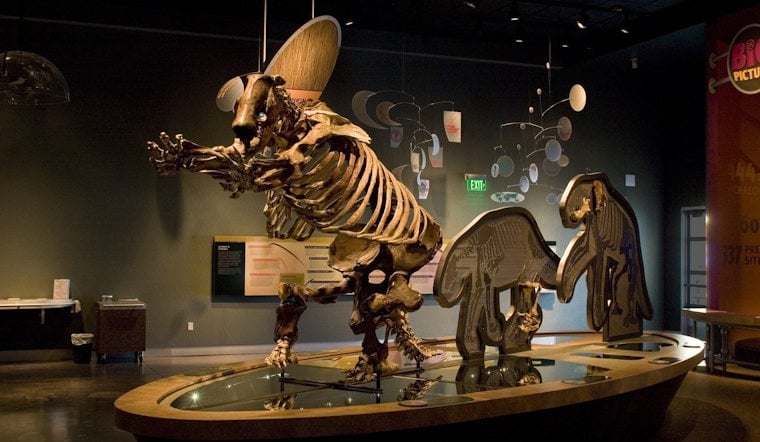
Scientists from across the country will spend Saturday digging through the collections of Hemet's Western Science Center, pulling out fossils and explaining them to whoever walks up to ask. It's called PaleoCon, and the fourth annual edition of the fossil-themed event runs from 10 a.m. to 4 p.m. on August 22 at the museum, located at 2345 Searl Parkway.
Admission covers the event's activities, including the science. Participating scientists will conduct research in front of the public, according to a news release cited by the Press-Enterprise, picking fossils from the museum's holdings and discussing them with visitors on the spot. The event also includes hands-on activities and a scavenger hunt, all included in regular museum admission, with food available for purchase from Missy's Hotdogs.
The researcher lineup spans institutions coast to coast. Per the same report, this year's roster includes Brian Beatty of the New York College of Osteopathic Medicine, Sarah Boessenecker, Melissa Macias of Duke Cultural Resources Management, Eric Scott of Cogstone Resource Management, and Christina Olson of Georgia Southern University. Also participating are Peter Kloess of Riverside City College, Melissa Pardi of the Illinois State Museum, Meagan Weatherall of the University of Arizona, Ascanio Rincon of Cogstone Resource Management, Robert Boessenecker of the University of California Museum of Paleontology at Berkeley, Win McLaughlin of Southwestern Oregon Community College, and Stuart Sumida of Cal State San Bernardino. Beyond their public-facing appearances, the visiting researchers spend several days conducting additional research in the museum's collections around the event.
Teen Ambassadors Take the Stage
PaleoCon isn't only a showcase for out-of-town experts. The event includes presentations by the museum's 2026 cohort of teen ambassadors, a group of local high school students who spent six weeks of their summer break collaborating with Western Science Center staff on scientific outreach projects, the article notes.
The Western Center Academy appears on a California Department of Education directory page.
What a $10 Ticket Buys
Admission is $10 for adults, $8.50 for seniors 62 and older, $7.50 for students ages 13 to 22 with ID, and $7 for children ages 5 to 12. Kids 4 and younger get in free, as do active military members with ID, per the Press-Enterprise report.
PaleoCon is built around putting real fossils, and the scientists who study them, directly in front of families.
The Fossils Behind the Fanfare
The museum's Ice Age fossil collection came out of the ground during construction of Diamond Valley Lake in the 1990s, when the Metropolitan Water District of Southern California uncovered more than 100,000 late Pleistocene Ice Age fossils across 2,646 sites, according to the Guardian. That salvage effort took place during a major infrastructure project, according to the San Bernardino County Land Use Services Department.
The Western Science Center opened in 2006 to curate and display the nearly one million specimens pulled from that dig, according to Wikipedia. Among those specimens is Max, a Pacific mastodon, the largest mastodon specimen ever discovered in the western United States, according to the Western Science Center.
Max turned out to be more than a museum centerpiece. In a PeerJ paper, the Pacific mastodon was formally named a new species. The species was estimated to have lived between 639,000 and 160,000 years ago.
The museum's reach extends beyond Ice Age mammals, too. Its permanent Prehistory Pathways exhibit has a New Mexico focus and includes Ornatops. The building itself carries its own distinction: in 2008 it became the first museum in the United States to receive LEED Platinum certification from the U.S. Green Building Council, thanks to features like roof solar panels and sub-floor cooling pipes designed to cut energy use in the desert, according to Lehrer Architects, the firm behind the campus design.
After PaleoCon wraps up, the Western Center Community Foundation will host its annual Science Under the Stars fundraising gala at the museum on September 19, supporting exhibits, education, and research. For now, though, the spotlight on Saturday belongs to the fossils and the scientists willing to dig them out in front of a crowd.





