

























































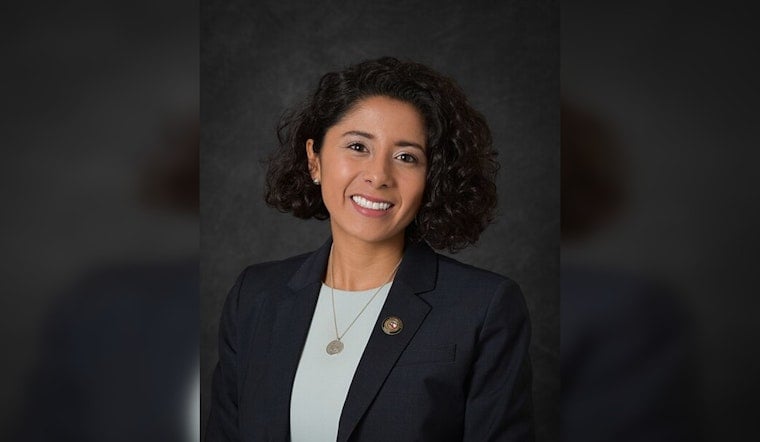
Harris County Judge Lina Hidalgo is once again asking commissioners to consider a property tax rate increase to preserve early childhood programs, placing the item on the Commissioners Court agenda roughly a year after a similar effort collapsed without support from her colleagues. The specific contents of the new proposal, including how much it would raise or exactly which programs it would fund, have not yet been released.
Hidalgo requested the agenda item herself, according to Click2Houston, which reports that the proposed 2026 tax rate is designed to maintain at least a portion of the county's critical early childhood programming. The outlet notes that it remains unclear how the current proposal differs from the penny tax initiative Hidalgo championed last year, and that Harris County Commissioners Court is expected to release further details as it takes up the item.
A Funding Cliff Years in the Making
The stakes trace back to the pandemic, when Harris County directed about $150 million of its $1 billion in federal American Rescue Plan Act funds toward early childhood initiatives, the largest single county investment of COVID-19 relief dollars in early education anywhere in the country, according to the Greater Houston Community Foundation. That money helped launch Early REACH in June 2023, a pilot program that created between 800 and 1,000 free child care slots for children ages 0 to 4 in economically vulnerable neighborhoods. Community Impact has reported that the program's federal grant period is set to conclude on September 30, 2026, leaving county leaders scrambling to find a replacement funding source before slots begin disappearing.
Hidalgo first proposed a one-cent property tax rate increase last August, one projected to generate somewhere between $60 million and $66 million annually for early childhood programs. The measure failed to gain commissioner support before the state deadline to qualify for the November 2025 ballot, according to the same Community Impact report.
Censure and Fallout Still Loom Over the Debate
The 2025 push left lasting scars on the court. After talks over the tax proposal broke down last August, commissioners voted 3-1 to formally censure Hidalgo for decorum and conduct violations, after she brought children from a local daycare center into a commissioners court meeting and repeatedly interrupted fellow members, as detailed by Click2Houston at the time. Hidalgo later pushed back on the censure and continued to publicly advocate for early childhood education funding, according to Hoodline's prior coverage of the censure fight. That friction was not new; a similar clash over tax rate discussions had already surfaced at a commissioners court meeting the year before, per Hoodline.
Any new tax hike faces steep legal hurdles as well. Under Texas Senate Bill 2, enacted in 2019, counties cannot raise property tax revenue by more than 3.5% above the no-new-revenue maintenance and operations rate without triggering a mandatory voter-approval election, according to the Texas Public Policy Foundation. Lawmakers tightened that limit further last August, when the Texas House approved Senate Bill 10, lowering the voter-approval cap from 3.5% to 2.5% starting in tax year 2026, according to Texas Scorecard.
The Scale of the Local Need
The underlying shortage is stark. An April 2025 analysis by Children at Risk found that 88% of low-income working families in Texas live in what it calls child care deserts, ZIP codes where demand for care is at least three times greater than the licensed capacity available. Locally, an estimated 30,000 eligible children in Harris County were sitting on the Texas Workforce Commission waitlist for state child care subsidies as of this past April, while federal and state grants cover fewer than 20% of eligible local children, Community Impact has reported.
A University of Houston Institute for Research on Women, Gender & Sexuality evaluation from last September found that of the 322,000 children age four and under in Harris County, more than 166,000 meet income eligibility guidelines for subsidized early child care under 85% of the state median income, underscoring how far current capacity falls short of demand.
Alternatives on the Table, But No Direct Funding Fix
Commissioners have not been entirely idle on the issue. In April, the court voted to approve a business accelerator program intended to help local child care providers navigate state regulations and lower operational overhead. Hidalgo noted at the time that the step did not provide direct funding to maintain the child care slots set to expire, according to Community Impact's reporting on the vote.
Whether commissioners will ultimately support putting a dedicated tax rate before voters, or whether Early REACH and similar programs will simply sunset as federal ARPA funding runs out this fall, remains an open question. Harris County Commissioners Court is expected to release additional details on the new proposal as members take up the agenda item, according to Click2Houston.





