

























































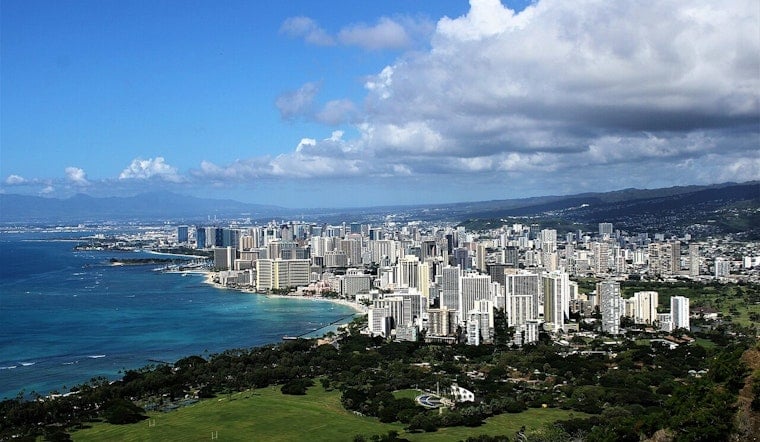
Honolulu has landed near the very bottom of a new national ranking of the best places to retire, with financial analysts pointing to sky-high rent and grocery bills that dwarf costs in cities like Brownsville, Texas. A one-bedroom apartment in downtown Honolulu rents for an average of $2,913 a month, compared to just $947 in central Brownsville, and a simple liter of milk costs $2.30 in Honolulu versus 87 cents in the Texas border city.
The gap comes from WalletHub's 2026 study comparing 182 U.S. cities on their fitness for retirement, as detailed by Islands.com. Honolulu ranked 179th out of 182 cities for affordability, according to WalletHub, and Brownsville had the lowest adjusted cost of living among all the cities compared. An inexpensive restaurant meal in Honolulu runs about $28 on average, nearly triple the roughly $10 an equivalent meal costs in Brownsville. Overall, WalletHub found Honolulu's adjusted cost of living to be twice as high as Brownsville's.
Yet the same study didn't leave Honolulu in last place across the board. The city placed third nationwide for quality of life and ninth for activities available to retirees, pulling its overall retirement score up to 61st out of the 182 cities ranked. Florida cities, meanwhile, occupied three of WalletHub's top five retirement locales overall.
A Separate Study Ranked Hawaii Dead Last Among States
WalletHub isn't the only outfit sounding the alarm on Hawaii's cost burden for retirees. A 2025 study by Retirement Living ranked Hawaii 50th, dead last, among all 50 states for retirees, giving the state an affordability score of just 5.6 out of 30, even as it ranked the state third highest for quality of life, according to Hawaii Public Radio. The dual findings underscore a recurring pattern in how outside researchers view the islands: gorgeous surroundings, brutal price tags.
Tax policy adds another wrinkle that can make or break a retiree's budget in Honolulu. Hawaii exempts 100% of Social Security benefits and employer-funded public and private pensions from state income tax, a break the state has offered since 1953, per the Tax Foundation of Hawaii. But that generosity doesn't extend to everyone. Hawaii fully taxes employee-funded retirement account withdrawals, including 401(k) distributions and traditional IRAs, at state income tax rates that can climb as high as 11%, according to SmartAsset. In other words, a retiree living on an old-fashioned pension gets treated very differently under Hawaii tax law than one relying on a self-funded 401(k).
Everyday spending gets squeezed further by Hawaii's General Excise Tax, a 4% levy with local surcharges up to 0.5% in Honolulu that applies to nearly all business transactions, including groceries and over-the-counter medicine, per Kiplinger. Property taxes tell a more favorable story on paper: Hawaii has the lowest effective residential property tax rate in the country, around 0.27% to 0.29%, though median home valuations above $800,000 keep the actual dollar amounts paid comparatively steep, according to SafeMoney.com.
Free Beaches and Discounted Golf Try to Soften the Blow
Honolulu does try to make up ground with free and low-cost perks aimed squarely at older residents. Snorkeling at Hanauma Bay Nature Preserve is free for Honolulu residents, the Diamond Head Crater hike costs nothing for locals, and the city's beaches, including the less-crowded, calmer waters at Kahala Beach Park, don't charge admission at all. Foster Botanical Garden charges just $3 for entry, and the Friendship Garden Trail operates on a donation basis.
Retirees who golf get a break too, with discounted options around Honolulu ranging from $10 a day to $95 a month, and the Byodo-In Temple also offers discounts for senior-aged visitors. Riders 65 and older can get an annual bus or Skyline rail pass for $45 a year, and the YMCA runs hula lessons for ages 50 to 100. The City and County of Honolulu also provides classes, clubs, and events for local kūpuna, the Hawaiian term for elders, reflecting what the culture describes as a deep-seated caring and respect for older generations.
Roughly one in four Honolulu residents is over age 60, and statewide, about 18.4% of Hawaii's population is currently 65 or older, according to the Nanawale Community Association. State demographic projections estimate that one in four Hawaii seniors will be 85 or older by 2045, with the senior population expanding at an estimated 3.6% per year. That aging wave is arriving at the same time the islands face a serious housing crunch for lower-income kūpuna.
Housing Waitlists Stretch Years for Oahu Seniors
More than 10,000 households currently sit on waitlists for municipal housing assistance on Oahu, with seniors making up roughly 40% of those applicants and facing wait times of two to five years for public housing, per ez Home Search. That pressure has pushed non-profit developers toward federal tax-credit alternatives to speed up affordable construction. Hoodline previously reported on one such effort when the city opened Makiki Banyan, a 90-unit development built under the city's Bill 7 program, offering income-restricted one-bedroom apartments starting at $1,950 a month including utilities.
The cost-of-living squeeze has also fueled labor tension well beyond the retirement community. Late last year, roughly 300 healthcare support workers at Kapiʻolani Medical Center went on strike, arguing that wages and retirement benefits weren't keeping pace with the city's cost of living, with Teamsters Local 996 members picketing around the clock outside the hospital, as Hoodline reported at the time.
Despite the financial headwinds, Oahu remains a magnet for visitors and prospective retirees alike, drawing more than 5.5 million visitors in 2025 and receiving nearly all of the tourists who fly into or begin their island vacation there. Honolulu, whose name translates to sheltered harbor, was also named one of the world's most disappointing destinations in 2025 by another outlet, a reminder that not every visitor leaves charmed. For retirees weighing whether to call the city home, the calculus increasingly comes down to whether free hikes, discounted golf, and hula lessons can outweigh a grocery bill and rent check that run roughly twice what they would in much of the rest of the country.





