

























































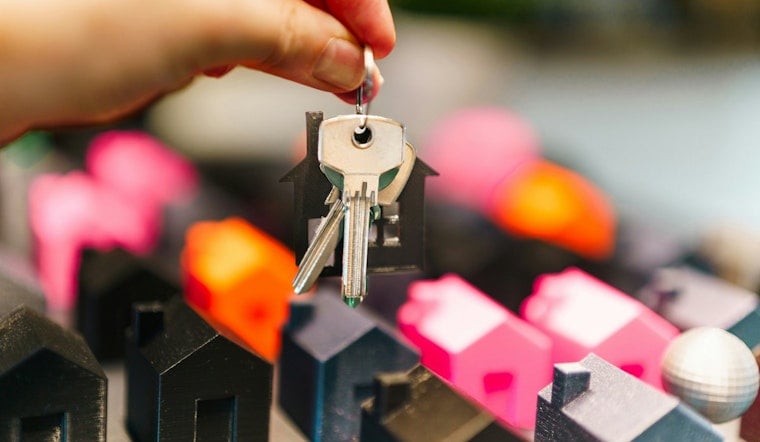
American home shoppers are stuck in a strange limbo: home sales have slumped for several consecutive years, mortgage rates just climbed to their highest point of 2026, and yet prices refuse to fall. Buyers now need to earn nearly $110,000 to afford the typical home for sale, according to a Redfin report, while median household income sits at just $83,730. That roughly $26,000 gap between what a home costs and what families actually earn is the central puzzle of today's real estate market.
As reported by KABB, elevated home prices have created a challenging environment for entering homeownership even as asking-price growth has moderated and starter-home affordability has improved somewhat as more lower-priced properties reach the market. Homes have sat on the market longer than they did during the pandemic-era buying frenzy, when ultra-low mortgage rates unleashed a wave of buyers competing over a supply of homes that was already limited. Real estate economist Yingqi Xu said earnings needed to buy a house have stabilized, but that homes still are not affordable to the average American, per the same report.
Mortgage Rates Hit a New High for the Year
Freddie Mac reported that the average 30-year fixed mortgage rate reached 6.69% for the week ending August 6, marking its highest level in more than a year and the first time in over 44 weeks that rates have exceeded year-earlier levels, according to Realtor.com Economic Research. Mortgage rates have been 6% or higher for years now, a sharp contrast to the 4%-or-lower rates many current homeowners locked in during the pandemic. The article notes that higher mortgage rates add hundreds of dollars to monthly payments compared with those pandemic-era loans.
Rates aren't set directly by the Federal Reserve, even though the central bank may raise its benchmark rate later this year. Instead, mortgage rates are tightly correlated with 10-year Treasury yields, which have climbed on economic concerns and uncertainty tied to the Fed. The KABB report also points to renewed pressure on mortgage rates stemming from an energy shock caused by the war in Iran, layered atop inflation that has remained above the Federal Reserve's 2% target for more than half a decade.
Why the Lock-In Effect Keeps Prices Propped Up
Higher mortgage rates have largely slowed home-price growth rather than actually reduced prices, and the reason comes down to what economists call the lock-in effect. Homeowners sitting on 3% to 4% pandemic-era mortgages are reluctant to trade them for substantially more expensive loans, which has limited the number of homes entering the market and kept many sellers on the sidelines. Kara Ng, an economist quoted in the KABB report, put it simply: the same rates keeping buyers out are keeping sellers out too.
Housing inventory has rebuilt somewhat over the last couple of years but remains 18% below pre-pandemic levels, according to the same account. Ng added that homeownership remains a typical household dream but is outside the typical household budget. Meanwhile, rising home valuations have pushed property taxes higher, and home insurance has become more expensive because of higher labor and materials costs combined with more extreme weather events.
A National Shortage Years in the Making
Housing construction has not kept up with demand since the 2008 financial crisis, leaving the U.S. short millions of homes, per the KABB report. High interest rates make housing projects harder to pencil out profitably, and builders face higher material and labor costs driven by inflation and tariffs. Single-family housing starts fell 3.2% year-over-year in June, marking the third consecutive monthly decline.
That persistent shortage is functioning as a floor under prices even as sales volume slumps and asking-price growth cools nationally, a dynamic Hoodline has tracked in prior reporting. First-time buyers face a particular squeeze: they lack the home equity that existing owners can roll into a down payment, and a 2024 Federal Reserve survey highlighted by Pew Research Center found that 70% of renters under 40 cite the inability to afford a down payment — not monthly payments — as their primary barrier to homeownership. High housing costs have pushed many Americans toward renting instead, and Redfin analysis shows the annual income required to buy a median-priced home still exceeds the income required to rent by roughly $35,000, though that gap has narrowed from a peak of more than $66,000 in late 2023.
Congress Passed a Sweeping Reform Package — But Relief Will Take Years
Congress passed what supporters call the most sweeping housing reform package in decades, the 21st Century ROAD to Housing Act, which officially became Public Law 119-101 on July 11 after clearing the Senate 85-5 and the House 358-32, according to Sheppard Mullin. The law had widespread backing in Congress and across the housing industry, and it aims to address the cost of homeownership primarily by encouraging more construction. It encourages local governments to update zoning laws to allow more housing, minimizes environmental reviews for builders, and aims to make it easier to construct manufactured homes.
One notable provision, Title 10, bars for-profit entities that control 350 or more single-family homes from purchasing additional single-family properties starting January 7, 2027, with civil penalties for violations. A companion measure, the Accelerating Home Building Act, creates a HUD grant program letting local governments adopt pre-approved pattern-book designs to speed up building permits, according to a release from U.S. Representative Bryan Steil.
Still, none of the law's 47 housing provisions are self-executing, meaning HUD, the USDA, and other federal agencies must complete extensive rulemaking before funds and regulatory changes actually reach local communities, per the National Association of Affordable Housing Lenders. The KABB report likewise notes the reform package will take years for its effects to be felt, leaving today's buyers and renters to navigate an affordability gap that federal policy has not yet closed.





